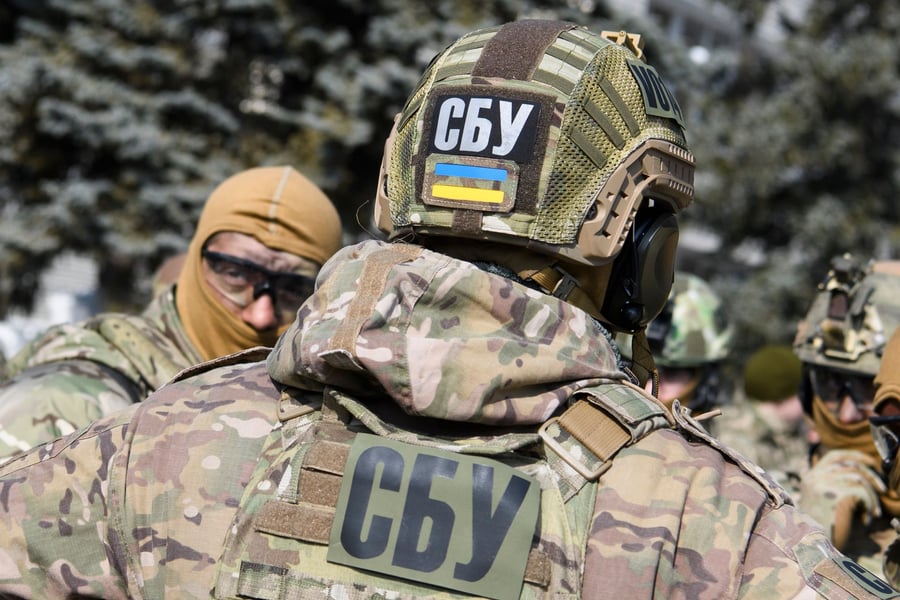

KYIV — When the shooting stopped at an address on Shumska Street in Kyiv’s Dniprovskyi district on the morning of September 2, three officers from Ukraine’s military intelligence directorate were down. One had an artery in his leg severed. A second was in serious condition. A third was lightly wounded. The men who shot them worked for a different Ukrainian agency, the Security Service of Ukraine, which said it had been conducting urgent investigative measures tied to an FSB-organized terrorist plot.
This was not a Russian strike. This was Kyiv, and the two agencies shooting at each other were both Ukrainian.
The immediate cause was a Russian man named Stepan Kaplunov, deputy commander of the Russian Volunteer Corps, a unit of Russian nationals who have crossed the border to fight against the country they were born in. Kaplunov had been detained by the SBU on August 23. On September 1, the Russian Volunteer Corps announced that he had been “abducted by unknown individuals” from his home courtyard, as first confirmed in dispatches from the Ukrainian capital. By the morning of September 2, the investigation into his case had produced a gunfight between two of Ukraine’s most powerful security services.
He was released. The case was handed to the Prosecutor General and the State Bureau of Investigation. President Volodymyr Zelenskyy, who had warned in the preceding days of Russia’s expanding operational campaign over Ukrainian territory, called the shootout “an absolutely disgraceful situation.”
Behind that disgrace is a campaign Russia has been running for considerably longer than this incident lasted.
The Russian Volunteer Corps occupies a particular and uncomfortable place in the war. Its fighters are Russian nationals who have taken up arms against the government in Moscow, among them opposition figures, military defectors, civilians who made an extraordinary choice. For the Kremlin, they are not just a military problem but a political one: Russians, on camera, in uniform, saying the Putin government should be dismantled. The FSB’s alleged plan to assassinate Kaplunov fits the pattern. His attendance at Ukraine’s Independence Day ceremonies on August 24 gave him visibility; his role in the RVC gave him symbolic weight that Moscow finds intolerable.
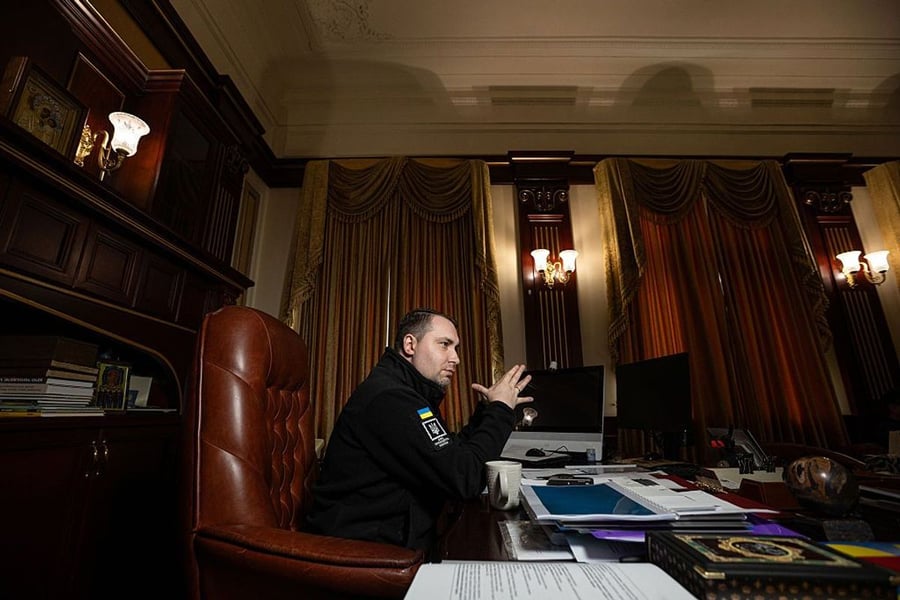
A competing narrative circulated from an anonymous security services source, in reporting from the Russian independent press: that the HUR and SBU units may have been fighting not over the FSB plot at all, but over disputes connected to the protection of fraudulent call center operations in Kyiv. That claim cannot be verified. But its circulation is itself a fact, and a useful one for Moscow, which benefits from any account that casts Ukrainian security institutions as corrupt rather than targeted.
The SBU’s institutional history makes the episode harder to read. In the spring of 2022, the service underwent a sweeping internal purge after officials were found to have maintained covert contacts with Russian handlers from before the war. That episode did not permanently resolve the question of Russian penetration; it established that the question exists and can recur. The September 2 shootout, whatever its origin, occurred in that context: two agencies that already distrust each other, now with a violent incident between them that serves Russian interests regardless of who was actually responsible.
The question of what triggered the SBU’s initial detention of Kaplunov on August 23, two days before Ukraine’s Independence Day and weeks before either agency acknowledged his disappearance, is precisely what neither the investigation nor any official has yet answered. Russia’s intelligence services have a documented capacity for manufacturing institutional distrust: planting disinformation, engineering conditions under which allied agencies begin to suspect and then act against each other. Germany’s federal investigators this week described the same approach when opening terror probes into two power substation attacks attributed to Russia’s “known pattern of hybrid operations.” Whether the Kaplunov case fits that pattern, and whether the SBU was acting on intelligence that originated in Moscow, is what the Prosecutor General’s office must now determine.
Zelenskyy’s response was blunt enough to suggest he understood the stakes. “Here in Ukraine, one can shoot only at Russian occupiers in defense of Ukraine,” he said. “No other shootout will ever be perceived by our state as something that anyone is allowed to do.” His administration was also contending, at the same moment, with Moscow’s accelerating consolidation of strategic partnerships, the Putin-Xi Bishkek declaration of September 1 having deepened the bloc that has absorbed Western pressure without fracturing.
Kaplunov is free. The investigation into how two Ukrainian agencies came to fire at each other in the capital over a Russian defector, and what, if anything, Russia helped set in motion, is just beginning.