
OTTAWA – Canada has already committed armored vehicles and artillery to Ukraine’s defense this year. If reports of a planned Zelensky visit next week prove accurate, Ottawa is being asked to do it again, and Russia has chosen this moment to say plainly what that means.
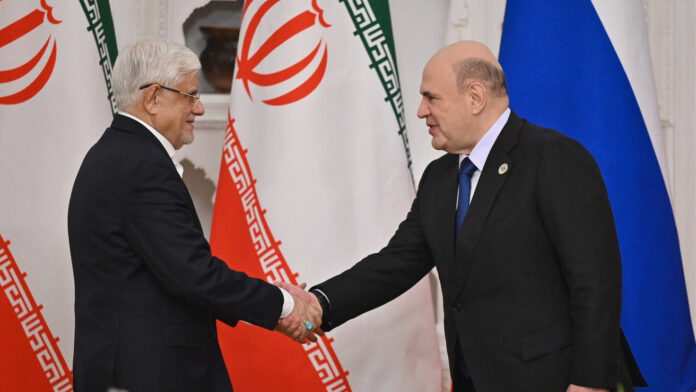
Russian Foreign Minister Sergey Lavrov told reporters Tuesday that all foreign arms supplies to Ukraine are legitimate military targets. His government’s spokesman, Dmitry Peskov, reinforced the position separately, calling further weapons deliveries to Ukraine “counterproductive” and warning that they would only inflate the conflict rather than resolve it. The statements arrived as Canadian media, citing sources first reported in the Globe and Mail, published reports that Ukrainian President Volodymyr Zelensky intends to visit Ottawa in the coming week.
Neither Kyiv nor Ottawa has confirmed the trip. Zelensky’s office has not commented publicly. Canada’s Department of National Defence did not respond to requests for comment before publication. What the Kremlin’s statement established is that whether or not Zelensky arrives, Moscow is watching what Canada decides to do, and that every decision on arms packages now carries an explicit Russian military designation.
The timing matters more than it might appear. The Kremlin’s “counterproductive” framing and Lavrov’s legitimate-targets declaration are not new positions in isolation. Russia has previously warned that NATO member supply chains for Ukraine could be treated as military infrastructure. What is new is the proximity of the warning to a reported head-of-state visit to one of the primary contributing countries. The Kremlin’s statement, delivered as a named position from Peskov himself, functions as a pre-visit message directed at Ottawa as much as at Kyiv.
Canada’s contributions since February 2022, when the Russian operation began, have included artillery shells, air defense components, armored vehicles, and most recently commitments under NATO’s collective capability pledges made at the Hague summit earlier this year. Zelensky’s reported visit, if confirmed, would likely focus on air defense capacity, artillery ammunition stocks, and long-range precision systems, the three categories Ukraine has flagged as most critical heading into the autumn operational period.
Lavrov’s exact formulation was deliberate. “All arms convoys, warehouses, and transport infrastructure serving weapons transfers to Ukraine are legitimate military targets,” he said, according to the Sputnik transcript. That language encompasses not just the weapons themselves but the ships, aircraft, and road networks that move them. Applied consistently, it would treat Canadian ports loading military cargo for Ukrainian delivery the same as Ukrainian depots receiving them. Moscow has not struck NATO territory. The declaration, nonetheless, describes a legal and operational framework in which it could claim justification for doing so.
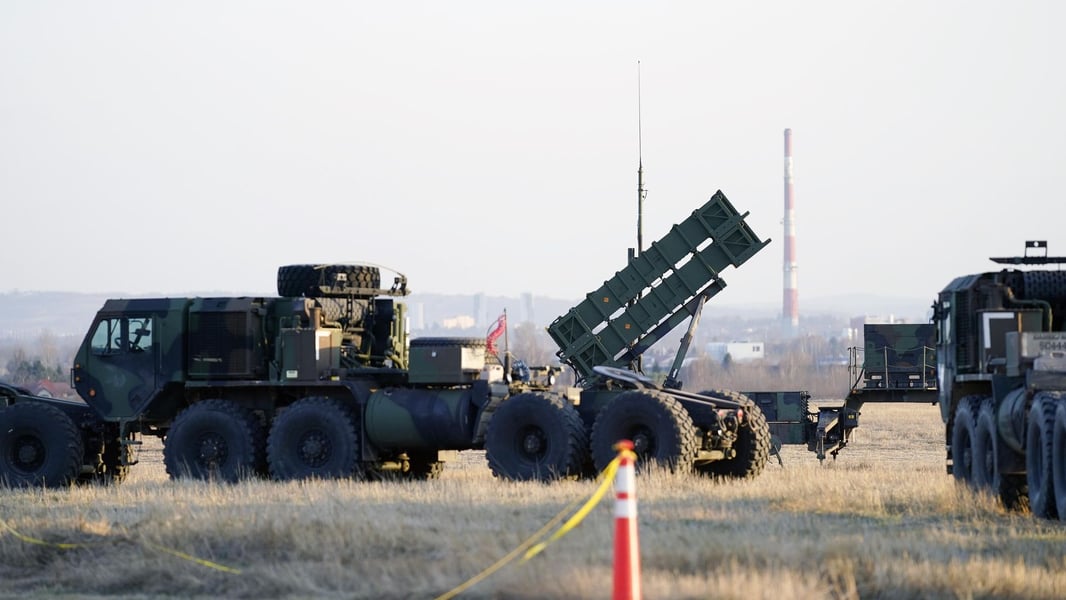
Russia’s posture toward NATO arms supplies has been consistent as a diplomatic argument and inconsistent as an operational one. Russia’s ambassador to Belgium, Denis Gonchar, last week described the confrontation as one NATO continues to escalate, framing the alliance’s support for Ukraine as the proximate cause of the conflict’s prolongation rather than as a defensive response to the Russian operation. That argument runs through every Kremlin official statement on arms and has yet to change a single NATO contributor’s policy. It has, however, provided Moscow with a consistent legal framework for treating the supply chain as part of the conflict zone.
The reported Zelensky visit to Canada would be his second to North America this year, following a Washington visit in July during which he addressed a joint session of Congress and received renewed commitments on F-16 pilot training and long-range strike systems. Ottawa has been a consistent if secondary contributor by comparison to Washington, Berlin, and London. A bilateral visit of this kind typically precedes a formal announcement of a new support package, which is presumably what Zelensky’s office expects Canada to be ready to provide.
The operational reach of Russian intelligence services within Ukraine was illustrated Tuesday by a shooting between SBU and HUR officers over an FSB defector in Kyiv, an incident that revealed the degree to which Moscow retains active assets inside Ukrainian state institutions. Whether that context shapes Canada’s calculus in any direct way is unclear. What it confirms is that Zelensky is traveling from a situation of internal fragility as well as external military pressure, a context that will not be absent from the room if the Ottawa meeting happens as reported.
What Zelensky’s reported visit and Lavrov’s simultaneous declaration share is an absence of resolution. Canada will likely make some commitment. Russia will likely name it a target. Neither the supply line nor the targeting doctrine will change in response to a single Ottawa summit. What changes, incrementally, with each visit and each Kremlin statement, is the operating environment that all parties have agreed to call the current state of the conflict.