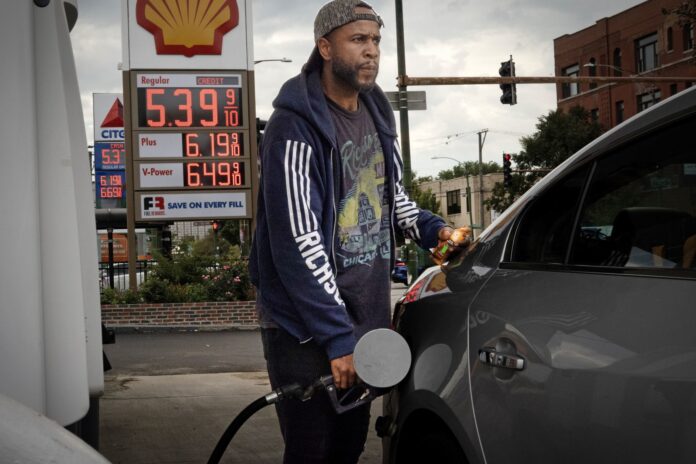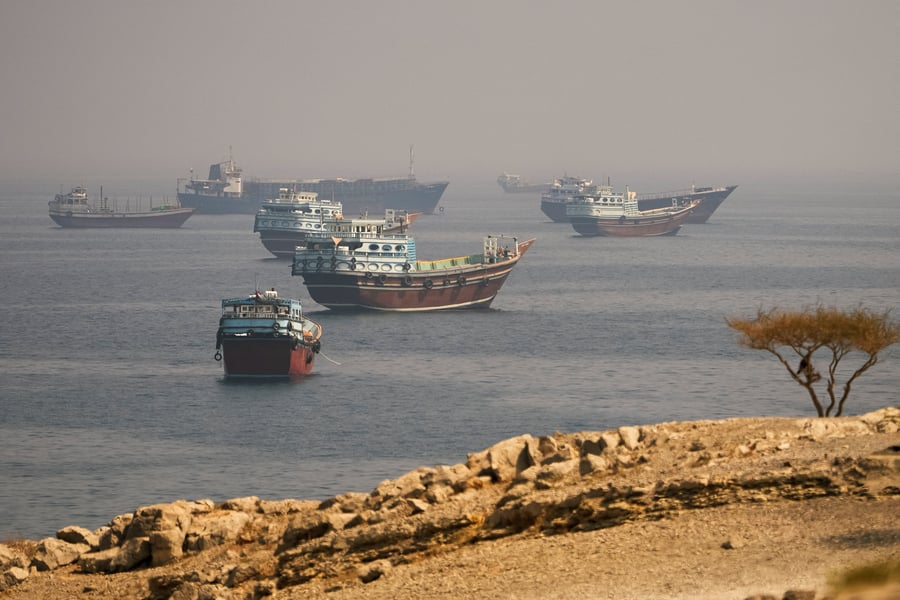

WASHINGTON — At $4.12 a gallon, the pump is already the most direct daily reminder most Americans have that the United States is at war in the Middle East. On Tuesday, President Trump offered a different kind of reminder: a Truth Social post floating the idea of renaming the world’s most strategically vital waterway after himself.
“Now that we have it under USA control, should we change the name Hormuz Strait to TRUMP STRAIT???” the president wrote, hours after the war entered its seventh month. The White House amplified the message on X, posting a redrawn map of the Persian Gulf with the waterway relabeled and the caption: “It’s got a nice ring to it.”
The post landed less than 24 hours after US airstrikes killed four people — including two children — at a wedding in the Iranian coastal town of Sirik, near the strait’s northern entrance. Iranian state media reported the dead included the bride’s younger siblings. The Pentagon confirmed the strike, describing the site as a logistics hub for Iranian drone operations.
The Strait of Hormuz is 21 miles wide at its narrowest point and carries roughly a fifth of the world’s seaborne oil. Since the US-Israeli operation in February that killed Iran’s supreme leader and triggered the current conflict, the strait has become one of the most dangerous commercial shipping corridors on the planet. UK Maritime Trade Operations, which monitors the waterway for NATO allies, has recorded near-daily vessel attacks over the past seven months — mine strikes, drone hits, and small-boat harassment runs that have driven insurance premiums to levels not seen since the 1980s Tanker War.
Trump’s claim of control is, at minimum, contested. Iran’s navy and the Islamic Revolutionary Guard Corps continue to operate in and around the strait. Tehran responded to Tuesday’s Sirik strike with missile and drone salvos against US bases in Bahrain, Jordan, and Iraq — the third such coordinated attack in six weeks, according to Al Jazeera. Iranian officials have said repeatedly that the waterway remains under their sovereign jurisdiction and that Washington does not have the authority to rename it regardless of its military posture.
The legal reality is more mundane still. The US Geological Survey’s Board on Geographic Names governs what US federal agencies call international features. Other countries are not bound by that board’s decisions. Renaming the strait “Trump Strait” on American government maps would obligate US diplomats and military officers to use that name in official communications — it would not compel Iran, Oman, the United Arab Emirates, or any other nation with a coastline on the waterway to follow suit.
Google and Apple updated their US-facing maps when the administration officially renamed the Gulf of Mexico “Gulf of America” and Lake Ontario “Lake America” earlier this year. Both companies said at the time they follow US government designations for domestic audiences while retaining internationally recognized names in global versions of their products. The practical result was two sets of maps showing the same body of water under different names depending on where you were looking from.
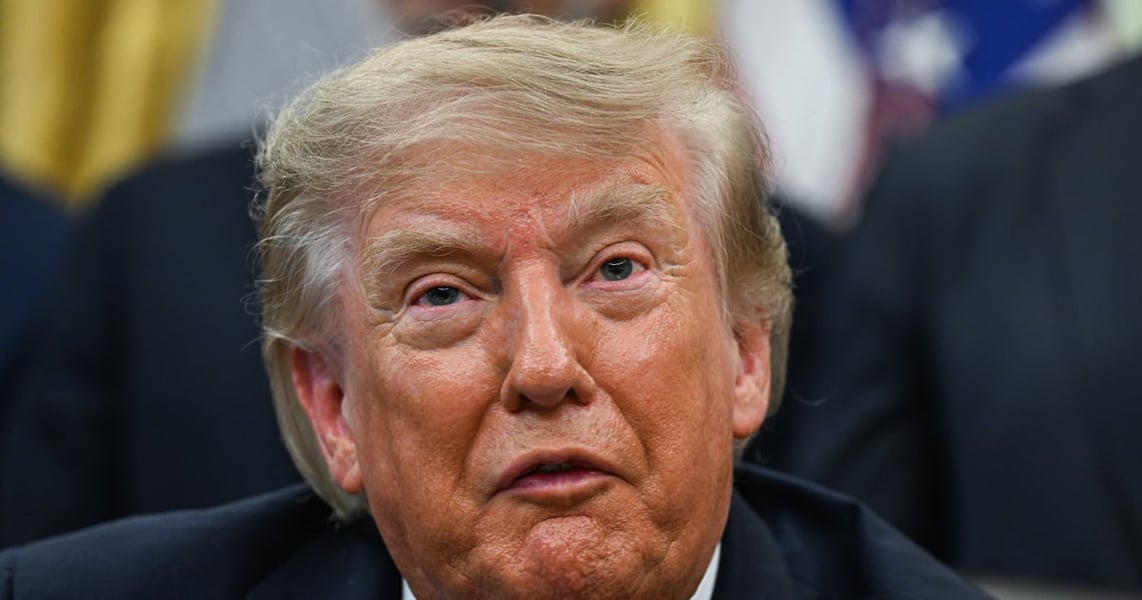
Treasury Secretary Scott Bessent offered a different reading entirely. In a CNBC interview earlier this week, Bessent suggested the strait could eventually become “worthless” as Gulf states — Saudi Arabia, the UAE, Qatar — accelerate their pivot toward renewable energy and alternative export routes. The secretary framed this as a strategic win, an argument that the waterway’s chokehold on global energy markets is a temporary condition the United States can outlast. He did not address gasoline prices, which have risen more than a dollar a gallon since the war began on February 28.
The renaming floats are a pattern now. Gulf of America, Lake America, and the gesture toward Trump Strait all share a logic: they announce dominion over geography that is, in fact, still in dispute. US military operations in the Strait of Hormuz — including the strikes and naval patrols that Trump cited as evidence of “control” — have not closed the strait to Iranian operations or to the near-daily attacks on commercial shipping that the conflict has produced. The gap between the assertion and the operational reality is where the gasoline price lives.
What the administration has not disclosed is any pathway out. Seven months into the war, there is no publicly acknowledged ceasefire framework, no named diplomatic back-channel, no stated objective beyond what the president described in February as “finishing the job.” Trump’s US military operations in the Strait of Hormuz have drawn scrutiny from within his own party, with several Republican senators privately questioning the absence of any defined end state — a concern that has grown sharper as the Iran war midterm elections calculus becomes harder to ignore in competitive districts. The Defense Department turmoil over civilian leadership has compounded that uncertainty inside the Pentagon.
For now, the Strait of Hormuz remains the Strait of Hormuz on every map that matters outside the United States. The president walked back his own suggestion within hours. The White House map stayed up. And at the pump, the price did not move.