
TALLINN — Estonia has spent a higher share of GDP on Ukraine’s defence than almost any NATO member. It has also committed €70 million to artillery shells that were found to be faulty and largely useless — and the minister responsible has resigned, with prosecutors now investigating how a contract of that scale was signed with a supplier that had no track record in ammunition manufacturing.
The failure did not happen in spite of Estonia’s commitment to Ukraine. It happened because of it.
The European Peace Facility, the EU mechanism designed to reimburse member states for military equipment delivered to Ukraine, was built to move faster than conventional EU budgetary processes. Speed was the architecture. Member states transferred weapons first and sought reimbursement later, bypassing the committee cycles that govern normal spending. That design served Ukraine. It also, in at least one documented case in Tallinn, served a contractor whose qualifications were not what the contract required.
In 2024, Estonia’s Centre for Defence Investments — known by its Estonian acronym RKIK — signed a deal with Datasel S.R.L., a company registered in Italy whose parent is the Indian ammunition manufacturer Neco Defense Munitions. RKIK made advance payments. When the shells arrived in 2025, they were found to be faulty. The National Audit Office, in a report released on August 28, stated the financial exposure plainly: “There is a risk that costs of around 70 million euros will have to be paid from the Estonian state budget,” meaning from public funds, not recovered from the contractor.
Elmar Vaher, RKIK’s current director general — who was not in post when the contract was signed — described what went wrong with a precision that made the failure sound almost simple. “If I start building a house and hire a company that has never built houses before, there is doubt the house will not be finished,” he said. A previous RKIK head was more direct about the institutional failure: the agency “failed to make sure the contract reached the audit office,” meaning the €70 million commitment moved forward without the mandatory institutional review.
An unproven contractor. Advance payment before quality verification. A mandatory audit bypassed. The failure was not one mistake — it was three, each compounding the last.
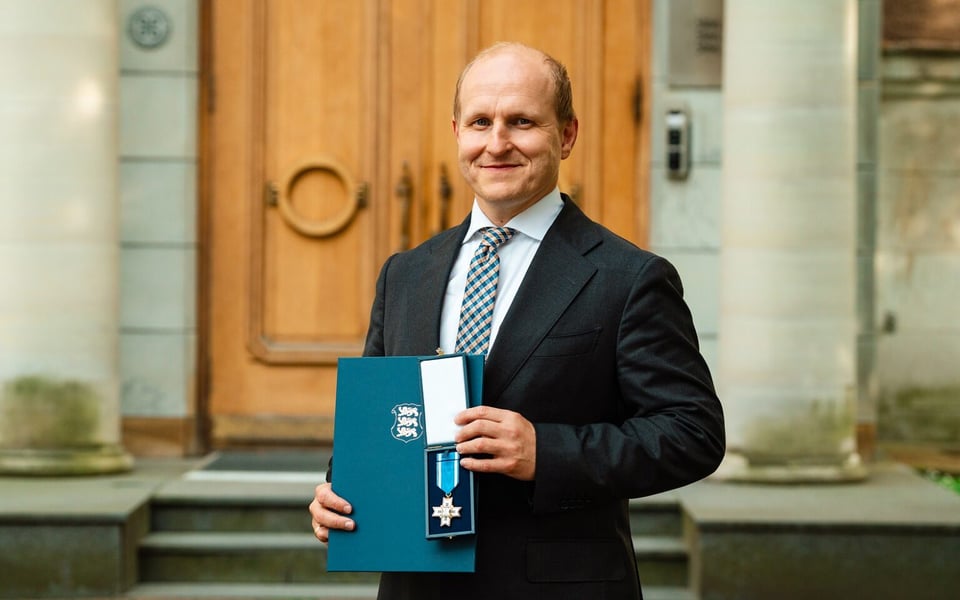
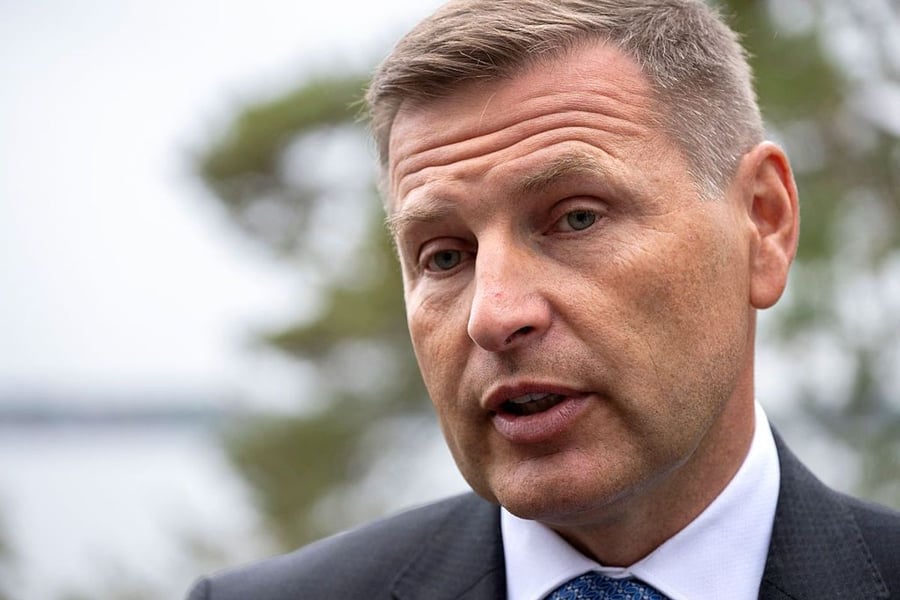
Hanno Pevkur, Estonia’s defence minister, announced his resignation on Tuesday. “A leader must have strength and courage to take responsibility,” he wrote on social media. “I must take political responsibility.” Within twenty-four hours of the audit report’s release, the Prosecutor’s Office had opened a criminal investigation, Prime Minister Kristen Michal had convened a cabinet session, and the Centre Party, in opposition, had moved to consider a no-confidence motion against Michal himself. What began as an audit finding became a political crisis with legal dimensions that Estonia will be managing for months.
The criminal investigation runs on a parallel track to a civil case Estonia had already filed against Datasel before Pevkur’s resignation — a sequence worth noting. Legal accountability was already in motion when the minister stepped down, suggesting the decision to pursue the contractor preceded, rather than followed, the political fallout. Whether the criminal probe establishes that the procurement failure involved more than institutional negligence is the question prosecutors are now examining.
Estonia financed the shell contract through the EU’s European Peace Facility, which means Tallinn will ultimately need to account for the €70 million to Brussels. That accounting has not yet begun. As this publication has documented, accountability questions around Western military spending tied to Ukraine have surfaced across multiple donor governments — a pattern that now has a concrete Estonian chapter. The European Peace Facility itself faces institutional scrutiny over whether its reimbursement model was built for the scale and pace of procurement it enabled.
The Kyiv Independent, in its coverage of the scandal, noted that the criminal investigation’s precise scope and the terms of Estonia’s civil action against Datasel remain undisclosed. Also unknown is whether any portion of the contracted shells reached Ukrainian forces before the quality dispute escalated, and what legal recourse Estonia retains if the litigation fails to recover costs.
Those gaps define what comes next. What the audit, the resignation, and the prosecutor’s filing have established is that Estonia committed €70 million to a supplier that, by its own agency’s assessment, was not qualified to do the work. The urgency of helping Ukraine created conditions in which that decision moved faster than the oversight systems designed to catch it.
That condition is not unique to Estonia. It is the structural environment in which most of NATO’s arms pipeline for Ukraine has operated since 2022. Estonia’s case stands out only because it is the one, so far, where the failure produced a ministerial resignation, a prosecutor’s inquiry, and a question that no one in Tallinn has yet answered: where did €70 million go, and who is responsible for it.