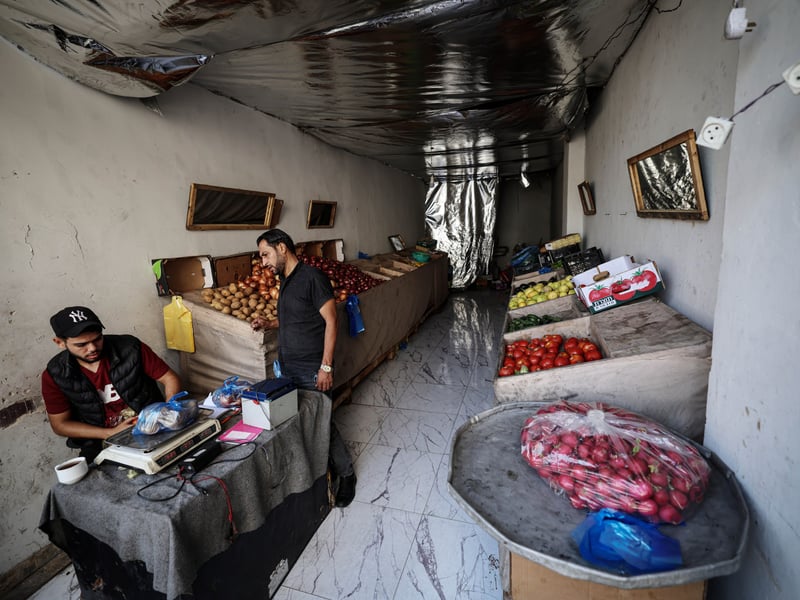

GAZA CITY — Ismail al-Barawi used to buy a full carton of 30 eggs for the 11 or 12 relatives he feeds. This week he buys four or five, because a carton that cost 35 shekels now sells for 60 to 70, he told Al Jazeera.
The squeeze began on Wednesday, when COGAT, Israel’s military aid-coordination agency, said commercial goods would no longer enter Gaza. By Sunday the halt was in its fifth day. Onions have gone from five or six shekels a kilogramme to as much as 10, avocados to around 15, and Iman Atallah, a displaced woman in Beit Lahiya, says a sack of flour that cost 25 to 35 shekels before the closure is now about 80.
Who stopped the trucks is the dispute, and it matters in a territory that has lived under an Israeli blockade since 2007. COGAT says Gaza’s merchants suspended coordination themselves because Hamas demanded 10,000 shekels, about $3,200, a truck and wanted 30 percent of sales paid in cash. On that account Israel is only reacting. The Gaza Government Media Office rejected it on Thursday, saying the money was a voluntary community fund, that the cash rule was agreed with the Chamber of Commerce to ease a cash shortage and the circulation of worn-out banknotes, and that Israel is using the quarrel to tighten supplies.
COGAT puts the stakes in trucks. It says about 250 a day meet Gaza’s needs, while the ceasefire the US brokered last October commits Israel to about 600, the Times of Israel reported. The paper also relayed COGAT’s allegation that Hamas arrested a merchant’s son on 13 October after his father refused to pay. As far as the sources reviewed show, that claim rests on COGAT alone.
The market had little slack to lose. OCHA‘s 2 October situation report, drawing on Cash Working Group data, put September food prices at an average 204 percent above pre-October 2023 levels. It also counted 788 commercial truckloads between 21 and 27 September, a Gaza Chamber of Commerce figure, or roughly 113 a day. COGAT says merchants bring in about half of all trucks; the two counts may not measure the same thing, and neither has been updated since the halt. The same report noted notable price decreases for eggs and flour that week.
Nickolay Mladenov, the Board of Peace‘s high representative for Gaza, said on Thursday that he had received COGAT’s letter and that the coercion it described was “unacceptable and must end immediately.”
Al-Barawi has done his own arithmetic. If the crossings stay shut another 10 to 15 days, he told Al Jazeera, a 50 kg sack of flour could cost 200 or 300 shekels. None of the accounts reviewed for this report says when commercial trucks will move again.