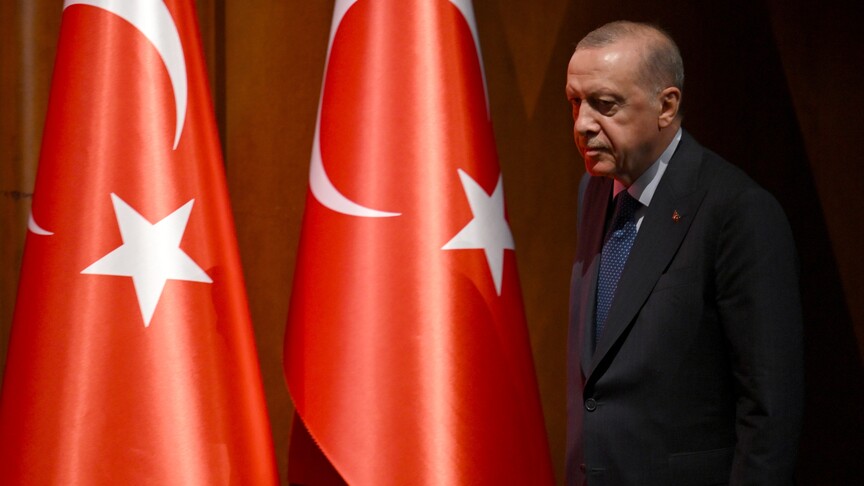

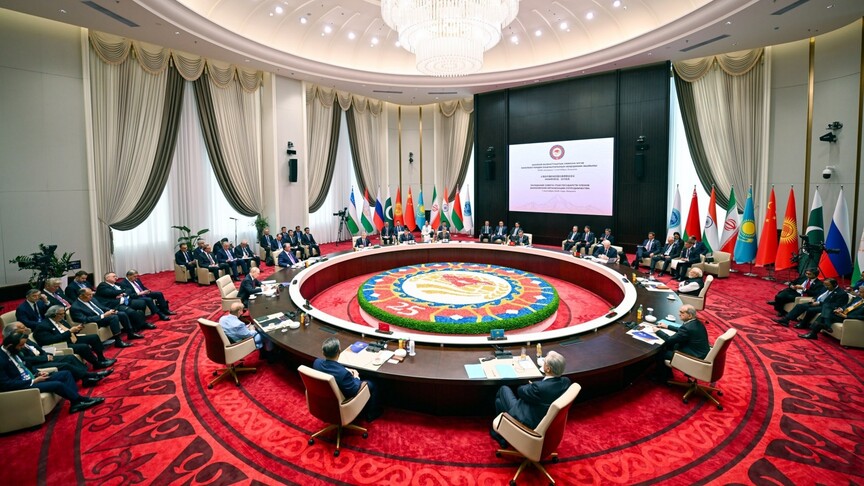
ANKARA — Turkey is in NATO. Turkey controls the Bosphorus. Turkey hosts Incirlik Air Base, the forward post the United States uses to project power across the Middle East. And on Tuesday, aboard his presidential plane flying home from Bishkek, Recep Tayyip Erdogan said Turkey might join the Shanghai Cooperation Organisation, the bloc anchored by Russia and China that NATO spent four decades treating as the adversary.
“Turkey has a 360-degree vision,” Erdogan told reporters traveling with him from the SCO summit in Kyrgyzstan, in a dispatch from the presidential plane. “This does not mean turning our backs on the West.” What it does mean, he added, is that Turkey sees full SCO membership not as a rupture but as an extension of its strategic reach.
Turkey has been an SCO dialogue partner since 2013, long enough to know the architecture but short enough to have plausible deniability whenever Brussels asked uncomfortable questions. On Tuesday, Erdogan removed some of that ambiguity.
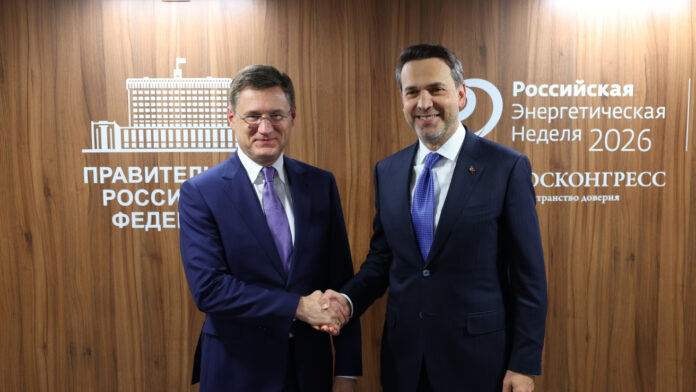
The statement came after what Erdogan described as a “very productive” bilateral meeting with Russian President Vladimir Putin on the sidelines of the Bishkek summit, conducted in what he called a “very sincere atmosphere.” The warmth was notable. Erdogan and Putin have navigated difficult terrain over the past decade, from a downed Russian jet in 2015 to competing interests in Syria and a war in Ukraine where Turkey sold drones to Kyiv while refusing to join Western sanctions on Moscow. That these two men describe their meeting in Bishkek as sincere says something about what shared interest has quietly done to ideology.
The geopolitical arithmetic behind Erdogan’s signal is not hard to read. Donald Trump’s return to the White House has introduced a turbulence into the alliance that no Turkish president before him has had to manage. After Turkey’s position at the Ankara NATO summit tested the alliance’s internal coherence more publicly than any previous dispute, Ankara has been searching for structural alternatives, not to replace NATO membership but to hedge it. When Anadolu Agency reported in August that Erdogan had shelved EU membership as a foreign policy priority, the direction of travel became difficult to misread.
The question now is whether full SCO membership can actually be done. No NATO member has sought to simultaneously hold full membership in the SCO. The legal architecture is untested. NATO’s Article 5 commits members to collective defense; the SCO’s Charter calls for non-interference, multilateralism, and security cooperation, terms broad enough to coexist with many commitments but narrow enough, in practice, to create friction with a Western mutual-defense obligation. Neither Ankara nor Brussels has put a formal legal opinion on record.
The West’s response has been muted. European capitals are conditioned to treat Erdogan’s eastward gestures as leverage: a negotiating move ahead of the next immigration deal, the next arms sale, the next corridor crisis. That reading has been correct often enough to calcify into an assumption. But the structural shifts since 2022 have not reversed. Russia and China have deepened their economic integration in ways that no longer depend on Turkish participation. If Ankara joins, Turkey amplifies the bloc; if it does not, the bloc sustains itself.
Erdogan’s “360-degree vision” is a diplomatic phrase, but it names something real. Turkey has been running a multi-vector foreign policy for the better part of fifteen years, maintaining NATO commitments while supplying drones to Ukraine, managing gas transit while refusing sanctions on Moscow, brokering prisoner swaps while pursuing its own objectives in Syria. Full SCO membership would formalize what has long been Turkey’s operational posture: a country that belongs to no camp completely and extracts value from every margin of ambiguity available to a state that controls critical geography.
What the Bishkek signal added is a timeline question. Erdogan did not say Turkey would apply; he said Turkey “never views this perspective negatively.” That is a specific choice of language from a president who uses language specifically. It stops short of a commitment while moving materially past a dismissal. The next move belongs to the SCO’s member states, to NATO’s Brussels secretariat, and to a Trump White House that has shown no consistent position on what NATO membership actually requires of its allies.
Whether Turkey can legally and practically hold full membership in both organizations, nobody in authority has yet said. That is worth watching.