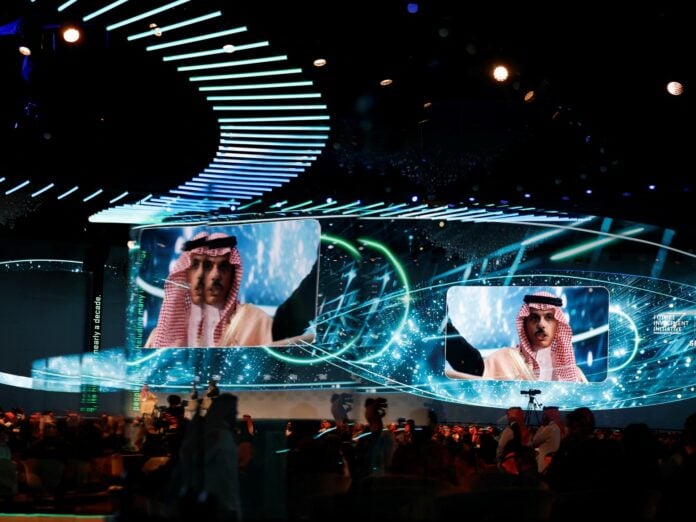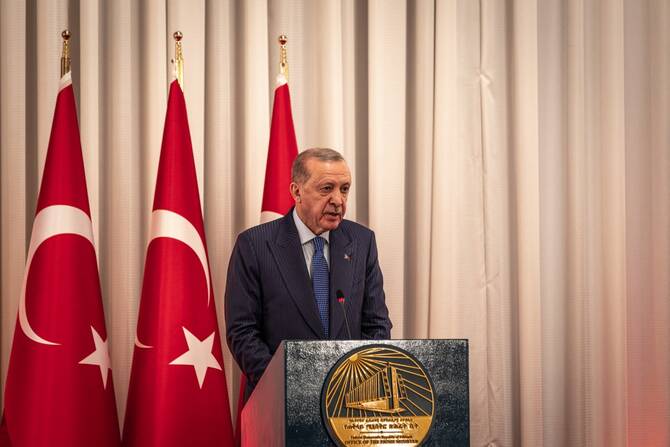

ANKARA — Donald Trump bypassed Congress on June 21 to approve the sale of $700 million in General Electric F110 jet engines to Turkey. It was the kind of decision that ends careers for the officials who sign off on it, and Trump made it thirteen days before the NATO summit in Ankara. Every alliance member understood what it meant.
Recep Tayyip Erdogan enters next week’s summit in a position no Turkish president has occupied in more than a decade. Trump needs him. The question now circulating in NATO capitals is what Erdogan intends to collect on that debt, and whether the alliance can accommodate his terms without breaking what little cohesion it still has.
The summit is scheduled for July 7 and 8. Ankara is hosting, unusual in itself for a country that spent most of the past decade at the fringe of the alliance’s trust. Turkey was expelled from the F-35 fighter jet program in 2019 after purchasing Russian S-400 air defense systems, a decision that triggered years of congressional opposition to arms sales and placed the country in a kind of suspended membership, formally inside NATO but practically excluded from its most important procurement networks.
That exclusion is now under active renegotiation. Turkish officials have told reporters that Ankara’s core demand heading into the summit is the easing of restrictions on its defense sector, access to components, joint industrial agreements, and expanded cooperation agreements that would partially compensate for its F-35 loss. Arab News reported that Turkey is not currently seeking formal reinstatement in the F-35 program, a demand that officials regard as too politically visible to pursue before Trump’s congressional opponents take notice. What it wants instead is the infrastructure of cooperation: the shared supply chains, the technology licensing agreements, and the symbolic acknowledgment that it is back inside the room.
Luke Coffey of the Hudson Institute put it plainly. “If there’s one NATO ally Trump doesn’t want to antagonize going into the summit, it’s Turkey,” he told reporters. Coffey noted that Erdogan’s dual role as host and as the only leader capable of mediating between Moscow and Kyiv gives Turkey a positioning advantage no other alliance member can claim.
That mediation role has grown substantially since ceasefire talks between Russia and Ukraine entered a new phase. Turkey has served as the back-channel, hosting rounds of negotiations, allowing its intelligence services to move between the two sides, maintaining relationships in Moscow that no other NATO member can sustain. For Trump, who has consistently defined the Russia-Ukraine conflict as someone else’s problem he inherited and must be seen to solve, Erdogan’s back-channel is not an irritant. It is a resource.
Polish Prime Minister Donald Tusk said this week that Russia could strike a NATO member within months, putting fresh pressure on the alliance to show unity at a summit that was already expected to be difficult. Tusk’s warning, delivered as Poland prepares to travel to Ankara, underscored how much the summit’s security stakes have risen. German Chancellor Friedrich Merz, who has pledged to double Germany’s defense budget and reach the 3.5 percent GDP target six years ahead of schedule, has been publicly confronting Trump’s characterization of NATO’s defense spending as “ridiculous.” That confrontation sets the stage for an alliance gathering with no shortage of fracture lines.
Into that atmosphere, Erdogan arrives carrying an agenda that is both narrow enough to be achievable and broad enough to matter. Turkish Foreign Minister Hakan Fidan has spent the past month moving through European and Middle Eastern capitals, building the case for Turkey’s expanded role. Serkan Demirtas, a Turkish foreign policy analyst, told reporters this week that Ankara views the Ankara summit as an inflection point in the country’s standing within the alliance, an opportunity to translate Trump’s personal goodwill into structural concessions that will outlast any one administration.
The risk in that strategy is visible to anyone watching from Warsaw or Berlin. Turkey’s willingness to maintain ties with Moscow while nominally a NATO member has been a constant source of tension. Its domestic record, including the arrest of 209 activists, lawyers, and journalists in pre-summit security operations, drew criticism from human rights organizations. Trump acknowledged that friction directly when he told Erdogan he would have skipped the summit entirely were it not for their personal relationship, a disclosure that laid bare the transactional logic now governing American engagement with an alliance it helped found 77 years ago.
What Turkey wins from this summit matters beyond the bilateral relationship with Washington. NATO is heading into a period where defense spending commitments, force posture decisions, and procurement networks are all under revision simultaneously. A Turkey that extracts its industrial cooperation agreements at Ankara becomes a Turkey with leverage over the next round of those decisions too. Erdogan has spent years demonstrating that leverage is more durable than trust. The F110 engine sale, arriving thirteen days before the summit, is the Trump administration’s acknowledgment that he was right.
For the alliance, the Ankara summit will answer a question deferred for years: whether there is a version of Turkey’s NATO membership that works for both sides. What that version looks like is still unclear. What Erdogan’s starting position looks like is not.