
WASHINGTON — South Korea’s Ministry of Defence announced Monday morning that its annual joint military exercises with the United States would proceed on schedule, hours after President Donald Trump ordered his Pentagon chief to “substantially reduce” the drills and accused them of being “totally inappropriate and hostile” toward North Korea.
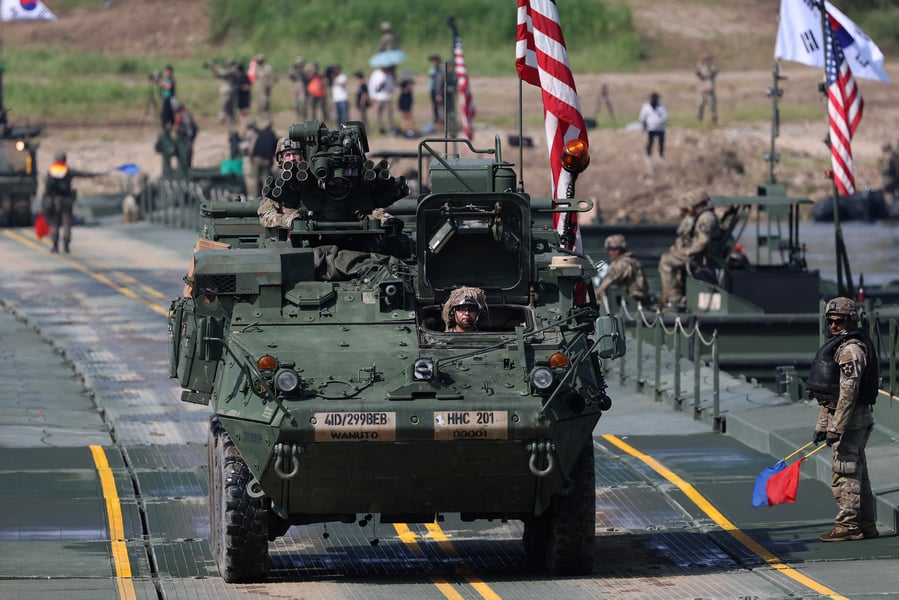
The defiance was quiet, clinical, and immediate. A statement from Seoul said the Ulchi Freedom Shield exercises, which deploy some 18,000 South Korean troops alongside US forces for eleven days each summer, “will proceed as previously notified and scheduled.” The statement did not mention Trump by name.
For Seoul, the order presents an impossible bind. South Korea is the country these exercises exist to protect. Its territory would be the first struck if the deterrence they maintain ever fails. Its government did not ask for the reduction Trump ordered, and its military appears to have decided it will not honor it.
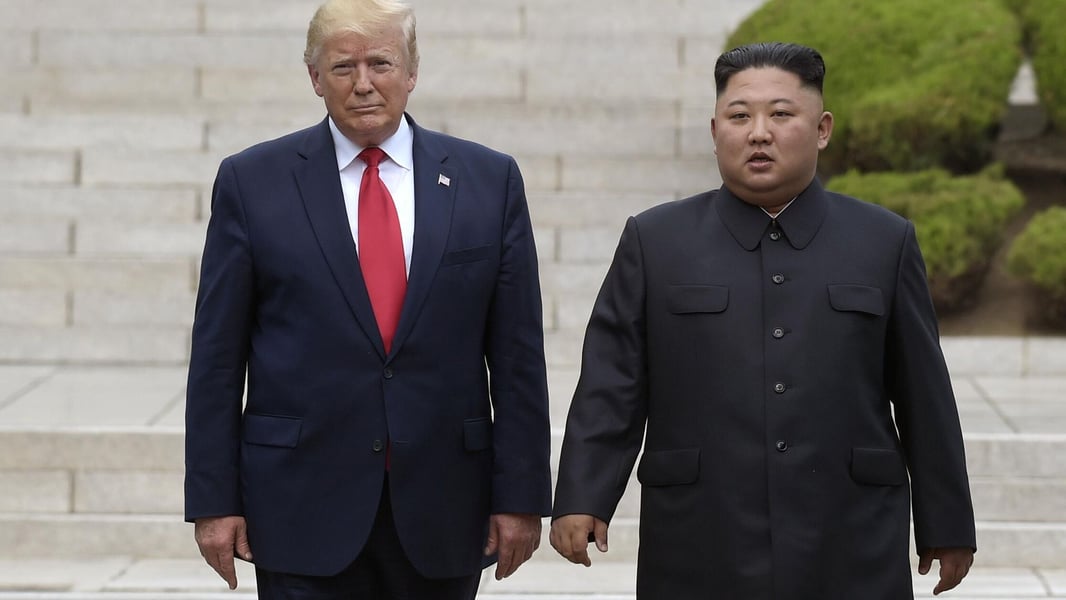
Trump announced the decision on Sunday evening, framing it as an act of diplomatic goodwill toward Kim Jong Un. “I am not happy with the fact that the United States has, long ago, agreed to participate in Joint Military Exercises with South Korea,” Trump wrote. The exercises, he said, send “a signal that is totally inappropriate and hostile” to Pyongyang. According to Al Jazeera, he directed Secretary of Defense Pete Hegseth to “substantially reduce” the exercises.
He described Kim as an old reliable. North Korea, Trump said, “has been unthreatening and respectful” during his second term in office. His relationship with Kim was, in his telling, an asset the Pentagon was now undermining. No one in Seoul was asked to validate it, and no defense official has publicly endorsed it.
It was not the first time Trump had offered North Korea a military concession it did not ask for. After his June 2018 summit with Kim in Singapore, the first meeting between a sitting US president and the North Korean leader, Trump announced a suspension of what he called “war games” with South Korea, using language virtually identical to Sunday’s announcement. He described the exercises as “expensive” and “provocative.” Kim gave nothing in return.
That episode ended with a resumption of the exercises within eighteen months, after the diplomatic track collapsed. This time, Trump directed Hegseth to execute the reduction. Hegseth has not commented publicly. As Sputnik reported, Trump’s administration has framed the reduction as necessary for preserving his diplomatic relationship with Pyongyang.
The president wove another grievance into Sunday’s statement. South Korea had refused to join the US-Iran war coalition when Washington asked. “They said, ‘No thanks!'” Trump wrote. The line was aimed as much at embarrassing Seoul’s current government as at praising Kim’s. Trump measures alliances by what allies contribute to his own campaigns, not by treaty obligations or shared security interests.
That logic is what makes Monday’s defiance by the South Korean Ministry of Defence so consequential. Seoul’s government is declining to enforce an order from its primary military guarantor, the country whose 28,500 troops stationed on the peninsula form the core of its defense posture against a North Korea that possesses nuclear weapons and, by most estimates, the means to deliver them.
What the Ulchi Freedom Shield exercises actually provide is less visible than their name suggests. The drills are not designed to be aggressive. They do not simulate offensive operations into North Korea. They rehearse the command-and-control procedures, logistics flows, and interoperability protocols that would be needed if Pyongyang attacked first. The military value is institutional. It keeps a complex alliance machine running at a level of readiness that cannot be rebuilt quickly once allowed to lapse. Trump’s characterization of them as “hostile” reflects something other than a reading of their operational scope.
The exercises are scheduled to begin Tuesday. Whether Hegseth sends any order to US forces participating in them is unknown. Whether the 18,000 South Korean troops currently preparing to execute them will receive any instruction from Washington to stand down is also unknown. The Pentagon has said nothing.
Trump’s move connects directly to the wider erosion of US alliance commitments during his second term. He has used cost criticism to pressure South Korea, Japan, and NATO allies to spend more on their own defense and simultaneously used cost criticism to justify unilateral concessions to the adversaries those alliances are designed to deter. The contradiction has been consistent. The resolution to it has not been.
Analysts note that what Trump offered Kim in 2018 was a suspension, and that Kim did not respond by suspending anything. North Korea continued weapons testing through the period of informal US exercise restraint, culminating in intercontinental ballistic missile tests that resumed before Trump left office in 2021. The Gaza war ceasefire negotiations and the stalled Iran diplomacy are the most visible signs of how Trump’s transactional foreign policy is performing elsewhere in 2026. A unilateral military concession to South Korea that Seoul is declining to honor adds another data point to that ledger.
Whether the Ulchi Freedom Shield proceeds Tuesday as Seoul insists, or quietly shrinks under undisclosed Pentagon guidance, the message from South Korea’s Ministry of Defence this morning is plain: an ally operating under a nuclear threat on its border is not prepared to reduce its own readiness because a US president posted praise for the man threatening it.