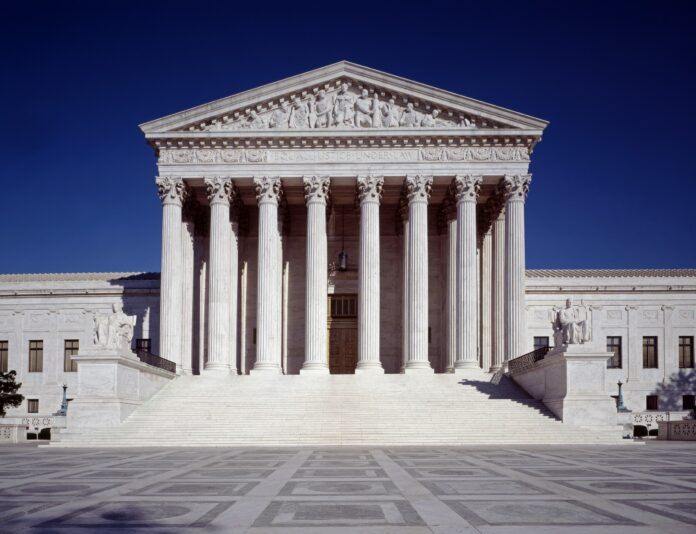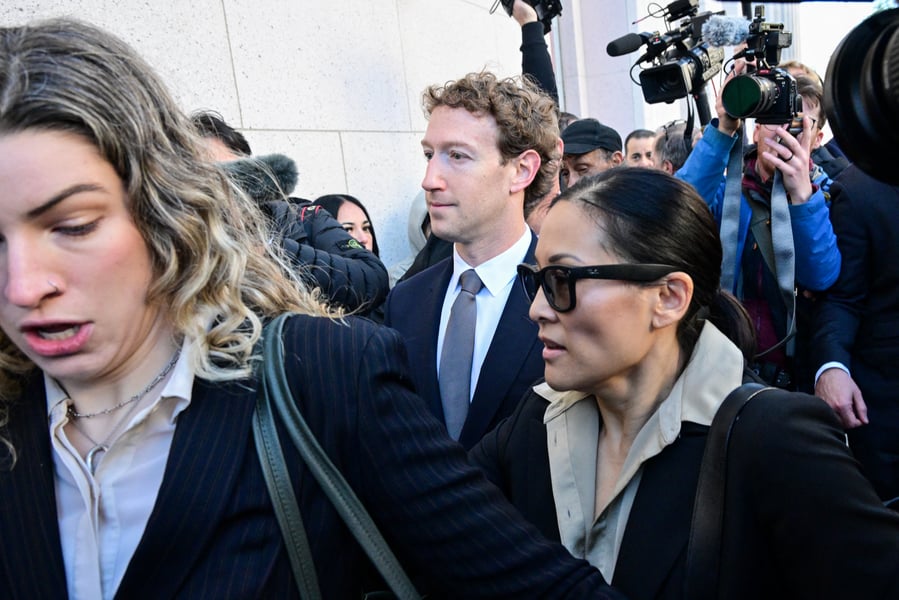

OAKLAND, Calif. — In a federal courthouse here Monday, the attorneys for four states stood before a judge and argued something that would have sounded improbable a decade ago: that the features designed to keep teenagers scrolling Instagram and Facebook constitute an unlawful product, and that Meta Platforms must pay for the harm those features caused.
The stakes they put before U.S. District Judge Yvonne Gonzalez Rogers were remarkable on their face: up to $1.4 trillion in civil penalties. The actual argument was narrower and, in some ways, more unsettling. Not that social media harmed children as an unintended consequence, but that Meta’s engineers built features with a calculated understanding of their psychological effects and then withheld that understanding from regulators, parents, and the public.
Four state attorneys general from California, Colorado, Kentucky, and New Jersey are jointly pursuing this federal case under the Children’s Online Privacy Protection Act and state consumer protection laws. The trial is expected to last six weeks, presided over by Judge Gonzalez Rogers in the Northern District of California.
The federal law at the center of the state claims, the Children’s Online Privacy Protection Act, known as COPPA and enacted in 1998, was designed in the era of dial-up internet to restrict how websites collect data from children under 13. The states argue Meta violated it systemically: allowing underage users to register accounts, collecting their behavioral data through algorithmic tracking, and using that data to serve engagement-maximizing content. Those violations, the states contend, were neither accidental nor isolated.
New Jersey Attorney General Jennifer Davenport opened with a sentence the courtroom will likely revisit in closing arguments: Meta had placed “profits over the health of a generation of young people.” That framing is intentionally blunt. It is also the precise framing the states believe is supported by what sits inside Meta’s internal research files.
What those files are expected to show, according to pretrial filings, is that Meta’s product teams studied Instagram’s effect on teenage girls, identified elevated rates of anxiety, depression, and body dysmorphia linked to algorithmic content curation, and continued optimizing for engagement rather than well-being. The company has disputed that characterization.

A Meta spokesperson dismissed the allegations outside the courthouse as “unsubstantiated,” saying they offered “no evidence of consumer deception.” That framing reflects where Meta’s legal strategy has settled: the company’s features are industry-standard tools, the spokesperson maintained, not instruments of manipulation.
That argument has faced a bruising stretch in recent months. In March, a Los Angeles jury found Meta liable for addictive social media design and awarded $6 million to an individual plaintiff. A New Mexico judge earlier this year ordered the company to pay $567 million under the New Mexico social media safety ruling, requiring restructured operations for teenage users, usage limits, notification restrictions, and AI-content safeguards. Both judgments are under appeal.
The Oakland trial proceeds against a legal backdrop the earlier cases did not enjoy. The Ninth Circuit ruled last month that Section 230 cannot shield Meta from social media addiction lawsuits when the claims are rooted in the design of the platform’s own features. With that protection removed, the four states are pursuing exactly the kind of design-focused liability argument that once seemed legally untenable.
The $1.4 trillion figure is not a litigation demand so much as a legal ceiling. COPPA violations carry statutory penalties of up to $51,744 per infraction. The states intend to argue that Meta collected data on children under 13 without parental consent at a scale that, multiplied by the statutory rate, reaches that figure. Whether Judge Gonzalez Rogers would ever apply that formula literally is a question that belongs to a different phase of the proceedings.
What happens over the next six weeks is less about a single verdict than about the public record the trial creates. Testimony, documents, and findings will persist regardless of how the jury rules. The March verdict established that juries can hold Meta liable. This trial aims to establish what Meta knew and when it knew it, a harder question and the one that reaches further.
The trial opens as Meta’s chief executive Mark Zuckerberg has shifted the company’s public positioning sharply toward artificial intelligence, announcing expansions in open-source model releases and AI-generated content features while the social platforms remain central to how young people spend their hours. Meta’s lawyers are expected to argue the two questions are legally separate. The states have indicated they do not intend to let that separation stand unchallenged.
What no verdict will settle is the question underlying the entire proceeding: whether social media platforms engineered for engagement at scale can be made genuinely safe for children without becoming something their business model cannot sustain. As NPR reported, the case could change Instagram and Facebook forever if states prevail. That outcome remains distant and contested. The courtroom provides a venue but not an answer.