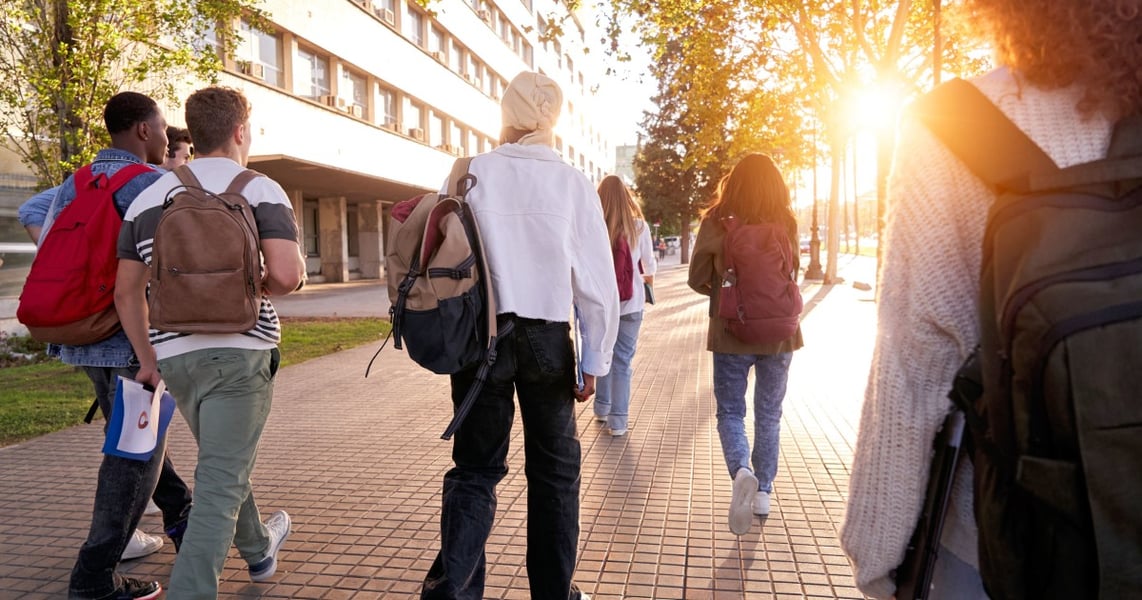

ATLANTA — For three years running, the question hung over pediatric clinics, school counselors, and emergency departments: whether what happened to American teenagers during the pandemic had become permanent. The CDC’s latest data, released Monday, offers the clearest signal yet that the answer is no. At least not entirely.
The agency’s CDC’s Youth Health in Focus report, drawing on the National Youth Risk Behavior Survey conducted in 2025 with more than 20,000 high school students, found that persistent sadness or hopelessness among teenagers dropped to 33 percent this year, down from 40 percent in 2023 and a peak of 42 percent in 2021. Suicidal ideation, the proportion of students who seriously considered attempting suicide, fell to 14 percent, compared with 20 percent two years ago.
Those are not small movements. They span three rounds of the biennial survey and represent, for the youth mental health research community, the most sustained documented improvement in adolescent well-being since the crisis deepened after 2015.
But the headline figures are the easiest part of this story. The harder part lives a few tables deeper in the report.
Among female students, persistent sadness stands at 43 percent in 2025. Nearly one in three reports poor mental health. Eighteen percent seriously considered suicide, and 15 percent made a plan. The improvement is real. The peak for girls was 57 percent in 2021, falling to 53 percent in 2023 before this year’s reading. Yet for all the progress in the aggregate numbers, close to half of American teenage girls are still telling federal researchers that they felt so sad or hopeless for at least two consecutive weeks that they stopped doing some usual activities.
Researchers generally attribute girls’ greater burden of reported distress to several overlapping factors:
- More exposure to appearance-focused social-media platforms.
- Greater sensitivity to disruptions in peer relationships.
- A stronger tendency to internalize distress, which is more likely to appear in surveys as sadness or hopelessness than in outward behavioral problems.
Because these structural conditions did not materially change between 2023 and 2025, they remain plausible explanations for why the gender gap persisted during that period. They describe population-level patterns, however, rather than determining how any individual adolescent will respond.
The CDC report also found reasons for measured optimism beyond mental health. For Generation Z students as a cohort, physical activity improved: the percentage who played on a sports team rose to 58 percent in 2025, up from 52 percent in 2023. More students reported eating fruits and vegetables daily and drinking water regularly. These are not dramatic shifts, but they represent movement in the right direction across multiple behavioral domains simultaneously.
Social media addiction researchers tracking platform engagement patterns may note that hourly-or-more social media use remained essentially flat at 36 percent, down only marginally from 37 percent the previous cycle. Whether that stability signals that interventions are working or that a ceiling has been reached is not something this survey cycle can answer.
NBC News reported the findings alongside commentary from public health officials who noted the convergence of multiple improved indicators as potentially significant, while cautioning that single survey cycles can overstate trends.

What it does not include this cycle is also significant, and has drawn attention from researchers and advocates since the data was released. The “Youth Health in Focus” edition omitted LGBTQ-specific data, which the previous YRBS cycle had presented separately given the well-documented higher rates of depression, suicidal ideation, and harassment among lesbian, gay, bisexual, transgender, and questioning students.
Whether the omission reflects a deliberate policy decision by the current administration or a methodological choice specific to this report’s framing has not been publicly explained by the CDC. The agency has not responded to questions about the gap. For clinicians and school counselors who work with LGBTQ youth, a population that prior YRBS data consistently showed experiencing sadness and suicidal ideation at roughly double the overall student rate, the missing data creates a blind spot at exactly the moment the rest of the picture is improving.
That gap matters for how the positive headline should be read. If LGBTQ students’ mental health has tracked upward with the overall trend, the aggregate improvement is broader and more durable than it looks. If that population has not improved, or has deteriorated under a more hostile legal and social environment in several states, then the headline number understates the ongoing scale of the crisis. Absent that data, neither conclusion can be drawn.

What Monday’s report confirms is that the 2025 readings are better than 2023 across five indicators: persistent sadness, poor mental health, suicidal ideation, suicide planning, and suicide attempts. For public health advocates who spent years watching those numbers worsen, the direction matters. The CDC data establishes the clearest documented baseline for recovery since the pandemic-era deterioration began.
Whether that recovery is durable, and whether it has reached the students whose data no longer appears in the report, is a question the next survey cycle may or may not be designed to answer.