

MENLO PARK — The harder sell at a Spectrum store was never broadband. It was persuading a customer that the next device they carry everywhere might sit on their face instead.
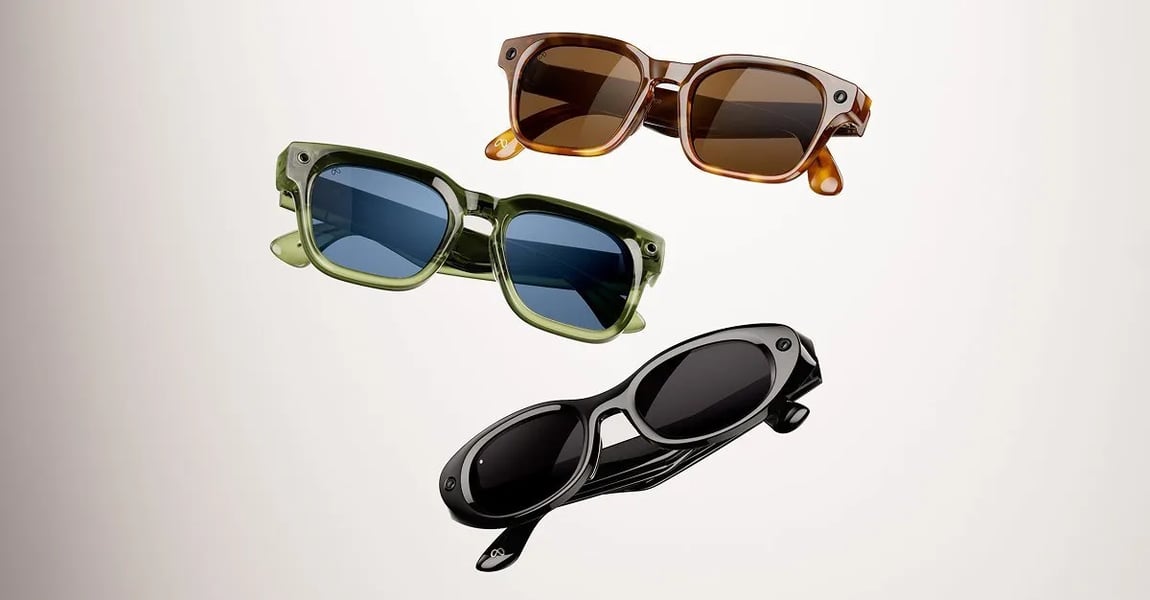
That pitch arrived this week when Charter Communications, the country’s second-largest cable operator, announced that Meta AI Glasses Adventurer, priced at $299, are now available at select Spectrum stores and on spectrum.com. The announcement landed 48 hours before Mark Zuckerberg takes the stage at Meta Connect 2026 on September 23. No separate mobile contract is required, no new account. The glasses pair to any compatible smartphone running iOS 14.2 or later, or Android 10 and above, and draw on Spectrum’s approximately 45 million secure WiFi access points for seamless connectivity at no additional fee.
The Spectrum deal is fundamentally a distribution bet, not merely a bet on the glasses themselves. Charter is trying to place AI eyewear at the moment consumers first consider buying it—through financing, bundling, and retail visibility—much as mobile carriers helped turn smartphones from specialty devices into default purchases.
Two product tiers
| Product | Starting price | Key difference |
|---|---|---|
| Meta Adventurer | $299 | Meta-branded hardware without a licensing premium |
| Ray-Ban Meta | $359 | EssilorLuxottica branding and Ray-Ban heritage |
The two models are described as functionally similar: a 12-megapixel camera, up to eight hours of battery life, Muse Spark AI, and prescription-lens support across 26 styles and multiple finishes.
The $60 gap matters because the Adventurer removes both the EssilorLuxottica brand fee and the Ray-Ban premium. For customers who specifically want Ray-Ban, the difference may be acceptable; for everyone else, Meta’s own-brand model offers a more compelling entry point.
Zuckerberg has been making the platform argument in unusually direct terms throughout 2026. “Glasses are the ideal form factor for you to be able to give an AI assistant the ability to see what you see, hear what you hear, talk to you throughout the day,” he told investors. His preferred analogy is the flip-phone transition: “It felt pretty clear that in five years or whatever, all of the flip phones were going to be smartphones, and that’s basically how I feel about glasses today.” Industry trackers recorded a 263 percent surge in global AI glasses shipments during the first half of 2026, with Meta holding 94 percent of the display-less segment and more than 7 million units sold in 2025. Zuckerberg’s commentary on the future of Meta Connect 2026 has framed the event less as a product launch and more as a platform declaration.
The Spectrum partnership takes the distribution argument a step further. Charter’s WiFi footprint, approximately 45 million access points across its cable network, integrates with the glasses without additional fees, making the hardware feel native to an infrastructure customers already pay for. No Amazon listing or Best Buy shelf can replicate that friction-reduction. Whether bundled connectivity converts lookers into buyers is still unproven. But it is the structurally correct move if Meta’s objective is mass-market penetration rather than sustained early-adopter sales.
Apple is the pressure that changes the timeline for all of this. John Ternus has redirected the company’s spatial computing roadmap away from Vision Pro successors and toward display-less smart glasses targeted for late 2027, with gesture controls and dual-camera input. Apple’s entry into carrier distribution channels, through deals with AT&T, Verizon, and T-Mobile that the company has run for every major iPhone cycle, would replicate what Charter is now building for Meta at a scale Charter cannot match. Meta’s current 94 percent market share exists in a market Apple has not yet entered.
The case against the Spectrum deal as a true inflection point is worth stating plainly. Buying AI glasses requires behavioral commitment that a new iPhone never demanded: wearing something on your face, accepting ambient audio capture, carrying a camera on your head in environments where a phone camera already reads as intrusive. Luna’s camera-free design is an acknowledgment of that resistance, not a dissolution of it. Removing the camera also removes the killer features. Whether the pushback against Meta’s smart glasses is an obstacle to mainstream adoption or a feature-set ceiling for the product is genuinely unresolved.
What the Spectrum deal does establish is where the fight for the glasses market will actually be contested. Not primarily in keynotes, not in sensor comparisons, but in retail infrastructure. Charter Communications has concluded, as its announcement confirmed, that the decision to buy AI glasses belongs alongside the decision to buy a phone plan.