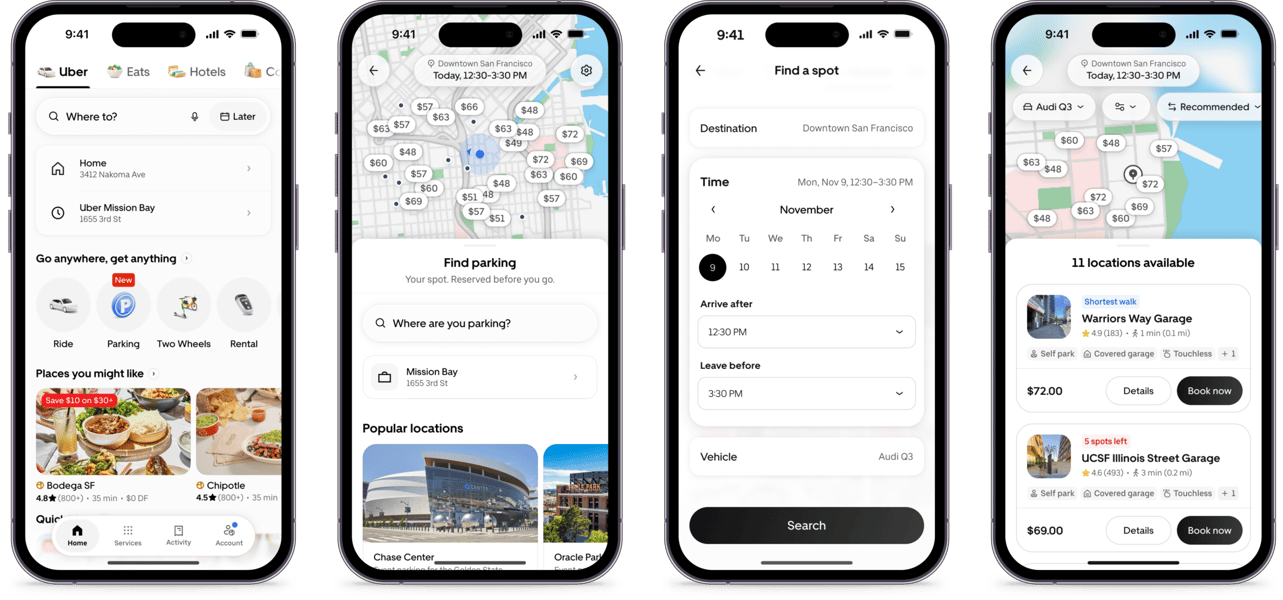

Uber is giving customers a reason to open its app even when they plan to drive themselves. The company launched parking reservations on November 9 in 15 US cities, bringing part of the SpotHero service it acquired into the same app used to book rides.
Drivers can compare parking locations on a map, pay through their Uber account and retrieve an entry pass without switching to a separate booking app. The launch covers garages, surface lots and valet options, rather than an announced system for reserving ordinary street parking.
The scale needs a qualification. Uber describes SpotHero’s network as more than 13,000 facilities across 400 cities in the United States and Canada. That is the network behind the acquisition, not a statement that Uber Parking is available in every one of those cities today.
Engadget’s launch report lists the initial markets as Atlanta, Austin, Boston, Chicago, Dallas, Denver, Los Angeles, Miami, Nashville, New York City, Philadelphia, San Diego, San Francisco, Seattle and Washington, DC. The distinction between those 15 markets and the broader network matters when checking whether the new icon produces bookable options near a particular destination.
In Uber’s November 9 announcement, vice president of product Amit Fulay presents the service as useful for people taking a ride or using their own car. The product extends Uber’s role from arranging the journey to handling a purchase at the end of it.
That is the immediate business change. A customer who chooses to drive has not bought a ride, but can still make a transaction through Uber. SpotHero supplies an established parking network for that purpose, rather than requiring Uber to begin with an empty map and recruit every facility from scratch. Neither the announcement nor Engadget’s report establishes what share of each reservation Uber will keep.
The booking process starts with the Parking icon on the home screen. Customers enter their destination, date and required time, then browse an interactive map with upfront prices. Filters distinguish self-parking from valet, garages from surface lots, and amenities such as on-site staff. The displayed options therefore depend on both where someone is going and when they need the space.
To complete a reservation, the customer enters the vehicle’s make, model and licence plate number, then pays using a method in Uber Wallet. Those details form part of the booking process; the company is not describing a reservation made solely against a person’s name or account.
Entry arrangements vary by facility. Uber says the parking pass remains available inside its app, with customers either scanning a unique QR code or entering through licence plate recognition. Drivers should not assume that every location uses the same check-in method simply because the payment was made through one platform.
Uber also says reservations can be extended in the app. Engadget reports that most parking options can be cancelled without charge until the reservation starts. The word “most” is important: that report does not establish a universal free-cancellation policy for every garage or lot, and the company’s launch post does not set out a complete schedule of cancellation terms.
The membership incentive has a similar condition. Uber One members can earn 10% back in Uber One credits on eligible completed parking reservations. The company says those credits can then be used on future Uber rides and Uber Eats orders. A reservation must qualify and be completed; merely holding a booking is not the condition described in the announcement.
Nor is the benefit an immediate 10% reduction in the parking price. A credit for a later transaction leaves a different decision for customers than a lower amount charged today. Its usefulness depends partly on whether the member subsequently buys an eligible ride or delivery order. The launch announcement does not explain every exclusion governing which parking reservations qualify.
The acquisition timeline also deserves care. Uber announced it was acquiring SpotHero in February, according to Engadget; the November announcement describes the parking launch as building on the acquisition. The new consumer feature is the development being announced now, rather than a newly disclosed agreement to buy the company.
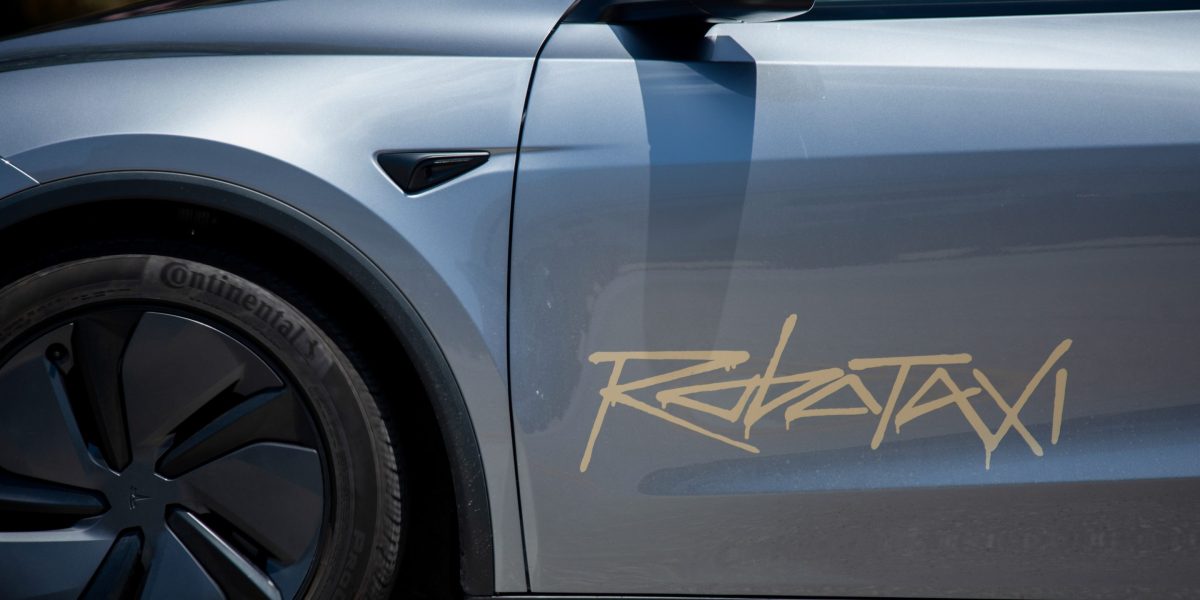
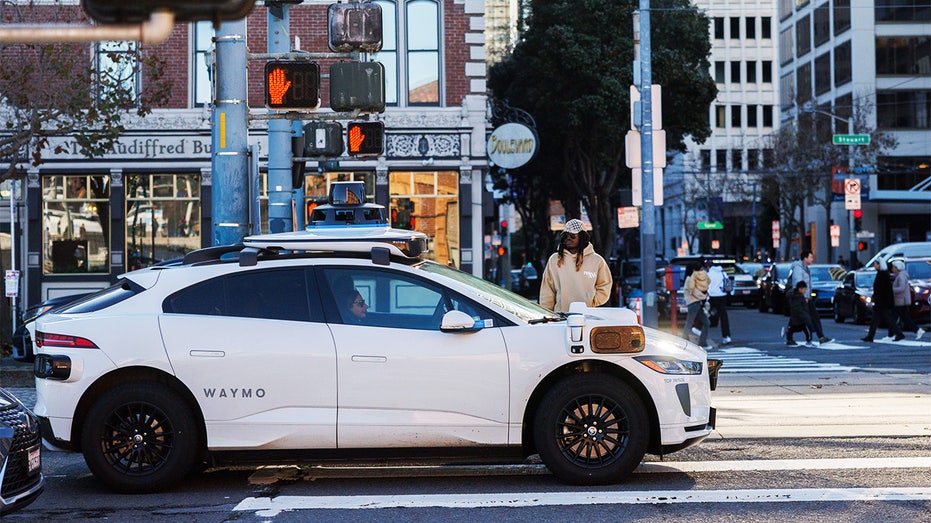
Beyond private motorists, Uber is considering a second use for the same kind of infrastructure. Engadget reports that the company plans to experiment with parking lots as staging areas for autonomous-vehicle fleets offered by its self-driving partners. That is an operational proposal, distinct from the reservations now offered to drivers of their own cars.
A place for an autonomous vehicle to wait between journeys could serve a different purpose from a space reserved by a commuter for several hours. The report does not establish that every parking facility in SpotHero’s network is equipped for autonomous fleets, charging or maintenance. A large inventory of commercial parking locations should not be treated as a completed robotaxi infrastructure rollout.
For customers, the practical question at launch is narrower: whether a suitable facility appears for their destination, time and vehicle, with acceptable entry and cancellation conditions. Eastern Herald has not independently tested availability, completed a booking or compared the app’s prices with direct garage rates.
Uber’s announcement provides no city-by-city expansion timetable. Its larger parking network offers room to expand, but customers outside the 15 launch markets do not yet have a dated promise of when those spaces will become bookable inside Uber.