
ROME — Italy’s airspace was running at about half its usual capacity on Friday morning after a fault in the data network that supports air traffic control, and the national air navigation provider could not yet say when full service would return.
ENAV, the provider, said the anomalies appeared overnight between Thursday and Friday. Its contingency systems kept traffic moving normally, with no loss of capacity, until 6 a.m. As traffic built and the faults persisted, it introduced flow-regulation measures that temporarily cut the number of aircraft Italian airspace can handle. By ENAV’s own estimate, capacity was down by about 50 percent when it issued its statement on Friday morning.
The agency has ruled out a cyberattack or sabotage, and technical checks have traced the origin to the data transmission network itself. That is nearly all it has said. It has not named the failed component, the supplier or the site, and it has not said how long the repair will take.
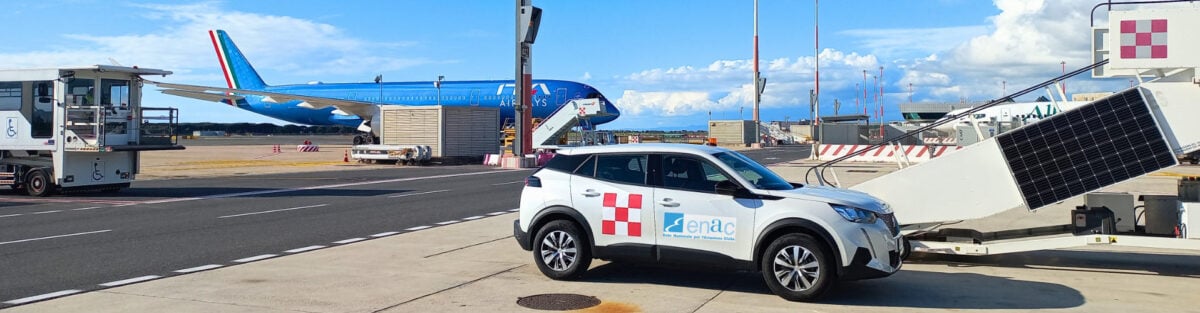
The effects were visible by mid-morning. Euronews reported at least four cancelled flights at Rome Fiumicino, to Milan Linate, Riyadh, Tirana and Trieste, while other services were delayed by up to 60 minutes. Milan Linate, Milan Malpensa and Naples Capodichino also reported delays and cancellations, and airport operators told passengers to check their flight status with their airlines. No overall count of cancellations or delays had been published at the time of writing, and no report of a return to full capacity had appeared.
The outage recalls a night in June 2025. In Euronews’s account, a breakdown affecting the Milan Area Control Centre, which ENAV described as a data transmission and connectivity problem, lasted about two hours from 21:00 and left more than 300 flights cancelled or diverted. ENAV said around midnight that it was resolved. Pierluigi Di Palma, president of the civil aviation authority Enac, told ANSA that an investigation was under way to understand the origins of the breakdown.
The two events are not identical. The 2025 failure sat in one control centre in the north and lasted a couple of hours on a Saturday night. This one, in ENAV’s description, spans the entire national territory and began in the dark but was still unresolved when the morning departure waves arrived. TEH could not find a published conclusion from the 2025 inquiry, so it is unclear whether any lesson from that night applied here.
ENAV’s statement says its contingency systems held until 6 a.m. It does not say how long they could have held, or why a fault that began overnight was still unresolved when the first banks of flights needed it.