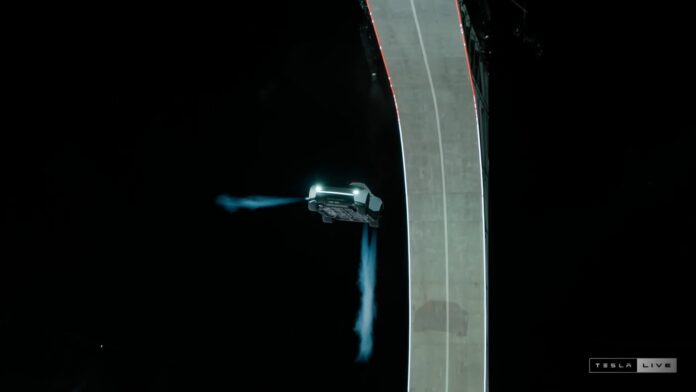

NEW YORK — Tesla asked the state of Nevada for permission to run 5,000 autonomous vehicles in Las Vegas. It was granted ten.
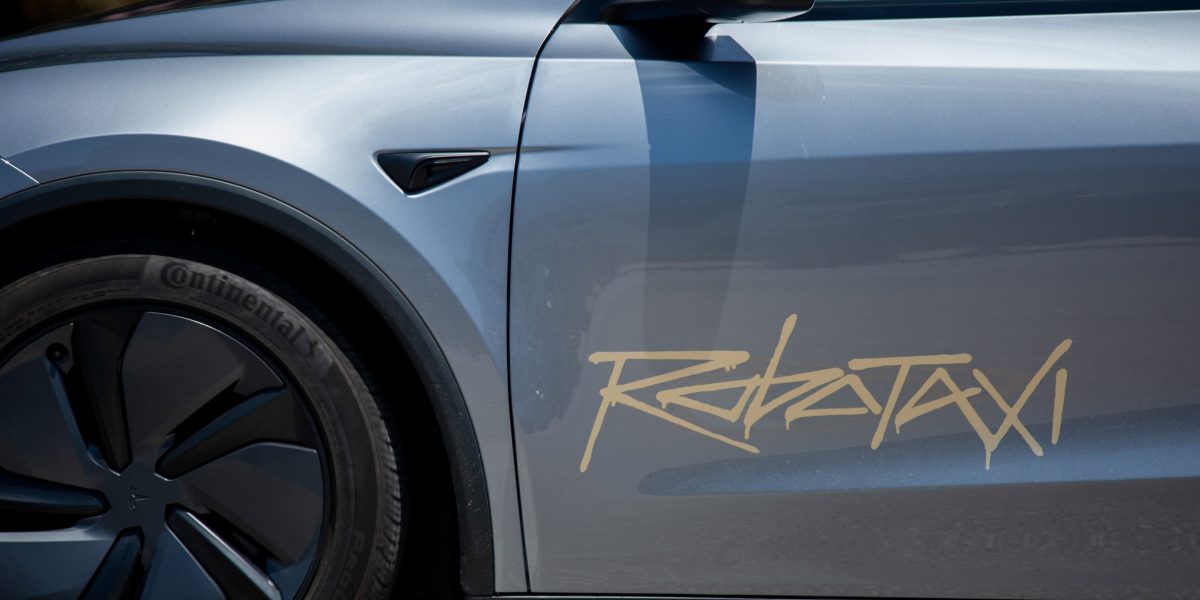
The conditions attached to those ten are worth reading in full. They may operate on one approved corridor of the Strip, at no more than 45 mph. They may not pick up within a quarter of a mile of the airport. Each vehicle must carry the word Robotaxi on its body. And each must be supervised by a human being.
A spokesperson for the Nevada Transportation Authority told Fortune that the initial ten were an interim capacity and that a further hearing would determine whether the company gets the full 5,000. Tesla did not respond to Fortune’s request for comment.
Tesla shares fell 2.40 per cent to $354.13 on Monday afternoon in New York and now sit 29.0 per cent below their 52-week high of $498.83. The wider market was not the cause. The Dow was up 0.14 per cent.
TSLA Stock Today: The Numbers
| Instrument | Price | Session | Below 52-week high |
|---|---|---|---|
| Tesla (TSLA) | $354.13 | -2.40% | -29.0% |
| Nasdaq 100 | 29,077.54 | -0.79% | -5.5% |
| Nasdaq composite | 26,036.82 | -0.55% | -4.2% |
| S&P 500 | 7,654.72 | -0.26% | -2.1% |
| Dow Jones Industrial Average | 53,351.46 | +0.14% | -2.5% |
| PHLX Semiconductor Index (SOX) | 11,432.75 | -2.62% | -22.0% |
| Live intraday quotes, not settlements. Distance from the 52-week high is Eastern Herald’s calculation from the quoted price. Tesla’s 52-week low is $297.38, so the shares sit roughly 19 per cent above the bottom of their range and 29 per cent below the top. | |||
The Car Business Is the Part That Works
The irony of Tesla in 2026 is that the division nobody wants to discuss is the one delivering. Second-quarter deliveries came to 480,126 vehicles, a record, up 25 per cent on a year earlier, and the revenue line follows.
| Revenue line | Q2 2026 ($m) | Q2 2025 ($m) | Change |
|---|---|---|---|
| Automotive sales | 20,006 | 15,787 | +27% |
| Automotive regulatory credits | 146 | 439 | -67% |
| Automotive leasing | 364 | 435 | -16% |
| Energy generation and storage | 3,139 | 2,789 | +13% |
| Services and other | 4,581 | 3,046 | +50% |
| Total revenues | 28,236 | 22,496 | +26% |
| Gross profit | 4,751 | 3,878 | +23% |
| Gross margin | 16.8% | 17.2% | -0.4 pts |
| Figures as reported. Percentages and the margin ratios are Eastern Herald’s calculation from the reported amounts. Regulatory credits carry essentially no cost of revenue, so the $293 million decline in that line is a direct reduction in gross profit. | |||
That table, from the quarterly report Tesla filed with the Securities and Exchange Commission, contains a line most coverage skips. Regulatory credit revenue fell from $439 million to $146 million, a decline of two thirds.
Those credits are sold to other carmakers who need them to meet emissions rules, and they carry almost no cost, which makes them close to pure profit. Losing $293 million of them is why gross margin slipped to 16.8 per cent from 17.2 even as revenue grew 26 per cent. Strip the credits out of both years and the underlying business improved; leave them in and the margin went backwards. It is a large industrial business executing well, with a subsidy quietly draining out of it.
The autonomy business, on the evidence available, is not scaling. Tesla launched Robotaxi in three Florida cities in July. But its Robotaxi network drove fewer miles for paying customers in the second quarter than it had in the first. Elon Musk’s explanation was that the company needs to accumulate driving data specific to the Cybercab before it can scale, using Cybercabs retrofitted with steering wheels and pedals to calibrate to the chassis.
That is a reasonable engineering answer. It is also an admission that the timeline has moved, and it arrived in the same quarter that paid autonomous mileage went backwards.
Half the Call Is About Robots
The clearest measure of where management’s attention sits is the earnings call itself, and it has been counted. TechCrunch, working with the financial research firm Hudson Labs, analysed seven years of Tesla earnings-call transcripts drawn from S&P Market Intelligence, assigning a topic to each sentence.
Musk now spends about half his remarks on AI, robotaxis and Full Self-Driving, and under a third on cars and manufacturing. In 2022 autonomy and AI took 15 to 20 per cent of his time. Robotics alone went from 2 or 3 per cent in 2021 and 2022 to roughly a third by late 2025. Chief financial officer Vaibhav Taneja still gives around 30 per cent of his remarks to the automotive business, which is its own quiet commentary.

The methodology is disclosed and the direction is not really in dispute. What it means is contested. A chief executive talking about the future is doing his job. A chief executive talking about the future while the present funds everything is a different proposition, and shareholders are entitled to notice which one they are buying.
Optimus Has Already Cost Something Real
The robot programme is no longer only a slide. Tesla decommissioned the Model S and Model X production lines at Fremont and began construction there for Optimus, with production anticipated later this year. The company has spoken of Optimus Gen 3 entering production before the end of 2026 and of an eventual capacity of a million robots a year.
That is the part of the story with a price attached. Two vehicle lines that generated revenue have been retired to make room for a product that has not yet sold a unit. It may prove the correct trade. It is, unambiguously, a trade.
How Monday Fits
Tesla fell on a day when almost everything exposed to the artificial-intelligence trade fell. The semiconductor index dropped 2.62 per cent, AMD lost more than 3 per cent and Nvidia slipped ahead of Wednesday’s results.
But Tesla is not a semiconductor company, and its decline is doing something slightly different. Money leaving chips is leaving a trade with contracted revenue behind it. Money leaving Tesla is leaving a valuation built on autonomy and robots, at a moment when the autonomy business is being rationed by a state regulator ten vehicles at a time. Our Nasdaq column for Monday shows how narrow the selling was: roughly half the largest Nasdaq companies rose.
What This Column Cannot Tell You Yet
We do not know how many paying robotaxi miles Tesla is running now. The company disclosed a quarter-on-quarter decline but not the absolute figure, and without it there is no way to judge whether the Florida launch has changed the trajectory or simply added three cities to a small number.
We also do not know what the Nevada hearing will decide, or when. The regulator has said the ten vehicles are interim and that a further hearing will consider the full application. Until that happens, the gap between 5,000 and 10 is the single most concrete number in the Tesla autonomy story, and it is not one the company chose to publish.