
FASTag now clears most national highway tolls without cash or queues. This article explains how the system works, what drivers pay, and how recharge timing avoids extra charges.
Most drivers tap their FASTag balance once a month and forget about it until a toll lane rejects the tag. That single oversight then costs double the toll, a longer queue, and a few minutes of arguing with the booth operator. FASTag was built to remove exactly this kind of friction from highway travel, yet many drivers still treat it as an afterthought rather than a habit worth managing properly.
Bajaj Pay closes that gap. It shows your FASTag balance before you pay, working as both an information tool and a payment tool. Recharge via Bajaj Pay using UPI, cards, net banking, or a wallet, knowing the amount upfront.
How FASTag actually works at a toll booth
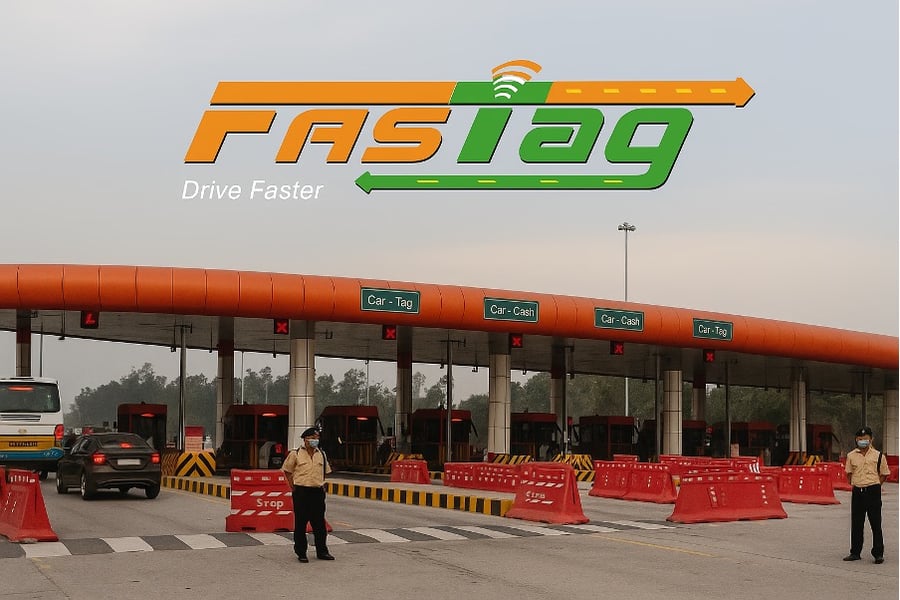
A FASTag is a small RFID sticker on your windscreen. The scanner at the toll plaza reads it as your car passes through. Your linked account gets charged for the toll right away. There is no stopping, no cash, and no manual entry.
This one change has reshaped Indian highways. Per NHAI data, FASTag now covers over 98 percent of toll transactions on national highways. More than 11 crore tags are active across the country. That is the scale that made cash lanes nearly disappear.
If you do not have a tag yet, the setup itself is quick. You can learn how to activate FASTag through your bank or a FASTag issuer. The whole process takes a few simple steps, done well before your trip.
Why your recharge timing matters more than you think
A low or empty balance changes how your trip goes. Per NPCI’s dispute rules, a blacklisted tag gets a short grace window at the next plaza. Miss that window, and you pay the toll manually instead. That manual payment often costs double the standard rate.
There is an easy fix for this. Book your FASTag recharge a day or two before a long trip. Do not wait until you reach the last toll plaza.
This single habit avoids the double charge. It also avoids the queue that forms when a scanner flags your tag for review.
| Situation | What happens | Cost to you |
| Tag balance sufficient | Toll deducted automatically | Standard toll only |
| Tag inactive or blacklisted | Grace window to recharge at next plaza | Standard toll if fixed in time |
| No valid FASTag at all | Manual lane or UPI payment | Up to 1.25 to 2 times the toll |
| Annual Pass active | No deduction at toll, prepaid coverage | Covered under the pass |
FASTag is no longer optional, even if you carry cash
FASTag has grown past the point of being a convenience. Per NHAI data, the system handled close to 27 crore transactions in October 2025 alone, worth around Rs. 4,781 crore.
That scale comes with a side effect worth knowing. Per a Ministry of Road Transport and Highways notification, toll plazas have shifted to fully digital payment. A vehicle without a valid tag is no longer turned away. It is simply charged more, often with no staffed cash counter left to fall back on.
This matters most on quieter routes. A dead FASTag at a smaller plaza can leave you stuck paying a penalty with no easy way around it, since the lane built for manual payment may no longer exist.
The Annual Pass: a real saving for frequent drivers
Tracking only your FASTag recharge habit is not enough. Per a PIB press release, the government launched a FASTag Annual Pass on 15 August 2025. It covers over 1,150 toll plazas.
The pass runs for one year or 200 toll crossings, whichever comes first. Launch pricing for the pass was Rs. 3,000.
Per NHAI’s updated fee notice, this was revised to Rs. 3,075 from 1 April 2026 for the new financial year.
Within six months, per a PIB press release, the pass had crossed 50 lakh users. It recorded more than 26.55 crore transactions in that period. Frequent highway drivers clearly found value in paying once instead of recharging again and again.
If you cross a toll plaza often, try this rule of thumb. Work out your usual monthly toll spend. Then compare it with the Annual Pass cost. For many regular commuters, the pass works out cheaper across a full year than repeated top-ups.
Regular FASTag versus the Annual Pass
| Feature | Regular FASTag recharge | FASTag Annual Pass |
| Payment style | Top up as needed | One-time yearly payment |
| Best suited for | Occasional highway trips | Frequent or daily commuters |
| Cost basis | Per toll crossing | Fixed at Rs. 3,075 (FY 2026-27) |
| Coverage | All toll plazas on the network | 1,150 plus specified plazas |
Plans are indicative. Actual pricing may vary. Toll fees and pass charges are subject to change.
Recharging your FASTag through the Bajaj Finance platform
Keeping your FASTag funded on time avoids double tolls and slow lanes on your next trip. Bajaj Pay lets you check your balance and recharge it in a few steps, on the app or the website, before you reach the booth.
- Open the Bajaj Finance app or visit bajajfinserv. in and log in.
- Go to ‘Bills and Recharges’ and select ‘FASTag’.
- Select your bank or FASTag issuer and enter your vehicle number.
- Review the balance and recharge amount before confirming.
- Choose a payment method and complete the transaction to receive instant confirmation.
FASTag has moved from a convenience to the default way India pays tolls, and recharge timing is now the main thing within your control. Top up before a trip, not during one, and consider the Annual Pass if you cross plazas often. Both choices save you money and time today.