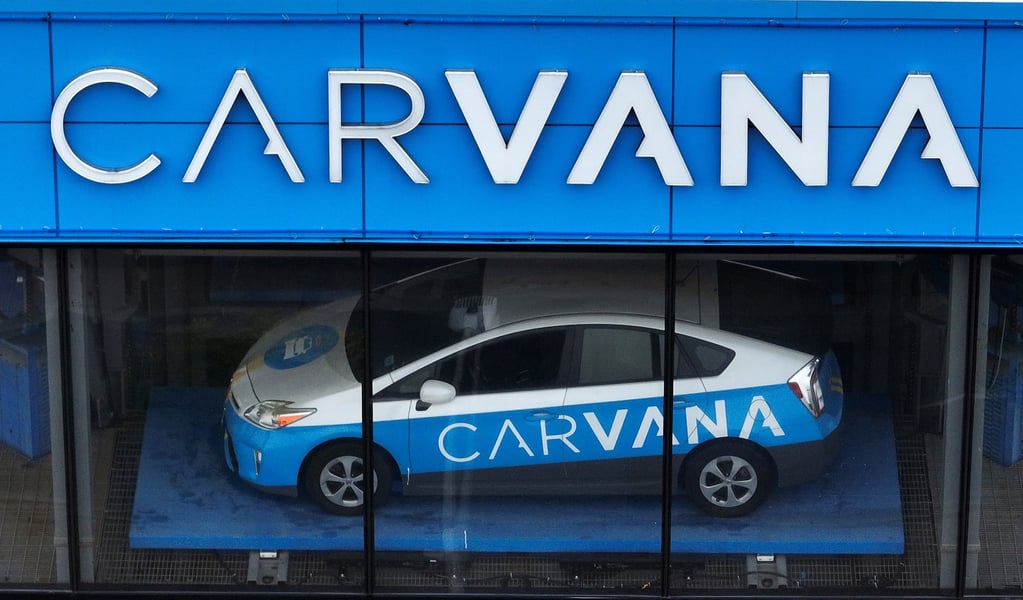

TEMPE, Ariz. – Three years ago, Carvana Co. was in negotiations with its creditors about the terms of its debt. On Wednesday, the Tempe-based online used-car marketplace announced the best quarter in company history. By the time after-hours trading closed, the stock had fallen 15 percent.
The tension in that sequence captures what investors found when they looked past the headline.
The figures for the three months ended June 30 were genuine records across every metric the company publicly tracks. Total revenue reached $7.38 billion, up 52 percent year over year. Net income came in at $513 million, against $308 million in the comparable period last year. Retail unit sales rose 38 percent to 197,325 vehicles, the tenth consecutive quarter in which Carvana held its position as the fastest-growing major automotive retailer in the country, according to the company’s earnings release. Adjusted EBITDA reached a record $769 million.
What the numbers beneath the headline showed was more complicated. Gross profit per retail unit, the metric investors in this company have treated as the clearest proxy for operational health, fell roughly 6 percent year over year to $7,014. The adjusted EBITDA margin slid from 12.4 percent in the same quarter last year to 10.4 percent now. The business sold meaningfully more cars and earned meaningfully less per car in the same quarter, a combination that tends to unsettle investors who read Carvana as a margin story rather than a volume story.
There was a second figure that did not appear prominently in Wednesday’s release. Of the $513 million in net income Carvana posted, approximately $349 million, nearly 70 percent, came not from the retail sale of used vehicles but from the origination and subsequent sale of auto loans. The finance unit’s contribution is not unusual for an automotive retailer operating a captive lending business alongside its car-sales platform. It does add a layer of complexity to any reading of the quarter as a pure retail turnaround.

The turnaround itself is real. At the end of 2022, Carvana’s stock had shed 99 percent of its value. Cash on hand stood at $434 million against annual cash consumption of roughly $1.8 billion. The company never used the word bankruptcy, though market participants used it freely. In July 2023, a restructuring led by Apollo Global Management exchanged Carvana’s unsecured debt for new senior-secured obligations backed by its real estate holdings and vehicle inventory. A restructured balance sheet bought the company room to operate. What followed was ten consecutive quarters of unit growth, margin recovery, and a stock price that recovered enough to make the crisis feel, in retrospect, like a closed chapter.
The macroeconomic environment has been favorable to used-car dealers in ways that Carvana’s own execution did not produce. Import tariffs imposed under the Trump administration have added to the sticker price of new vehicles, a pressure that redirected a portion of buyers who might otherwise have purchased new into the used market. That demand shift lifted used-car transaction volumes across the sector in the second quarter, and Carvana, with the broadest national digital footprint among pure-play used-car retailers, captured a large share of that incremental demand. Whether the growth in units reflects the model’s competitive advantages or a favorable market current is a question the results do not definitively answer.
Chief Executive Ernie Garcia framed the quarter in terms of market share rather than margins. The company operates at an annual run-rate of roughly 800,000 retail units, Garcia noted, representing just 1.5 percent of the U.S. automotive market. The implicit argument is that the addressable runway justifies prioritizing volume over per-unit profitability in the near term. Garcia said execution would remain the company’s primary focus. He did not specify when gross profit per unit might return to year-ago levels.
The full-year guidance Carvana provided reinforced the scale-over-margin posture. The company projected adjusted EBITDA of between $2.7 billion and $3.0 billion for 2026, a range whose midpoint of $2.85 billion came in slightly below the analyst consensus of $2.99 billion. Management forecast a sequential increase in retail units for the third quarter but offered no per-unit margin target. The pattern echoed what much of the Q2 earnings season has produced among high-growth companies: record revenues accompanied by margin signals that investors read as more consequential than the top-line figures suggest.
The auto loan environment has added its own complications. The Federal Reserve’s extended pause on rate adjustments has kept borrowing costs elevated for buyers financing used-vehicle purchases, putting monthly payments above what many buyers anticipated entering the market. The absence of clear forward guidance from Federal Reserve Chair Kevin Warsh on the path of rate cuts has extended that uncertainty into the second half of the year, a constraint that affects both buyer purchasing power and the profitability of the finance originations that now account for the majority of Carvana’s reported net income.
At 197,325 vehicles sold in a single quarter, Carvana is no longer testing whether its model can work at scale. The question it is now being asked is different: whether the gross profit per unit its retail operation can sustain on its own, as the supply constraints of the post-pandemic years ease and competition for available used-car inventory intensifies among both digital and physical dealers, is sufficient to justify the growth premium its shares have carried since the 2023 debt restructuring. The 15 percent after-hours decline was a market judgment that the answer to that question is not yet clear. That is not a verdict against the turnaround. It is a verdict against the assumption that its most favorable chapter still lies ahead.