
MENLO PARK — Mark Zuckerberg delivered Meta Platforms Inc. (META) its best revenue quarter in company history on Wednesday. The stock fell more than four percent when markets closed.
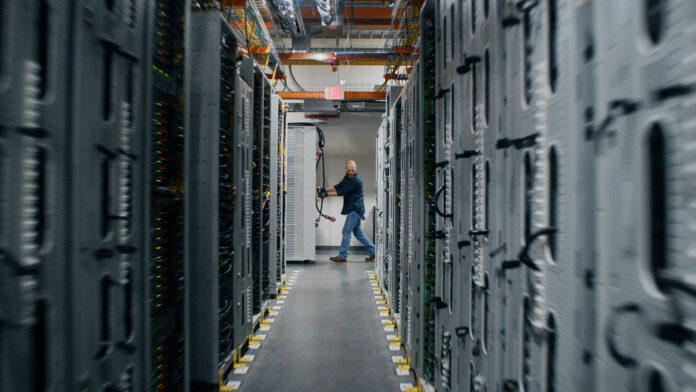
The disconnect between those two facts has a specific dollar amount. Meta generated $31.9 billion in cash from its operations during the three months ended June 30. After the company spent $31.1 billion on data centers, chips, and the sprawling AI infrastructure Zuckerberg has staked the company’s future on, $784 million remained. That is free cash flow. In the same quarter last year, the figure was $8.5 billion.
Revenue came in at $60.8 billion, a 28 percent increase from the prior year and approximately $620 million above the Wall Street consensus. Earnings per share landed at $6.18, missing the analyst expectation of $7.10 by nearly a dollar. Net income fell 14 percent to $15.8 billion. The second-quarter results were released Wednesday after U.S. markets closed, according to Meta’s official earnings release.
For investors trying to understand where the profit went, the income statement gives the answer: total costs were $42 billion for the quarter, up 55 percent from a year ago. Embedded in that figure were $2.4 billion in charges related to unspecified legal proceedings and $1.18 billion in severance expenses connected to the elimination of roughly 8,000 positions announced in May. Meta’s chief financial officer, Susan Li, said the company continues to see scrutiny on youth-related issues in several markets and has youth-related trials scheduled in the United States this year that may result in a material loss. Meta is not losing money. It is spending and paying money at a rate that is outrunning the revenue growth it is generating, and the gap between what the company earns and what it keeps is widening with each quarter.
Zuckerberg raised the full-year capital expenditure guidance to between $130 billion and $145 billion, up from the $113 billion to $128 billion range the company had projected in April. The revision adds roughly $17 billion at the midpoint to an already unprecedented infrastructure commitment. “AI is accelerating our core business today, powering our next generation of products, and opening the door to entirely new enterprise opportunities,” Zuckerberg told investors on the earnings call. The timeline for returns on that investment, pressed by multiple analysts, was not specified.
Meta had been signaling this trajectory for months before Wednesday’s numbers arrived. In early July, the company announced a C$13 billion AI data center in Alberta, Canada, its largest outside the United States and a marker of how broadly the capital commitment extends beyond domestic data centers. In the same period, Zuckerberg told company staff that AI agent development was moving more slowly than he had expected. That admission and the decision to accelerate spending by another $17 billion occupy the same frame.
Reality Labs, the division responsible for Meta’s augmented reality and virtual reality products, posted a $4.6 billion loss for the quarter. The division has recorded quarterly losses without interruption since Zuckerberg committed the company’s near-term reputation to the metaverse in 2021. Cumulative losses from that pivot exceed $60 billion. The AI pivot that followed it is drawing more capital, not less, and no quarterly profit target for the division has been provided.
After-hours trading sent the stock to approximately $560.85 from a close of $585.61, a decline of about 4.2 percent. The sell-off reflects a calculation investors are increasingly applying across large technology companies running major AI buildouts: at what multiple does spending of this scale justify the eventual return? The question is not unique to Meta, but Meta’s quarterly numbers make it impossible to avoid.
Meta’s core Family of Apps, comprising Facebook, Instagram, WhatsApp, and Messenger, remains the underlying engine. Advertising revenue across the suite grew 27 percent in the quarter. Daily active people across all apps reached 3.41 billion, a new company record. Zuckerberg has argued that AI-optimized ad targeting is already making each advertising impression more valuable, providing the near-term commercial justification for the infrastructure expenditure. The earnings release contains no data quantifying that effect separately from broader advertising growth.
The company’s AI products carry no dedicated revenue line in its financial reporting. Llama, the open-source model family Meta distributes without a licensing fee, generates no direct revenue. Muse Spark 1.1, the coding assistant Meta launched in early July to compete against OpenAI and Anthropic, carries a per-token price but its revenue is not disclosed separately. The gap between capital being deployed into AI and revenue attributable to that AI remained open after Wednesday’s earnings call.
Revenue guidance for the third quarter was set at $61 billion to $64 billion, implying continued growth of roughly 25 percent year-over-year at the midpoint. That guidance was above the prevailing consensus and points to continued top-line momentum. The open question for the remainder of the year is whether operating margins stabilize as the infrastructure build levels off or continue compressing as spending accelerates through the second half.
Wednesday’s results arrived into a difficult market. The Federal Reserve held interest rates steady while noting persistent inflation concerns, a decision that sent the Dow Jones Industrial Average down more than 1,100 points in the session. For highly valued technology companies already facing questions about the pace of AI returns, the combination of sticky rates and earnings misses made for a difficult Wednesday close. Meta’s stock had entered the session carrying those broader pressures alongside its own numbers.