
EDMONTON – The next time Meta’s recommendation algorithm decides what you see on Facebook, or its Llama AI model answers a developer’s query, some of that computation may run through a C$13 billion facility under construction in Alberta – if Meta can secure the land, power, and regulatory approvals it needs to build it.
Meta announced this week that it plans to build its first data centre in Canada north of Edmonton, Alberta, a facility the company describes as its largest single infrastructure commitment outside the United States. The investment, worth approximately nine billion US dollars at current exchange rates, is part of a capital spending programme that has seen Meta commit over 60 billion dollars globally in 2026 as chief executive Mark Zuckerberg repositions the company as an AI infrastructure player. Reuters reported the announcement Wednesday.
Alberta was an unusual destination for a project of this scale. Data centre development has historically concentrated in American states – Virginia, Texas, Oregon – where land costs are low, power grids are extensive, and permitting is well-understood. Canada has attracted some European-scale data centre investment before, but no single facility in Canada has approached this figure.
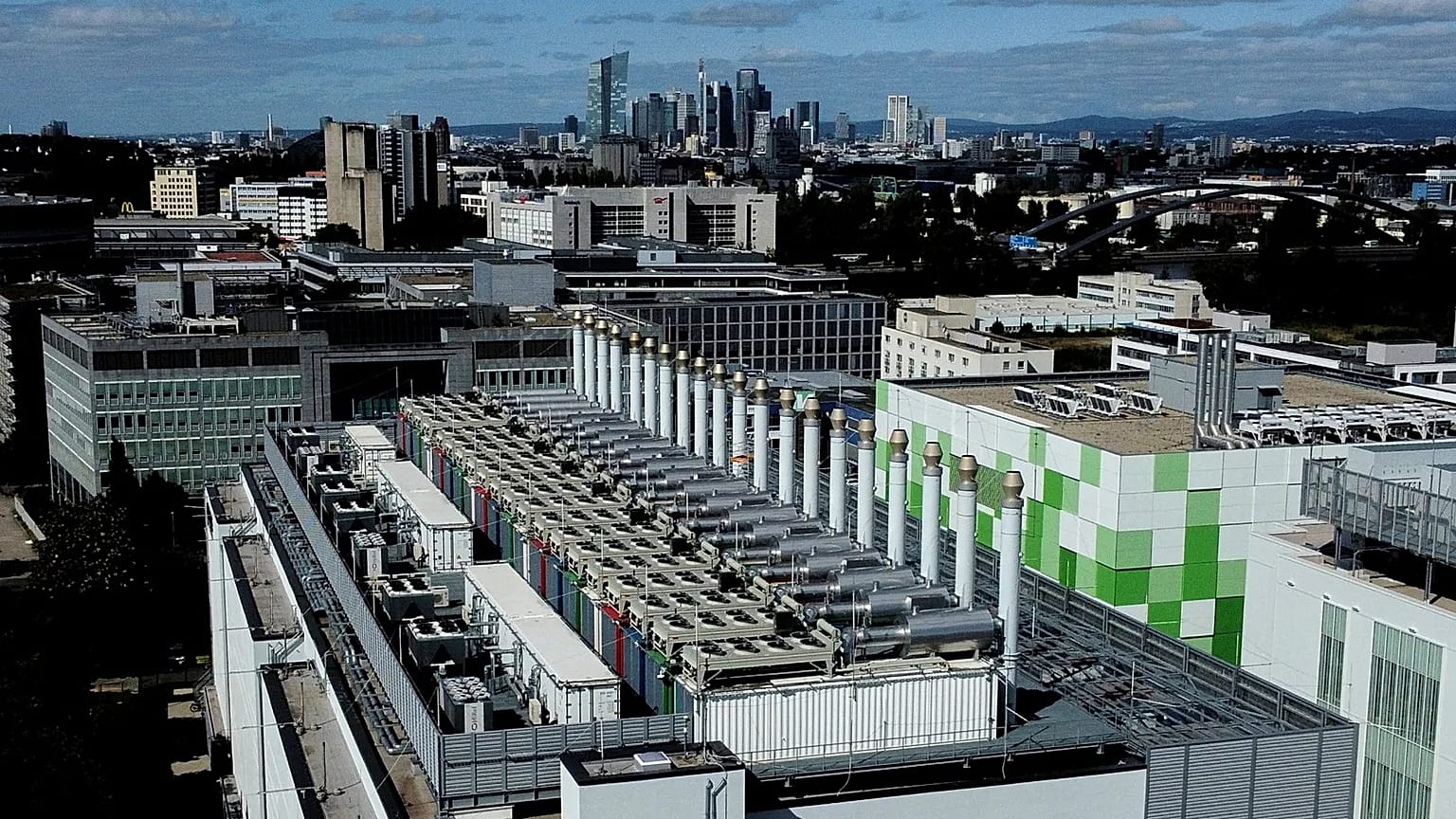
The physics of the decision are straightforward. Data centres generate enormous heat. Cooling that heat – whether through water, refrigerants, or outside air – is one of the industry’s largest operating costs. Alberta’s climate, where temperatures stay below freezing for months at a time, allows operators to use what the industry calls “free cooling,” circulating cold outside air through the facility and substantially reducing electricity consumption. That advantage compounds in a deregulated energy market. Alberta’s electricity grid, unlike most Canadian provinces, allows large buyers to negotiate directly with generators rather than buying at regulated utility rates – giving Meta more flexibility than it would have in Ontario or British Columbia.
What Meta has not said publicly is how it plans to source that power. Alberta’s electricity grid runs heavily on natural gas. A data centre this size would require hundreds of megawatts of continuous capacity. If that power comes from gas generation, the carbon footprint of Meta’s Canadian AI operations would be substantial. Meta did not respond to questions on this point before publication.
The announcement landed with immediate political weight in Alberta. Premier Danielle Smith called it a “transformative” moment for the province, framing it as economic diversification at a time when Alberta’s reliance on oil and gas revenues has made it politically vulnerable to energy transition pressures. Neither the province nor Meta has released specific employment commitments or a construction timeline.
Canada’s federal government also moved to claim ownership of the moment. Prime Minister Mark Carney’s government has spent 2026 positioning the country as a stable destination for technology investment, pitching Canada as an alternative for companies unsettled by the Trump administration’s trade posture. Meta’s announcement fits that pitch – though the relationship is not without friction. India’s technology ministry recently gave Meta seven days to explain how Instagram approved child abuse advertisements, a reminder that the company’s content moderation record is a live political question across jurisdictions.
The scale of what Meta is proposing is worth quantifying. C$13 billion represents roughly the equivalent of Canada’s total annual federal investment in all scientific research. The site is described as north of Edmonton but no specific municipality has been named. In the data centre industry, large announcements and actual groundbreaking are routinely separated by years; regulatory approvals, grid connections, and infrastructure buildout are each capable of introducing significant delays.
Meta is not alone in its ambitions for Canadian territory. Microsoft, Google, and Amazon have all announced Canadian expansions over the past two years, drawn by similar physics and similar political calculations. But no single company has committed a figure approaching C$13 billion for a single Canadian site. This is not incremental expansion – it is a bet that the Canadian grid can support true at-scale AI compute.
The questions that follow from Meta’s bet are the ones the company has not answered. Indigenous land rights consultations – normally required for large developments in Alberta – have not been publicly addressed. Water usage, which data centres require in significant quantities even when using air cooling, is another variable unaccounted for in the announcement. The grid capacity question may be the most pressing: Alberta’s electricity system has not been built to absorb the kind of continuous high-watt demand that a facility of this size represents. The wider AI industry’s relationship with governments on infrastructure and energy questions is still being negotiated – and Alberta is now in the middle of that conversation.
Anthropic, meanwhile, is in early talks with Samsung to build its first custom 2nm AI chip – a move that points toward a broader pattern: the hyperscalers and AI labs are all building deeper into hardware and physical infrastructure simultaneously. The Alberta announcement is Meta’s version of that pattern, at a scale that is hard to overstate.
Whether the C$13 billion figure gets spent or becomes another press release waiting on power connection approvals is the question the announcement does not settle. What it does settle is the direction. Canada – specifically Alberta – is now a target in a global race for AI compute capacity that the province has, until now, largely been invisible in.