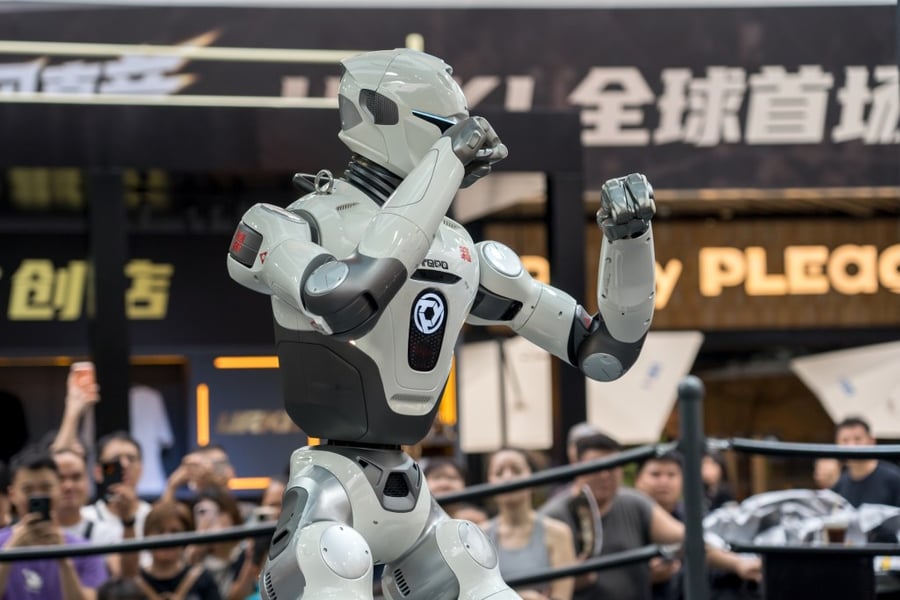

WASHINGTON — For the Chinese manufacturers who have spent years building the world’s most advanced humanoid robots and solar inverters, Tuesday was the day Washington finally decided they were not welcome. The Federal Communications Commission announced a ban on new imports of foreign-made humanoid robots, four-legged robot dogs and power inverters, warning that the devices, predominantly those made in China, could be used for surveillance or remote cyberattacks against the United States. The announcement’s security rationale was sweeping. The supporting evidence was not.
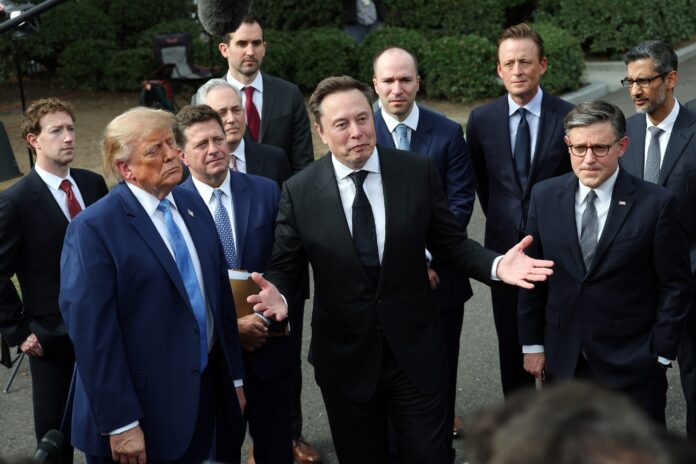
FCC Chair Brendan Carr, whom the Trump administration elevated to lead the commission, framed the action as a necessary response to what the agency called “unacceptable risks” posed by foreign-manufactured connected hardware. The ban covers new authorizations for humanoid and four-legged robots, along with power inverters used in data centers and solar installations. Existing devices that have already received FCC authorization remain unaffected. The commission said it would establish an exemption process for manufacturers that can demonstrate their products do not pose national security risks, without specifying how that process would work, how long it would take, or which companies might qualify.
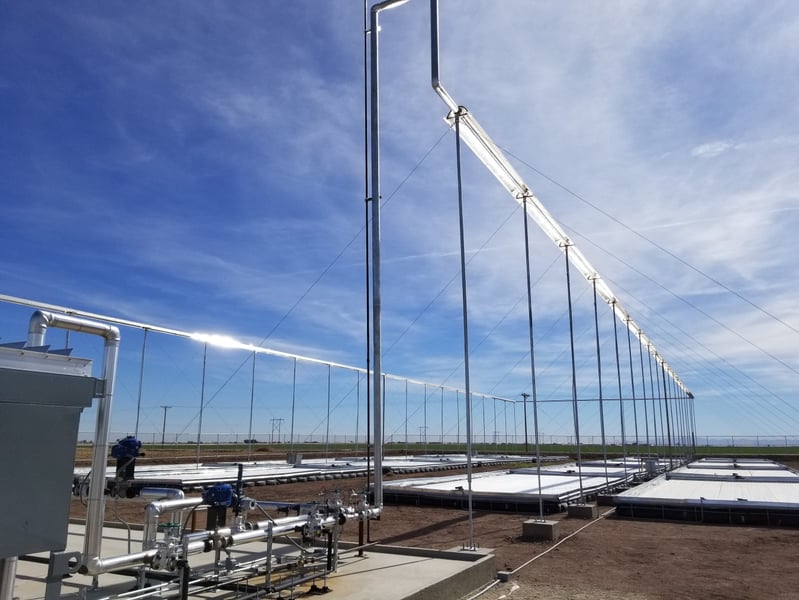
The scope of what the FCC is cutting off matters. China is not a minor player in either of these markets. Approximately 15,000 humanoid robots shipped worldwide in 2025, with Chinese manufacturers accounting for most of that output, a figure that reflects both the early stage of commercial deployment and China’s already-commanding position at the start of the race. In solar inverters, the hardware that connects rooftop panels to the power grid, Chinese companies control an estimated three-quarters of the global market. Manufacturers including Huawei, SUNGROW and Ginlong Technologies have become the default suppliers for American solar installations ranging from residential rooftops to utility-scale farms. A blanket restriction on new FCC authorizations does not simply slow those companies down. It removes them from future growth in a market they currently dominate.
What the agency did not provide is a publicly available technical case explaining how a solar inverter mounted on a residential roof constitutes the kind of national security threat that requires a federal ban. The FCC announcement cited general categories of risk, including surveillance, data theft, remote access and cyberattacks, without identifying a documented exploitation, naming a specific Chinese manufacturer whose products have been used against American infrastructure, or describing a technical pathway by which a power inverter simultaneously converts electricity and transmits sensitive data to Beijing. That gap may not matter to the ban’s supporters. It does make the measure difficult to evaluate on its merits.
China’s government did not accept the framing. A Foreign Ministry spokesperson said Beijing would use “all measures necessary” to protect its companies’ interests, NBC News reported. Chinese officials were more pointed still, urging Washington to “abandon its hegemonic mindset, and stop smearing Chinese companies,” as RT reported. A poll conducted by CGTN following the announcement found 83.5 percent of respondents believed the United States was moving toward technological protectionism rather than responding to a genuine security threat, a reading that reflects how Washington’s escalating tech restrictions register across much of the world beyond its own communications.
The ban does not arrive without context. Tuesday’s FCC action follows a pattern of successive Trump administration restrictions that has, over the past two years, targeted Chinese artificial intelligence chips, semiconductor equipment, electric vehicles, commercial drones and TikTok. Each restriction has arrived wrapped in the language of national security. Each has had the effect of protecting an American industrial sector from a Chinese competitor that was moving faster and pricing more aggressively. Whether the security justification is genuine, proportionate or something else is a question Washington has largely declined to engage on the evidence. Tuesday’s announcement changed nothing about that pattern.
For the American solar industry, the timing cuts across an active buildout of residential and utility-scale capacity. There is no American manufacturer with the production volume to absorb the demand that Chinese inverter companies currently fill. Domestic alternatives exist and are growing, but not fast enough to cover a sudden regulatory gap. Project developers, utilities and homeowners who have already committed to solar installations will need replacement parts and new units that the FCC’s exemption for already-authorized devices does not fully address. The ban’s near-term impact is blunted by that exemption; its medium-term effect on the solar supply chain is a question the commission has not answered.
The robotics implications are less immediately acute. Humanoid robots remain a technology in early commercial deployment, with total global shipments still measured in the tens of thousands. But the FCC’s jurisdictional move is notable in its own right. The commission has traditionally regulated communications hardware: radios, routers, handsets. Extending that authority to cover physical robots and power equipment represents a significant expansion of regulatory reach whose legal basis has not been tested in court. Several trade associations are expected to challenge the action. The broader technology enforcement picture is already generating complications that its architects did not fully anticipate. Taiwan’s detention of an Nvidia employee in an AI chip smuggling probe earlier this month illustrates how aggressively enforced technology restrictions create legal and commercial consequences that outpace the policies used to justify them.
The administration has not said when the exemption process will be finalized, which manufacturers might qualify, or whether companies already operating in the US market will have a pathway back to authorization. Those details will determine whether Tuesday’s announcement becomes the industry-restructuring measure it appears to be, or a more targeted restriction that the exemption framework effectively narrows. Solar and robotics industry groups have not said whether they will wait for that framework or pursue litigation. Chinese manufacturers subject to the ban have not disclosed what their government’s promised countermeasures will involve. Only that they are coming.
Beijing rarely specifies its countermeasures in advance. It also rarely fails to deliver them. Whether those measures take the form of export controls, market access conditions for American companies operating in China, or something Washington did not anticipate is the question Tuesday’s announcement has created and left entirely open.