
WASHINGTON — The Dow Jones Industrial Average posted its worst session in fifteen months Wednesday, shedding 1,129 points after the Federal Reserve held interest rates steady for a seventh consecutive meeting and revealed a policymaking committee more fractured on inflation than markets had anticipated.
The Federal Open Market Committee voted 9 to 3 to leave the federal funds rate in its 3.50 to 3.75 percent range. Beth Hammack of the Federal Reserve Bank of Cleveland, Neel Kashkari of Minneapolis, and Lorie Logan of Dallas all voted against the majority, formally preferring a quarter-percentage-point increase. Their simultaneous dissents represent the sharpest internal division the committee has produced in years.
The Dow Jones Industrial Average shed roughly 2.1 percent on the session, its steepest single-day decline since April 2025. The S&P 500 fell 1 percent and the Nasdaq Composite dropped 0.9 percent. The 10-year Treasury yield climbed six basis points to above 4.66 percent, a move that signals bond traders believe the Fed’s restraint may require a sharper correction later. Cryptocurrency markets, which had been on edge ahead of the Federal Reserve rate decision, also extended their losses alongside equities.
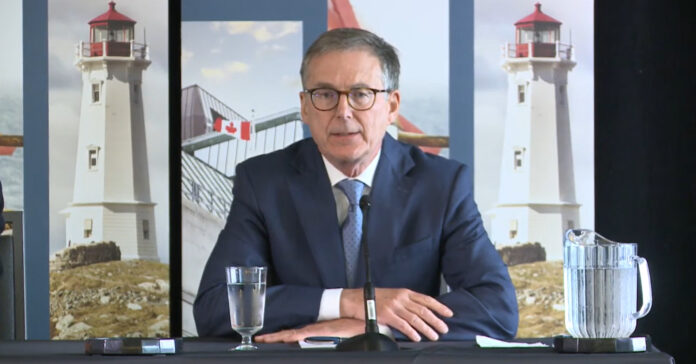
Fed Chair Kevin Warsh, in only his second rate-setting meeting since taking office in May, acknowledged the weight inflation has placed on ordinary Americans. “My colleagues and I recognize that high inflation has been an undue burden on American households and businesses,” he said, adding that the committee holds “no tolerance for persistently elevated inflation.” The FOMC’s written statement put the condition plainly: “Inflation remains elevated relative to the Committee’s 2 percent goal, in part reflecting supply shocks that have driven price increases in certain sectors, including energy.”
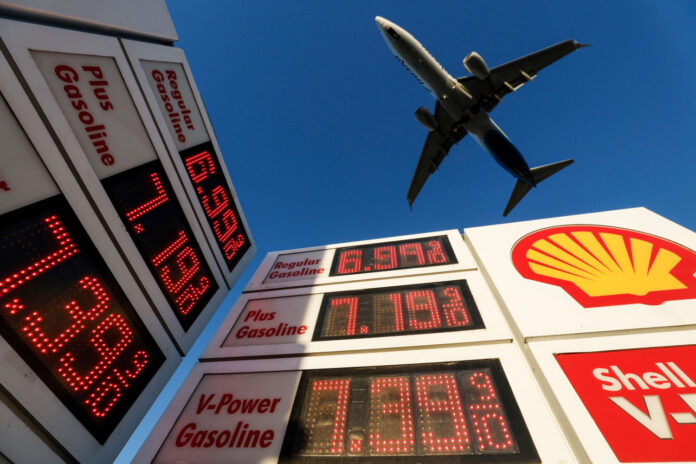
That energy reference runs through the broader disruptions that have kept fuel prices elevated throughout 2026. Warsh described economic conditions as otherwise solid, with steady job gains, low and stable unemployment, and artificial intelligence investment supporting longer-term productivity growth. Some workers face near-term disruption from that transition, he acknowledged. What the chair did not say, but what the three dissenting votes effectively said for him, is that no combination of those bright spots has yet broken the inflation trend.
Annual inflation reached 4.2 percent in May 2026, the highest reading in more than three years, and a level that has sat above the Fed’s 2 percent target for more than five years. The decisions by Hammack, Kashkari, and Logan to dissent formally carry documentary consequences: when the FOMC releases its meeting minutes, each dissenter must submit a written explanation of why they believed a rate increase was warranted at this meeting. Their reasoning becomes part of the official record.
Warsh has resisted pressure from both directions. Donald Trump has called publicly for the Fed to cut rates, a demand the central bank declined at every meeting since Warsh took office. Wednesday’s hold was neither a concession to the White House nor a capitulation to the dissenters. It was a continuation of the cautious posture Warsh established in May: collect more data, keep the next move’s direction open, and do not act on noise.
Three formal dissents in favor of a hike are not ordinary background noise. They carry institutional weight within the committee’s internal deliberations and signal where the center of gravity may be heading. If the conditions that drove Hammack, Kashkari, and Logan to their votes in July persist through the summer, the same pressures will arrive at the September meeting. Elevated inflation, a tight labor market, and energy-driven price increases do not disappear between now and then.
The bond market’s response on Wednesday was, in some respects, more informative than the equity selloff. When Treasury yields rise after a Fed hold, it typically reflects investors revising their expectations for where rates ultimately need to go, not just reacting to today’s decision. The 10-year yield moving above 4.66 percent is a collective bet that the current 3.50 to 3.75 percent rate is too low for the price environment the Fed is now operating in. As NPR reported Wednesday, a divided Federal Reserve leaves the question of when, not whether, a rate adjustment will eventually arrive.
Warsh closed his press conference with a commitment familiar from his predecessors: “The Committee will deliver price stability.” For households carrying variable-rate debt, including credit cards, adjustable mortgages, and home equity lines of credit, that promise has not yet produced material relief. Rates did not fall during seven consecutive holds. Inflation did not fall either. New consumer financial products offering elevated yields have proliferated in response to the high-rate environment, but they do not resolve the structural problem of purchasing power lost to persistent inflation.
What Wednesday’s 9-to-3 vote resolves, at least provisionally, is where Warsh’s majority stands today. It holds, nine to three, for waiting. Whether that majority holds at the September meeting is a question two more inflation reports and one employment reading will go some distance toward answering. The three dissenters have already put their answer in writing.