
DHAKA – The Nobel Peace Prize once gave Muhammad Yunus the world’s most impenetrable shield. In August 2026, that shield is showing its cracks.
Multiple criminal allegations have been formally registered against the 85-year-old microfinance pioneer who led Bangladesh’s interim administration for eighteen months after the 2024 ouster of Prime Minister Sheikh Hasina, according to court filings made public this week. The most serious invokes Article 7A of the Bangladesh Constitution, a sedition provision that carries the maximum punishment of capital punishment.
The allegations span five distinct categories: constitutional violations under Article 7A for actions alleged to have subverted democratic order; abuse of authority over the Grameen family of institutions that made Yunus famous worldwide, including the alleged illegal acquisition of benefits amounting to corruption under Bangladeshi statute; interference in judicial proceedings during the transition period; corruption charges carrying potential imprisonment of up to fourteen years; and criminal negligence in the administration of a national measles vaccination program after children’s deaths went preventable during a 2025 outbreak.
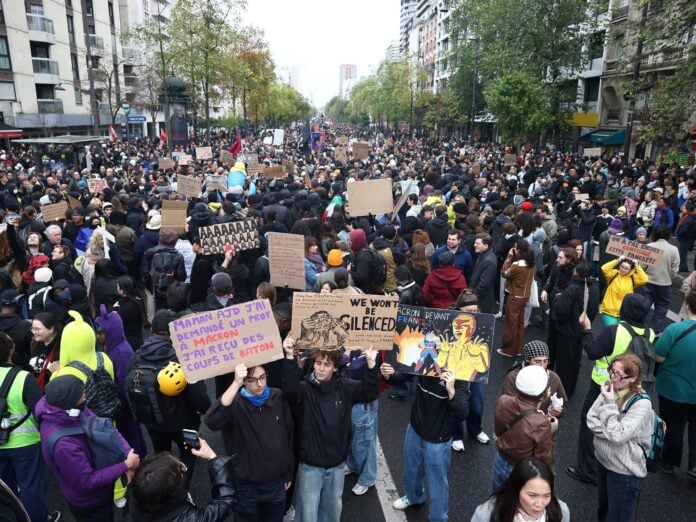
Yunus stepped into Bangladesh’s political vacuum two years ago, when Hasina fled to India in a military helicopter as a student-led uprising brought an end to her fifteen-year rule. The UN estimated that approximately 1,400 people died in the violence preceding Hasina’s departure. His Nobel credentials made him appear, for a moment, a neutral alternative to military control of the country, an opening that brought him global headlines but which, his accusers now allege, he used improperly.
The filings arrive as Bangladesh navigates its most volatile political moment in decades. Prime Minister Tarique Rahman’s government, which succeeded Yunus’s interim arrangement following elections earlier this year, now leads a country still processing the prosecutorial aftermath of that transition. Hasina herself, convicted in absentia by Bangladesh’s International Crimes Tribunal on crimes against humanity charges and sentenced to death, has announced plans for a Sheikh Hasina Bangladesh return from exile in India in December. Al Jazeera reported that some Awami League activists are beginning to emerge from hiding in anticipation, while survivors of the 2024 uprising remain deeply skeptical of her declared timeline.
The sedition charge, under Article 7A, is by far the most consequential of the set. The provision was inserted into the constitution precisely to protect Bangladesh’s democratic order from subversion, including by those occupying formal positions of authority. Its maximum penalty is death, though courts exercise wide discretion in sentencing and the clause has rarely been applied to its outer limit in Bangladesh’s legal history. That potential, however, frames every subsequent legal development in terms that carry particular gravity in a country where the last two years have already produced one death sentence against a former prime minister.
The judicial interference category touches on decisions made during the most politically contested period of the transition, a time when Bangladesh’s courts processed an extraordinary volume of cases involving former regime figures at a pace that drew criticism from international legal observers. Al Jazeera documented in November 2025 that human rights group Odhikar had raised concerns about ongoing impunity even as those proceedings moved forward. The measles negligence allegation stands apart from the others: a public health accountability claim arising from an outbreak during which children died from a vaccine-preventable disease, with the complaint attributing systemic failure to the leadership of the interim government at the time.
Yunus had not issued a public response to the specific filings as of Sunday. He faces a political arithmetic that the Nobel Prize does not resolve: a new government with the institutional tools to prosecute, a legal system moving on its own calendar, and a country whose appetite for accountability, directed first at Hasina’s party and now apparently at those who followed her, shows no sign of reaching saturation.
What Bangladesh does with these charges will reveal something significant about where the country’s post-authoritarian political order is actually headed. The legal system does not answer that quickly. At 85, Yunus has less time to wait than the process typically allows.