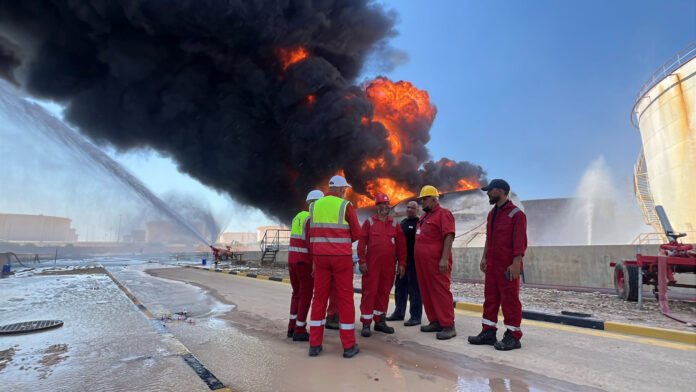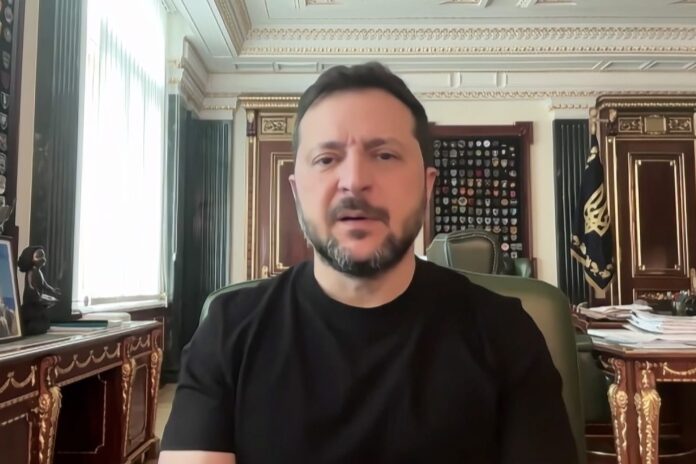

WARSAW — Donald Tusk told reporters on Friday that Russia could strike a NATO member within “months rather than years,” making public what Polish officials said had been a persistent stream of American intelligence warnings about a potential Russian provocation on NATO’s eastern flank. The coming weeks, the Polish prime minister said, “may prove critical.”
The statement came not from an anonymous intelligence briefing but from Tusk himself, at a press conference in Warsaw, hours before his delegation’s departure for next week’s NATO summit in Ankara. That context matters. Governments typically keep threat assessments private until forced to speak, and Poland has been receiving these warnings, Tusk indicated, for some time. “For us, it is very important to know that everyone will treat NATO obligations as seriously as Poland does,” he added.
The warnings themselves, first reported by British and Polish media citing sources close to Polish President Karol Nawrocki, describe a range of scenarios Moscow is said to be weighing. Missile and drone strikes on critical infrastructure, including power stations and energy grid nodes, are among them. So are simulated air attacks designed to force Poland to activate its air defense systems, a scenario American planners call a “zombie missile” provocation. The most extreme variant, considered unlikely but no longer excluded by Polish security officials, would involve a limited ground incursion by Russian or Belarusian forces along the NATO border, framed by Moscow as a GPS navigation error or a rescue mission for a downed aircraft. In each case, according to those briefed on the assessments, the strategic objective would be the same: to manufacture enough ambiguity inside the alliance to pressure Western governments into suspending military and financial aid to Ukraine.
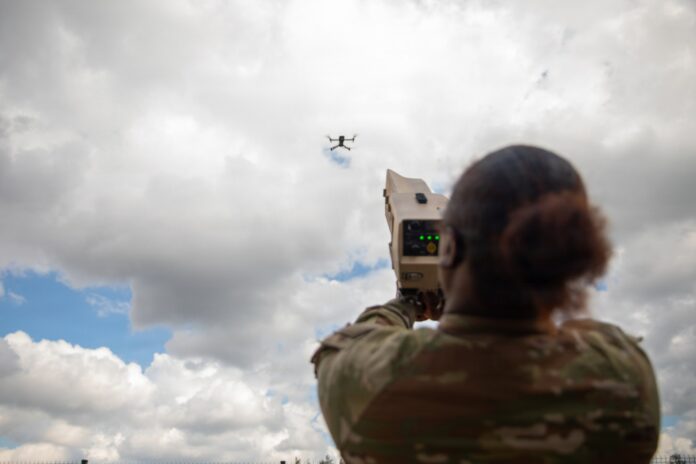
The pattern of Russian aerial reconnaissance and drone incursion has been building. Tusk referenced September 2025 incidents in which Russian drones violated Polish airspace, incidents that prompted Poland to invoke consultations under NATO protocols, as evidence that the threshold for border testing has been moving. An International Institute of Strategic Studies report documented 144 suspected drone sightings over six European NATO members between 2024 and 2026, suggesting a systematic mapping of Western air defense responses.
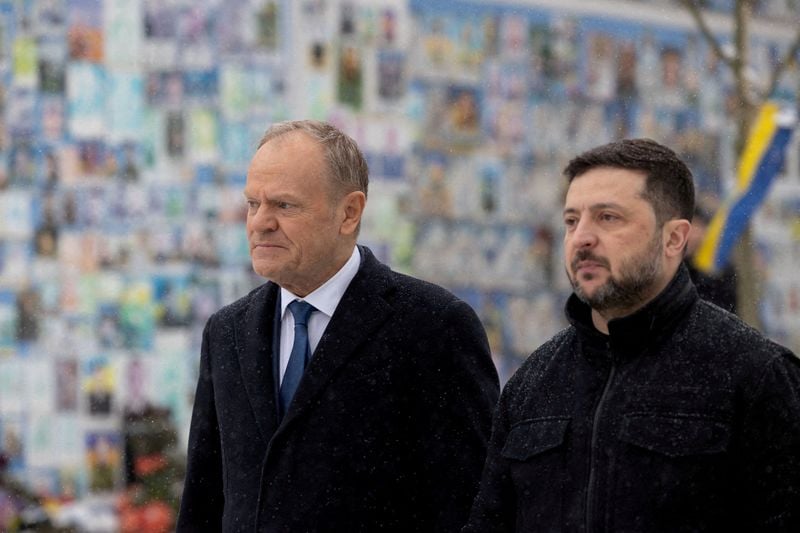
The Ankara summit opens July 7. Poland arrives carrying not only its security concerns but a parallel diplomatic strain with Ukraine that Tusk acknowledged openly on Friday. Relations between Warsaw and Kyiv have deteriorated sharply after Polish President Nawrocki revoked an honor he had awarded to Ukrainian President Volodymyr Zelensky, a decision linked to an unresolved dispute over the Volhynia massacres of 1943–45, in which tens of thousands of Polish civilians were killed by Ukrainian nationalist forces. Tusk said Friday he had received signals that “the Ukrainian side is looking for ways to ease the tension,” but he put responsibility for the next step squarely on Kyiv. “There is no such thing as a European community without reconciliation, and there is no reconciliation without coming to terms with a painful history,” Tusk said. He added that he would ask Poland’s Ankara delegation to be “cautious” about making public commitments on additional Ukrainian financial support, not because Ukraine lacks need but because Poland’s own border security obligations must come first.
Russia has not publicly responded to the intelligence reports. That silence is itself a feature of the scenario Polish security officials described: the value of a plausible-deniability operation depends on the absence of advance attribution. No Russian official has confirmed that any such provocation is being planned, and the underlying assessment remains anonymous, filtered through Polish political channels rather than confirmed by any named US intelligence official on record. What intercepts, satellite data, or human intelligence underlies the threat assessment has not been made public.
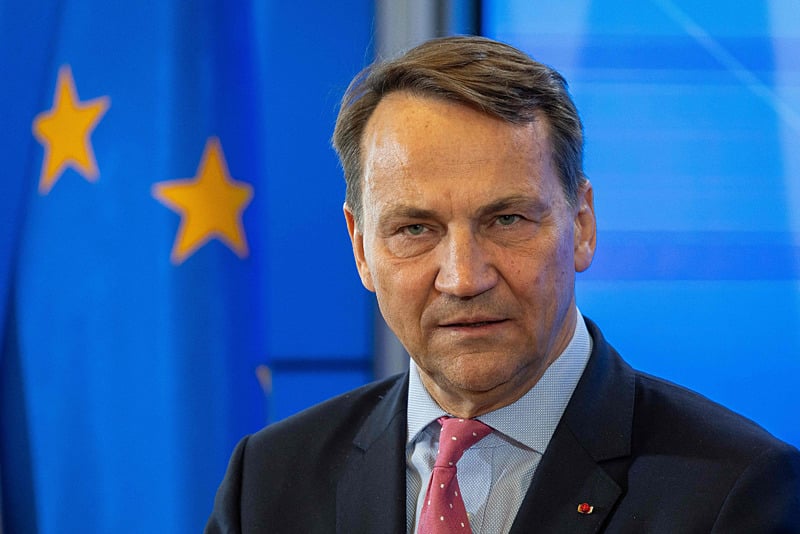
Germany’s Friedrich Merz arrived at the same summit this week with a different kind of signal. Berlin is on course to double its defense budget within four years, Merz said Thursday, reaching NATO’s revised 3.5 percent of GDP target by 2029, six years ahead of schedule. The pace of European rearmament since 2022 has been real; Germany’s shift from constitutional debt limits to defense-first fiscal priority would have been unthinkable a decade ago. Poland, which shares a 144-kilometer border with the Russian exclave of Kaliningrad and hosts thousands of US troops, has been at the front of that shift, spending well above 3 percent of GDP on defense for the past two years.
Whether that spending translates into deterrence depends on what the alliance can credibly commit in the window Tusk is describing. The Ankara summit was already carrying unusual weight: US President Donald Trump, who told Turkey’s Recep Tayyip Erdogan he might have skipped the gathering without their personal relationship, has questioned the terms of American defense commitments repeatedly since taking office. NATO’s promise to Ukraine at the summit is expected to be €10 billion in new funding, down sharply from the €70 billion figure circulating earlier in planning discussions. That gap, and what it signals about Western cohesion, will be visible to Moscow.
As Ukrainska Pravda reported, Tusk’s public framing of the threat timeline is itself a deliberate move, a signal to allies that Warsaw expects the window for deterrence to be shorter than most NATO capitals currently plan for. The summit communiqué will not resolve that disagreement. What it may reveal is whether the alliance’s political center has moved toward Poland’s reading of the threat or is still operating on a longer timeline.
What Tusk’s warning cannot settle on its own is how the alliance responds if a provocation happens. Those scenarios (a drone strike framed as accidental, a ground incursion dressed up as a navigation error) are designed to fall below the threshold that triggers Article 5 automatically. The ambiguity is the point. Whether NATO’s political framework is strong enough, as of next week in Ankara, to call that ambiguity by its correct name is the question that will outlast whatever communiqué the summit produces.