
NIZHNEKAMSK, Russia – Nine of the dead were sleeping.
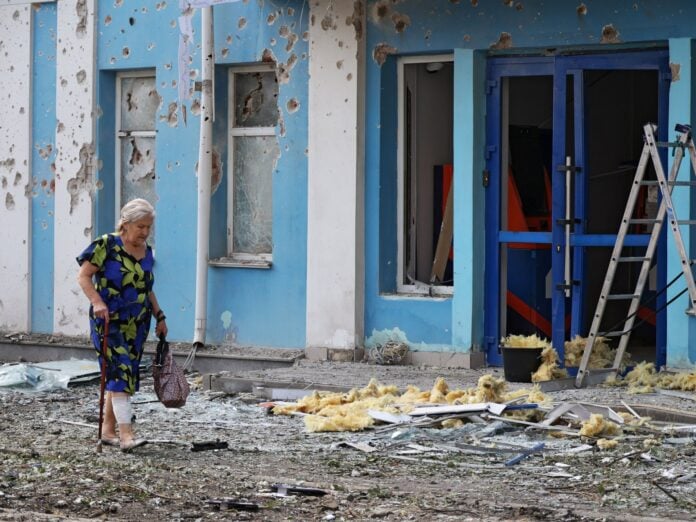
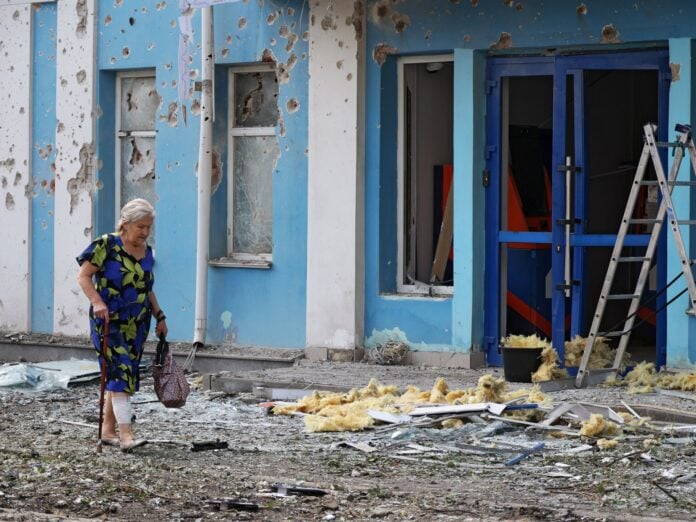
They were migrant workers, seven from Uzbekistan and others from Kyrgyzstan, who had come to Russia’s oil-refining heartland not for its war but for its wages. On Monday morning, a Ukrainian drone found the hostel where they slept and destroyed it. By the time emergency services reached the site, 13 people were dead, including a child. At least 75 others were wounded.
The Uzbek consulate in Kazan, the Tatarstan capital, confirmed that seven of the 13 dead were its nationals. Officials said the government was in contact with their families. Tatarstan draws labor migrants from Central Asia at scale, pulled by wages in the petrochemical sector that outpace anything available back home. For those families, the war arrived not as a headline but as a phone call.
The attack on Nizhnekamsk, a city of 240,000 in Russia’s Tatarstan region nearly 1,200 kilometers east of the Ukrainian border, confirmed what Ukraine’s military has been working toward for months: a sustained campaign that does not stop at the front line or the Volga or even the Urals, but reaches into the industrial centers Russia depends on to finance and fuel a war now entering its fifth year.
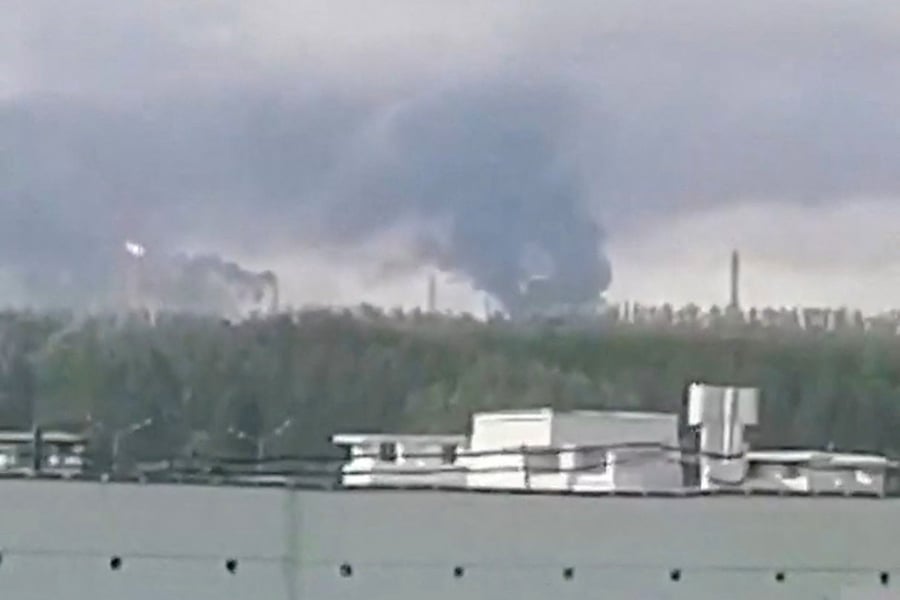
Ukraine’s General Staff confirmed the attack and named the target: the Taneco oil refinery in Nizhnekamsk, one of Russia’s largest and most advanced processing facilities, with an annual capacity of more than 16 million tonnes of crude. A fire broke out at the facility. Russia did not immediately disclose the extent of damage to refinery operations.
Tatarstan head Rustam Minnikhanov described the overnight operation as a “massive” assault on industrial and civilian infrastructure. The Russian Defense Ministry said its air defenses intercepted more than 450 Ukrainian drones across 16 regions through the night, a figure that, if accurate, would represent one of the largest single-night drone operations of the conflict. Beyond Tatarstan, drones triggered explosions in Russian-occupied Crimea’s Simferopol, briefly cutting power, and struck a logistics depot in Donetsk region and a munitions cache in Boikove.
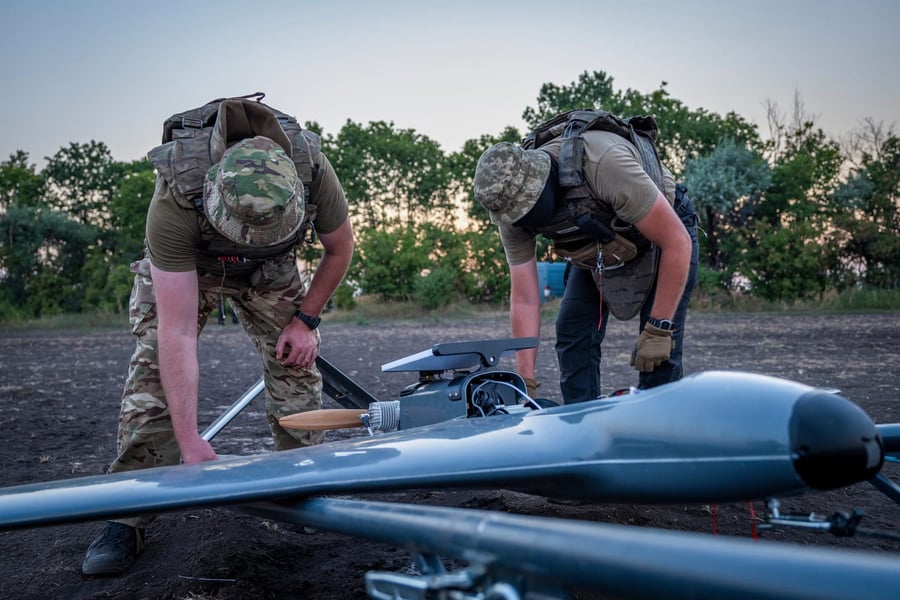
“Russia’s war will be felt more and more inside Russia,” Ukrainian President Volodymyr Zelenskyy said on social media late Sunday, hours before the strike. “We do deliver entirely justified responses, and every Russian strike will be met with our response.”
Nizhnekamsk is not incidental geography. The city is built around a dense cluster of petrochemical infrastructure, two refineries and a major petrochemical plant, that has made Tatarstan one of the pillars of Russia’s energy export economy. NBC News reported that Ukraine has been targeting Russian oil facilities with long-range drones almost daily in recent months, in a campaign that Ukrainian officials describe as a deliberate economic war: eroding refining capacity, straining domestic fuel supplies and unsettling Russian cities far from any front line.
Ukraine’s domestically developed long-range drone fleet can now reach Siberia, traveling roughly 2,000 kilometers from Ukrainian territory. Previous strikes have hit the Taneco facility in earlier months, as well as refineries in Ufa, Saratov and Omsk. In August, Eastern Herald reported how Ukraine struck three Russian oil refineries in a single day while simultaneously sinking a sanctioned Rosatom vessel in the Black Sea. In July, the campaign extended to the Wildberries logistics network, with drones killing eight workers near Moscow and forcing Moscow to ban diesel exports as refinery output fell.
Russia’s Investigative Committee opened a criminal case, citing terrorism statutes. Spokeswoman Svetlana Petrenko characterized the attack as targeting “industrial and civilian facilities” whose victims had “no connection” to military operations. Tatarstan declared a day of regional mourning. Putin’s office did not immediately comment.
The distinction Russia draws between industrial targets and civilian workers grows harder to sustain as Ukraine’s campaign deepens. The Taneco refinery employs thousands; the city depends on it economically. When a drone strikes a workers’ hostel at the gate of one of Russia’s largest refineries, the line between the energy infrastructure and the people who keep it running does not hold.
Zelenskyy, who said he would speak with international mediators this week about peace efforts, has cast the oil refinery campaign as leverage: pressure Moscow toward the negotiating table by making the cost of war legible inside Russia. “The only reason this is still continuing is Russia’s unwillingness to end this war,” he said. Al Jazeera reported that at least seven of the 13 killed were Uzbek nationals, with Tatarstan declaring a day of mourning.
What the Nizhnekamsk strike actually changed is unclear. The full extent of damage to Taneco’s processing capacity was not disclosed, and Moscow gave no sign Monday of any shift in its negotiating posture. What is apparent is that a drone originating somewhere in Ukraine crossed the better part of a continent and killed 13 people in a city that most Russians would not have associated with the war, a city they might have believed was safe.