
MOSCOW – A worker at the Saratov oil refinery was killed Thursday as Ukrainian drones struck the facility for the third time in six weeks. By nightfall, Moscow announced a ban on all diesel exports through July 31, framing the decision as a domestic supply protection measure. The underlying cause was starker: the Omsk refinery, Russia’s largest oil-processing plant at roughly 460,000 barrels per day, had halted operations overnight after drones reached it from nearly 1,700 miles inside Russian territory.
The Ukrainian Unmanned Systems Forces described the past 72 hours as an offensive conducted at “industrial scale,” as Fox News reported. Twenty-one vessels were targeted in the Sea of Azov – nineteen oil tankers, one cargo ship, and one ferry. Energy facilities in Tatarstan and Bashkortostan were struck. The Borisoglebsk military airfield in Voronezh, roughly 700 kilometres inside Russia from the front line, was attacked alongside the refinery infrastructure. The Saratov strike killed one person and damaged processing equipment.
Russia’s Energy Ministry announced the diesel export ban later Thursday, stating that domestic supply would take priority through the end of the month. The ministry’s statement described a temporary measure. What it did not include was any assessment of the Omsk facility’s damage or a timeline for resumed operations. Omsk supplies a significant share of fuel demand across Western Siberia, including agricultural regions in the middle of their summer harvest. Diesel shortages there are not an abstraction: they determine whether combine harvesters in the grain-growing south can complete their runs before crops pass peak.
This is not the first time Ukrainian strikes have compressed Russian domestic fuel supply to the point of government intervention. Russia’s fuel crisis had already escalated by early July to the point where Moscow was arranging jet fuel imports from Japan for the first time since 2022, routing 200,000 barrels through South Korea’s Yeosu port. That arrangement addressed aviation fuel. The Omsk shutdown and diesel export ban now extend the same problem to road transport and agriculture. The two decisions, five days apart, describe the same underlying trajectory at a widening scale.
The Azov campaign is a departure from Ukraine’s previous naval drone strategy. Earlier operations concentrated on Crimean ports and Black Sea shipping lanes, targeting vessels associated with Russia’s shadow fleet – the tanker network Moscow uses to export crude oil under Western sanctions. Extending operations into the Azov, a shallow inland sea that borders the Krasnodar and Rostov regions directly, brings targeting closer to the Russian mainland in waters that have no equivalent to the deep-water buffer of the Black Sea. Russia has not publicly described defences capable of protecting Azov tanker traffic at the tempo this campaign sustained.
The nineteen tankers struck over 72 hours represent not just a fleet of economic targets but a logistical bottleneck. Fuel movement through the Azov ports supports the downstream distribution network across southern Russia. Disrupting tanker operations there adds a distribution layer to the processing disruption already imposed by the refinery strikes – a combination that explains why Moscow’s export ban was announced before the Omsk situation was resolved, not after it.
Ukraine’s drone operations have consistently pushed their demonstrated range, from the June 6 Kronstadt strike near St. Petersburg to this week’s Omsk reach. The Borisoglebsk military airfield included in Thursday’s wave – a logistics hub rather than an energy asset – suggests the campaign coordinated multiple targeting priorities simultaneously rather than sequencing them.
Russia’s Defence Ministry issued an interception claim covering an unspecified number of the 72-hour wave. Defence Ministry statements in this conflict have consistently understated targeting outcomes until satellite imagery and market data provided independent confirmation. The Omsk situation will, in that sense, be settled by supply disruptions rather than official disclosure.
The timing intersects with the harvest season, when Russia’s agricultural regions see their annual peak in diesel demand. Combine harvesters, heavy transport, and irrigation systems all draw on supply that, in the regions adjacent to Omsk’s distribution network, is now competing with the military fuel chain for whatever refined product remains available. Farm operators in affected areas have reported no government guidance on priority access arrangements.
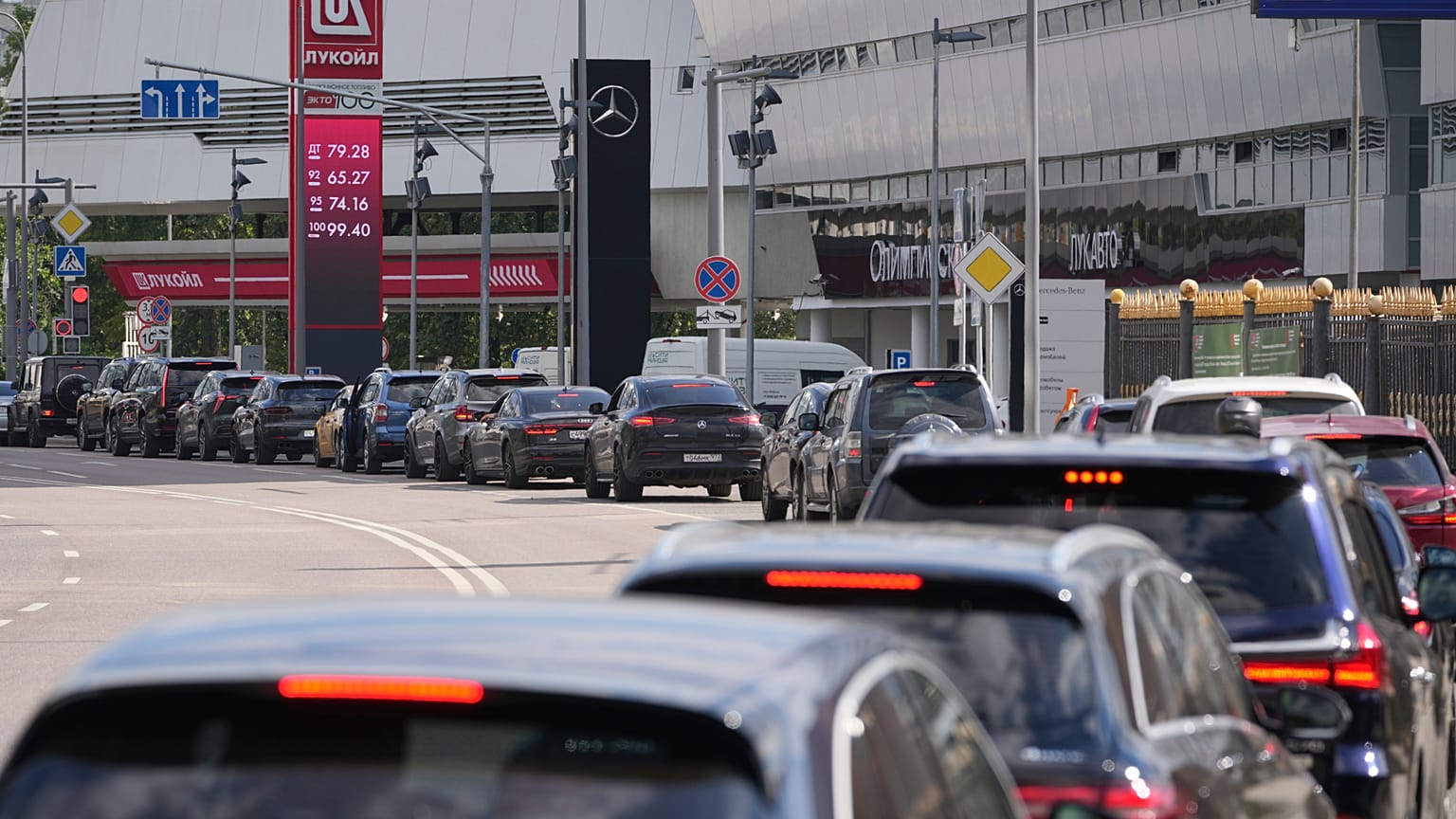
What is not established is whether the July 31 diesel export ban deadline reflects a recovery scenario or simply calendar management. No repair timeline for the Omsk facility has been made public. If the plant resumes operations before the month’s end, the ban will have served its stated purpose. If the damage is more extensive, the suspension will continue whether or not it is renewed by announcement. Russia’s fuel supply statements have been tested against reality repeatedly this summer; the queues at filling stations, not the ministry statements, have been the more accurate measure of where the situation stands.