
MOSCOW — The last fuel truck to reach a filling station in parts of Siberia this week arrived with a queue already waiting. Russia, which exports more crude oil than almost any country on earth, is arranging to buy jet fuel from Japan for the first time since 2022, a cargo of at least 200,000 barrels loading from Chiba in mid-July and routing through South Korea before heading east, according to an exclusive Reuters report published Thursday.
The transaction is modest in scale relative to Russia’s aviation demand. It is large in what it signals: a country whose refineries once processed enough fuel to supply its own military, its commercial airlines, and significant export markets across Europe and Asia now has to source jet fuel from a nation that has aligned with Western sanctions against it and restricted its access to technology and capital.
The cause is a sustained Ukrainian drone campaign that has, over the past year, struck 21 of Russia’s 38 large refineries. The Tuapse refinery, one of the largest processing facilities on the Black Sea coast, saw its export loadings fall 91 percent year-on-year in May 2026, according to the Centre for Research on Energy and Clean Air, a research group that tracks Russian fossil fuel flows. The Taman Black Sea port lost 53 percent of its oil product export capacity following mid-May strikes. Across all Russian refineries, drone attacks have at their peak reduced output by nearly 20 percent on certain days. Russian jet fuel exports dropped to roughly 13,000 barrels per day this year, down from 30,000 barrels before the campaign began, with most of what remains directed to Turkey.
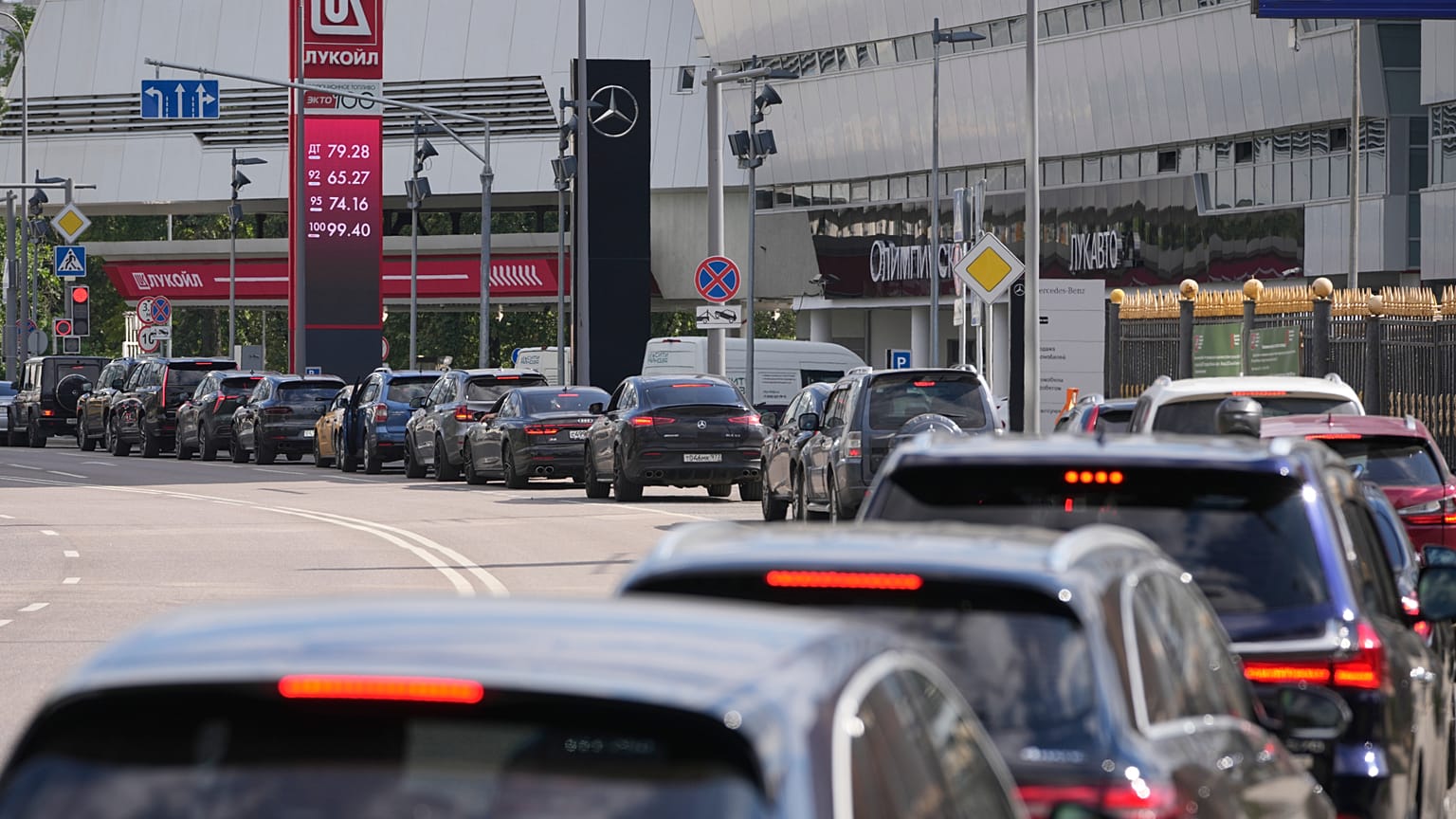
The impact on Russia’s domestic supply chain has been visible since spring. Two-thirds of the country’s regions reported fuel supply disruptions by mid-2026. Rationing caps of 20 to 30 liters per vehicle appeared at stations across multiple regions. Crimea declared a state of emergency in June, temporarily banning all retail fuel sales to the public. Farmers in affected areas warned they might be unable to complete the summer harvest without diesel, with combine harvesters standing idle in some southern regions while crops were ready to cut. Long queues at Lukoil and Rosneft stations in Moscow and Rostov-on-Don continued into early July, as Euronews documented.
“The crisis is deep, yet for a long time, Russian authorities were unwilling to acknowledge it,” Stanislav Mitrakhovich, an analyst at Russia’s National Energy Security Fund, told Al Jazeera. That reluctance, he said, triggered panic buying and fed public distrust of official supply statements. Irina, a Moscow resident, expressed her uncertainty plainly: “I’m deeply frightened by the uncertainty and the lack of understanding where the situation is heading.”
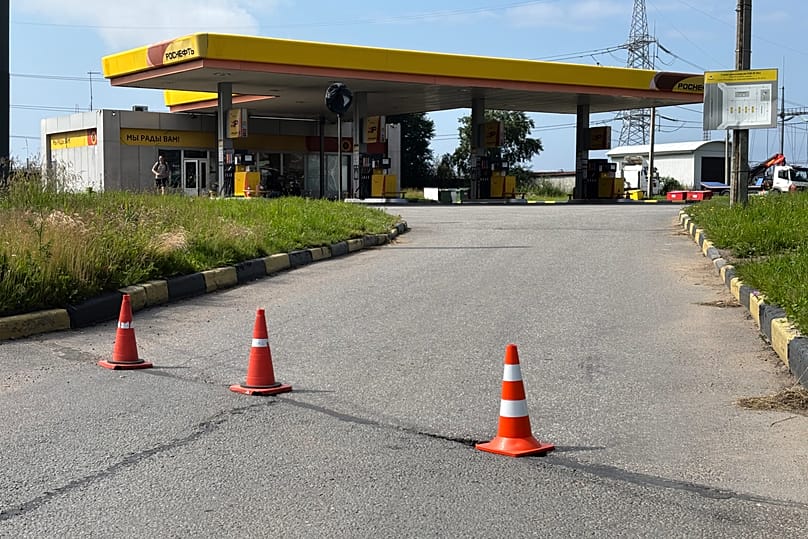
Russia has tried multiple remedies simultaneously. The government banned petrol exports and jet fuel exports; a diesel export ban was under consideration. Fuel-quality regulations were loosened to allow lower-grade products into the domestic supply chain. Imports of gasoline began arriving from Belarus, India, and Kazakhstan, though the combined volume remained short of demand. South Korea’s Yeosu port was already involved in a 22,000-barrel jet fuel shipment to Vladivostok in February 2022, the last time Russia imported on these terms. The July shipment from Chiba carries roughly nine times that volume.
The timing intersects with a week of elevated aerial activity over Russian territory. Eastern Herald reported Thursday that Russian air defenses claimed to have destroyed 188 Ukrainian drones in a single 12-hour window, a number suggesting that the pace of operations against Russian infrastructure has not slowed. At the same time, Russian officials were in Tehran: Deputy Security Council Chairman Dmitry Medvedev met with Iranian President Pezeshkian to advance plans for accelerating strategic cooperation, with energy sector coordination among the topics on the agenda.
President Putin has publicly acknowledged the shortages but described them as a “temporary deficit,” a characterization that sits uneasily beside the refinery output data or the fact that Russia is now importing aviation fuel from Japan. Russia’s energy ministry declined to comment on the Reuters report. South Korea’s Industry Ministry and Japan’s Ministry of Economy, Trade and Industry said they had no immediate response.
What the 200,000-barrel Chiba cargo cannot resolve is the underlying trajectory. Ukrainian drone strikes against Russian oil infrastructure have not stopped, and Russia has not demonstrated a capacity to repair refinery damage at a pace that keeps ahead of new strikes. The harvest season is underway, the period when Russian agricultural demand for diesel peaks, and the fuel math, as documented across regions throughout July, does not yet close.