
SANTA CLARA — Nvidia Corp. announced Sunday it will invest $1.5 billion in SB Energy, the SoftBank-backed data center developer constructing OpenAI’s PORTS-Pike Technology Campus in Pike County, Ohio, securing Nvidia’s position as the sole compute infrastructure supplier for what would become the largest AI data center complex in the United States.
The investment is accompanied by a credit commitment of up to $105 billion to support the campus’s construction, as TechCrunch reported. That financing figure places Nvidia in an unusual position for a semiconductor company: simultaneously the hardware vendor, equity investor, and primary lender for a single customer’s most consequential infrastructure project.
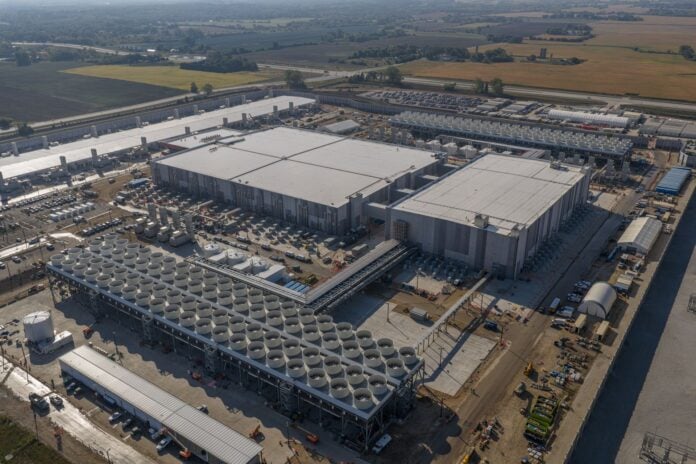
The PORTS-Pike campus is planned for land owned by the Department of Energy in Pike County, a rural stretch of southeastern Ohio where the federal government once operated a uranium enrichment facility. The site’s legacy of federal infrastructure investment — existing power grid connections, prepared land, and navigated regulatory approvals — makes it faster to develop than comparable greenfield sites. OpenAI has signed a 20-year lease on the campus.
Initial capacity is set at 4.25 gigawatts, with the campus designed to expand to eight gigawatts as demand grows. Powering that infrastructure requires a 9.2 gigawatt natural gas facility, which carries an estimated construction cost of $33 billion. Natural gas plant construction costs have risen 66 percent over two years, with some analysts projecting further increases as data centers compete for capacity against growing liquefied natural gas export markets. The $33 billion figure reflects those cost pressures applied to a plant operating at a scale few commercial developers have attempted.
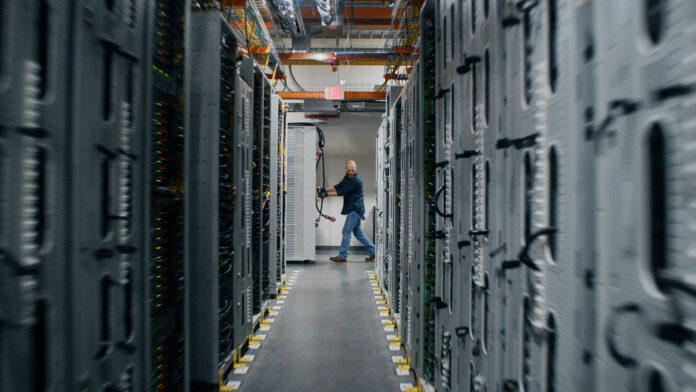
The dual structure of Nvidia’s commitment — equity investment plus credit facility — is a mechanism for locking in the supplier relationship at the infrastructure level. By funding construction directly, Nvidia ensures that the capital it provides flows back to it in the form of hardware purchases, with no competitive bidding process for the compute layer. Nvidia will be the exclusive provider of compute infrastructure at Ports-Pike for the duration of OpenAI’s occupancy, a constraint that would be unusual in any supplier agreement but takes on different significance when the customer holds a two-decade lease.
SoftBank’s involvement carries some history. The Japanese conglomerate is a co-investor in SB Energy alongside OpenAI and holds a stake in the project’s development entity. In November 2025, SoftBank sold approximately $5.8 billion in Nvidia stock, liquidating a significant position accumulated during the GPU shortage years. The SB Energy investment represents a different kind of exposure to Nvidia’s fortunes — not equity in the chipmaker, but a stake in the infrastructure project that Nvidia will exclusively supply.
The Ports-Pike deal extends a pattern of Nvidia moving aggressively into infrastructure financing. Earlier this month, the company announced a separate initiative with six major financial institutions to mobilize more than $500 billion in third-party capital for AI infrastructure globally, as Eastern Herald reported on Nvidia’s $500 billion AI financing push. The $105 billion credit commitment to OpenAI represents Nvidia’s own balance sheet exposure in addition to that third-party pool.
The distinction matters. Third-party capital pools are investor capital deployed through financing platforms; credit lines drawn directly from Nvidia’s balance sheet are the company’s own risk. Whether the $105 billion ceiling is ever reached depends on the pace of construction, OpenAI’s expansion decisions, and the long-term trajectory of demand for AI compute at Ports-Pike’s scale. At current energy costs, an eight-gigawatt data center running at capacity would require revenues from AI services that OpenAI has not yet fully established.
The broader competitive environment for AI infrastructure helps explain why OpenAI is committing to a 20-year lease rather than sourcing compute from cloud providers on variable contracts. Anthropic’s $65 billion revenue surge has intensified pressure on every major AI developer to secure long-term compute capacity rather than accept the pricing volatility that cloud spot markets carry at scale. A captive campus in Ohio, with its own power generation, insulates OpenAI from that variability.
What the arrangement does not insulate is the construction timeline. A $33 billion natural gas plant requires federal permitting, equipment procurement, and construction schedules that do not compress on demand. Eight gigawatts of data center capacity cannot be powered by infrastructure that does not yet exist. The gap between the announcement and the operational campus will test whether AI demand holds at a level that justifies the capital being committed now, or whether the development cycle outlasts the market conditions that made it seem necessary.
Nvidia’s answer to that uncertainty is structural rather than financial. A company that is simultaneously vendor, equity partner, and primary lender for the project has aligned its interests with its customer’s in a way that no arms-length supplier relationship achieves. That concentration of roles is the agreement’s most durable feature.