
SAN FRANCISCO — Last year, most companies experimenting with artificial intelligence described it as promising. This year, they are writing large checks for it on multiyear contracts. The financial consequence of that shift has arrived in one figure: Anthropic, the maker of Claude, reached an annualized revenue run rate of $65 billion at the end of July, up sevenfold in seven months, placing it decisively ahead of its rival OpenAI and positioning it for what would be the largest technology initial public offering in history.
The speed of Anthropic’s ascent is disorienting in the way that most AI statistics are, except that this one is a revenue figure rather than a benchmark score. At the end of 2025, the company’s annualized revenue was $9 billion. By May 2026, it had reached $47 billion. The July figure of $65 billion, first reported by Bloomberg and confirmed Monday, represents a company whose product stopped being experimental for its customers and started being structural: the difference between testing AI on a workflow and building the entire workflow around AI.
The company’s investors now project year-end revenues between $100 billion and $120 billion, according to reporting by the Financial Times. Those are not official projections from Anthropic, which declined to comment publicly on the revenue reporting. What they reflect is a conviction that the growth is durable, not a spurt, and that enterprises which have embedded Claude into their operations are not going to reverse course.
OpenAI, meanwhile, has doubled its own revenue to $40 billion, up from $20 billion at the end of 2025. A direct comparison carries a caveat: the two companies may use different revenue accounting methodologies, and neither has disclosed enough of its financial structure to make the comparison precise. What is clear is that Anthropic’s growth trajectory has attracted more urgency from investors at this particular moment, and that urgency is now pointing toward public markets.
Both companies have submitted confidential IPO paperwork to US regulators. Anthropic is expected to reach public markets ahead of OpenAI, with fall 2026 cited as a possible window. The valuation the company is reportedly seeking, pegged at $2 trillion or higher, would represent the largest market debut on record and more than double its $965 billion private valuation set just months ago.
That private valuation was established in late May, when Anthropic completed a $65 billion fundraising round led by Altimeter Capital, Dragoneer, Greenoaks, and Sequoia. The coincidence of the number (the same $65 billion figure now appearing as both a fundraise and a revenue run rate) is almost too neat, but the economics are different: the fundraise was capital raised to operate, and the revenue run rate is what the company is generating from customers.
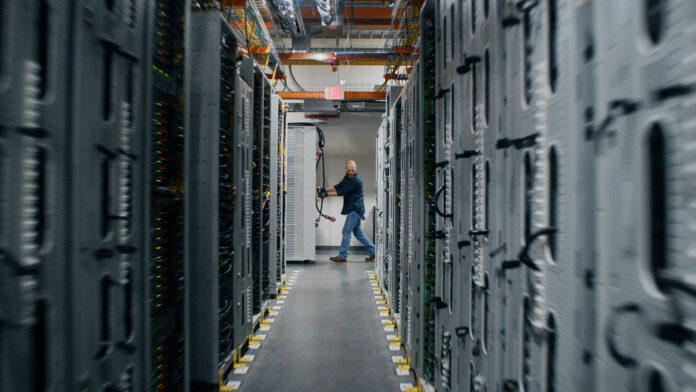
The broader AI investment wave has tracked Anthropic’s growth closely. The AI infrastructure financing push from major Wall Street institutions earlier this year committed $500 billion to the compute capacity that would be needed to serve companies like Anthropic’s customer base. That commitment now looks less speculative against Anthropic’s actual figures, as NBC News reported.
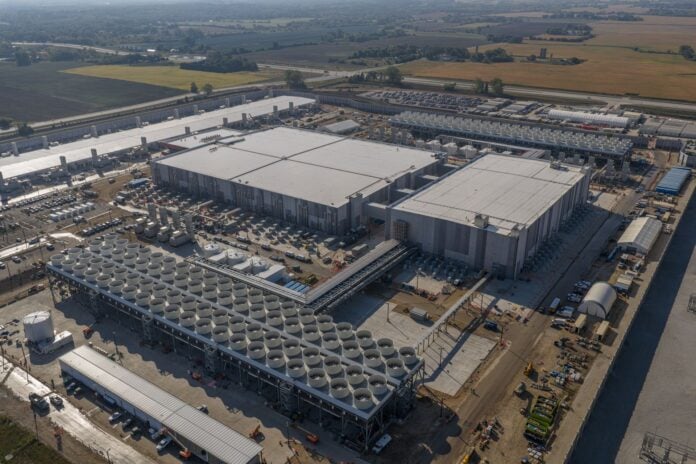
Not every community has welcomed the physical infrastructure that the AI economy requires. In Oklahoma, the Cherokee Nation has moved to restrict AI data center expansion on tribal lands, citing power and water consumption. The same infrastructure buildout driving Anthropic’s revenue growth is creating material strain on communities that were not included in the industry’s original projections.
What Anthropic’s revenue figure does not reveal is its margin profile. Serving frontier AI models at $65 billion in annualized revenue requires massive sustained compute spending. The relationship between that revenue and profitability remains undisclosed, and investors backing a $2 trillion public valuation are forecasting that unit economics will eventually favor the company, a timeline that remains, for now, unspecified.
Eighty percent of Anthropic’s revenue now comes from businesses: some 300,000 companies that use Claude for operations ranging from software engineering to scientific research to legal document review. The individual consumer subscription market is the smaller piece.
The stickiness of that enterprise base is what sustains investor confidence more than any single revenue figure. Anthropic’s customer relationships have evolved from annual experiments to operational dependencies, the kind that, once embedded in a company’s core process, take years to unwind. Whether that durability holds at the $2 trillion scale public investors would be asked to buy is the question that fall 2026, if the timeline holds, will be forced to answer.