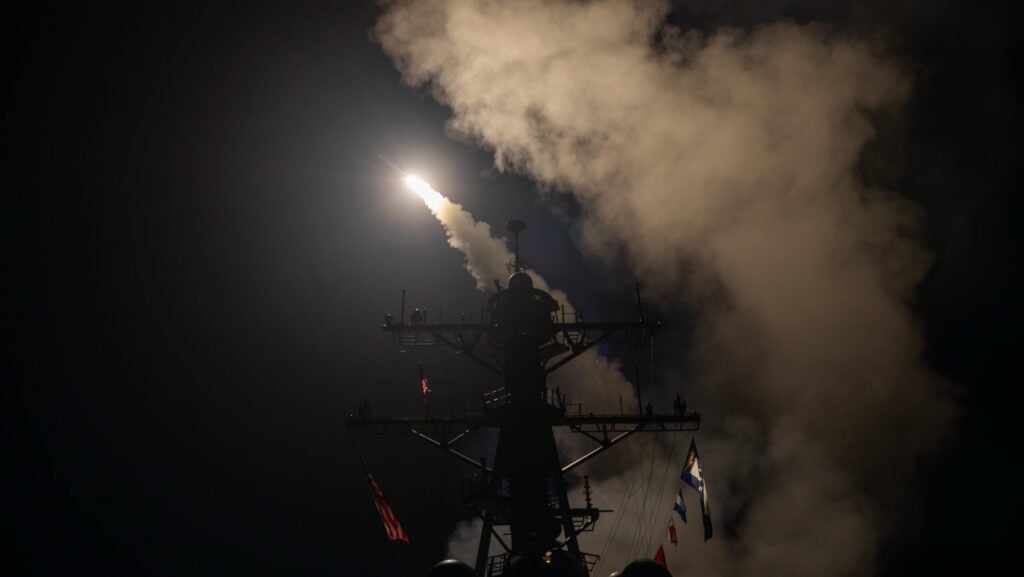

WASHINGTON — When the United States Navy awarded Raytheon Technologies a $22.9 billion contract on Sunday to massively expand Tomahawk cruise missile production, it was also acknowledging something that senior Pentagon officials have been reluctant to say plainly: the United States military spent years building stockpiles designed for peacetime, then found itself fighting several wars at once.
The gap was the central tension driving the deal. At the start of 2026, Raytheon was producing roughly 60 Tomahawk cruise missiles a year. In the same period, American forces had launched hundreds into Iranian-backed targets in Yemen, Iraq, and Syria, and transferred additional stocks to Ukraine. The numbers never added up. On a seven-year contract worth nearly $23 billion, the Pentagon is now betting that Raytheon can produce more than 1,000 missiles a year (a 16-fold increase) and that this time the industrial base will be ready before the next conflict demands it.
“This Tomahawk award increases our ability to equip the Joint Force,” Michael Duffey, Under Secretary of War for Acquisition and Sustainment, said in the official announcement. He did not address how far below wartime demand production had been running, but the contract’s scale answered that question implicitly.
The Tomahawk’s strategic pedigree is almost too long. The cruise missile debuted in the Gulf War, appeared in the 2003 Iraq invasion, served in Libya, Syria, and the Red Sea campaign against Houthi targets, in each case launched from ships and submarines at land targets well beyond the range of carrier air. That breadth of use, over three decades, is precisely why a peacetime production rate of 60 per year was inadequate for a world that had shifted to sustained operations. The Iran conflict, which saw the US surface fleet conducting strikes against hardened targets that carrier aircraft could not safely reach, accelerated a consumption problem that had been building for years.
Raytheon President Phil Jasper acknowledged the scale of what is required without framing it as a failure. “We are making significant investments in our workforce, technology, supply chain and facilities to dramatically boost production capacity,” he said. The company had already been accelerating before the contract finalized: RTX delivered three times more Tomahawks in the first half of 2026 compared to the same period in 2025, according to Breaking Defense.
The contract formalizes a framework agreement signed in February. For the Trump administration, it is the most visible piece of a broader industrial rearmament strategy assembled since late 2025. Earlier this month, similar multi-year framework agreements were finalized for US Patriot missile stockpile replenishment and THAAD interceptor components. Raytheon also holds framework deals for AMRAAM and Standard Missile-6 variants, a portfolio that positions RTX as the Pentagon’s primary long-range precision strike provider in a way no single peacetime contract had previously made explicit.
Acting Secretary of the Navy Hung Cao framed the deal in terms that balanced urgency with ambition: “This landmark $22.9 billion investment will accelerate Tomahawk missile delivery to warfighters at unprecedented speed. By working closely with industry to expand munitions industrial base capacity, the Department is utilizing every available tool to meet demands.”
What neither Cao nor the official press release addressed was the timeline for reaching 1,000 missiles per year. The contract runs seven years, a span that extends well beyond the current strategic environment and may or may not match the pace at which Tomahawks will be needed in scenarios planners are actively modeling. Independent analysts tracking US munitions inventories have noted that during the Iran conflict, monthly consumption at points exceeded total annual production. The contract addresses that math, but the delivery schedule, still not publicly disclosed, is the variable that matters most.
The broader pattern surrounding the deal is hard to miss. The US military has simultaneously moved to extend anti-drone protection to NATO allies while rebuilding its own long-range precision strike inventory. Earlier this week, Bulgaria received the first US counter-drone systems for NATO allies under a European Union SAFE financing deal, following a Ukrainian drone incursion into Bulgarian airspace earlier this month. The pace of both efforts reflects a single institutional bet: that the baseline for US and allied military operations has permanently shifted toward high-intensity conflict, and that the industrial infrastructure of the post-Cold War era cannot meet it.
For Raytheon, the contract provides something unusual in defense manufacturing: financial certainty over seven years that allows capital commitments to new facilities, expanded workforce, and supply chain investments without quarter-to-quarter funding uncertainty. How quickly the company converts that certainty into additional production is the technical question the contract leaves unresolved.
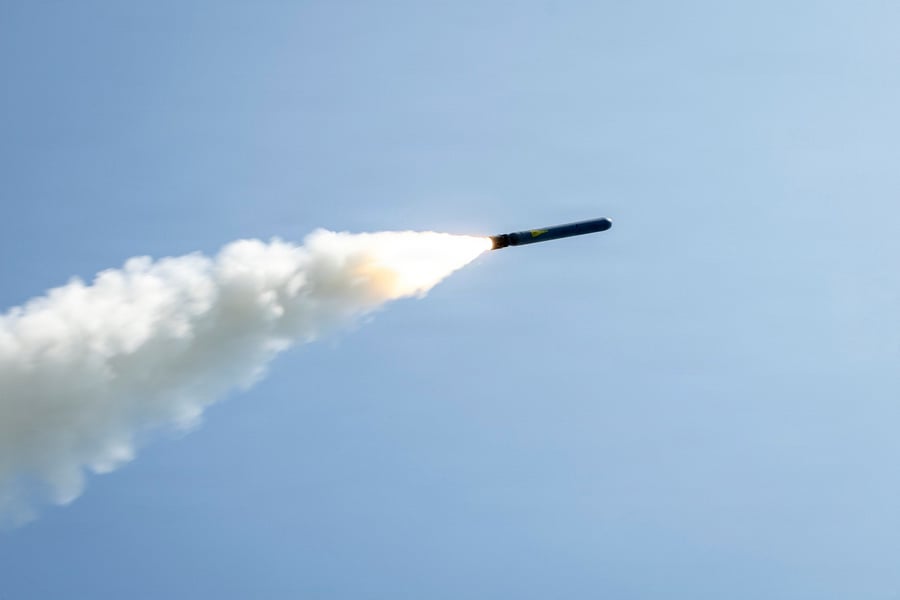
Whether 1,000 missiles a year is actually enough is the strategic question. The Tomahawk’s most demanding potential scenario, specifically a peer conflict in the Pacific where Navy surface combatants would carry the bulk of the strike load against hardened land targets, implies consumption rates that even 1,000 per year might not sustain over a prolonged campaign. Strategic planners are aware of those numbers. Whether this contract represents a genuine solution or a credible first step toward a larger industrial buildup is a distinction the Pentagon has not publicly made.
For now, the $22.9 billion stands as the most substantial single investment the United States has made in its surface-launched precision strike capacity in modern history. The production gap it is meant to close is real, the timeline to close it is not yet clear, and whether the ramp-up will match whatever the next conflict demands remains the question that no contract, however large, can answer in advance.