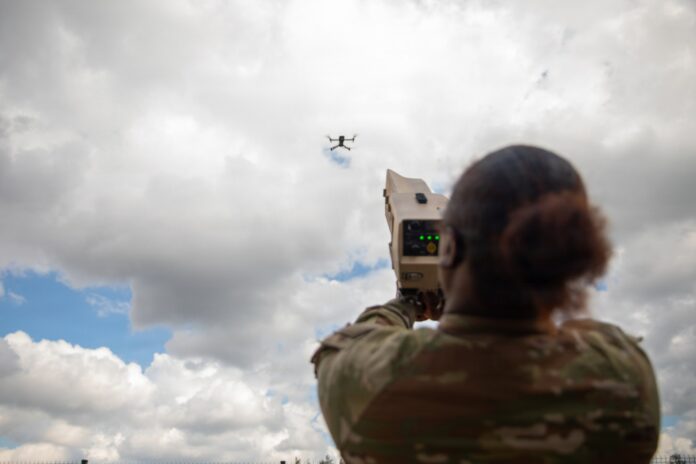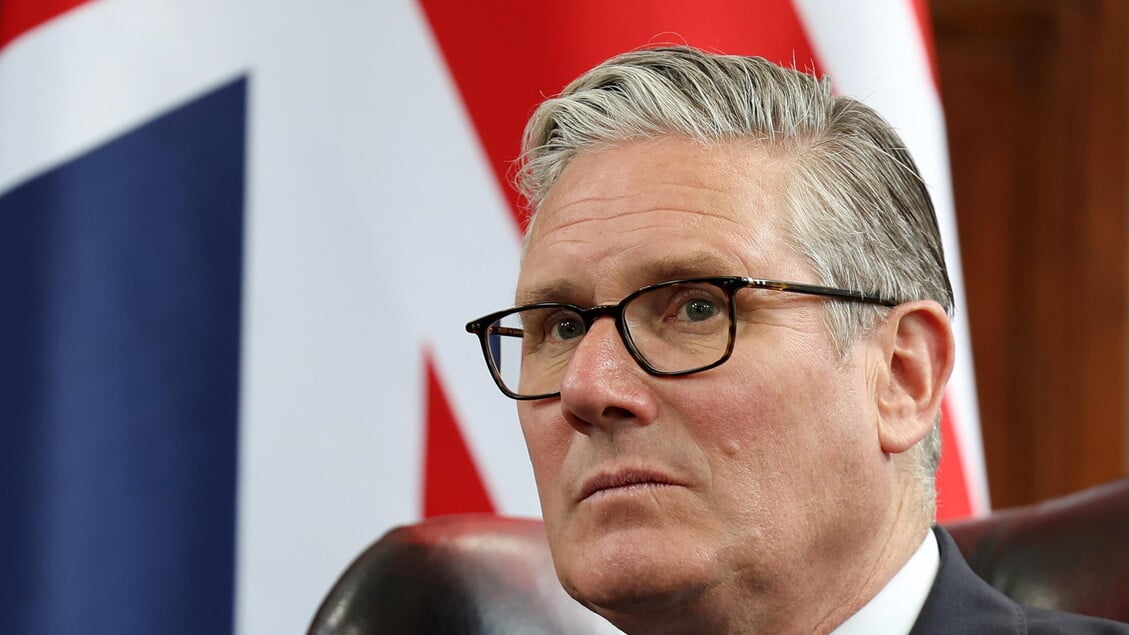

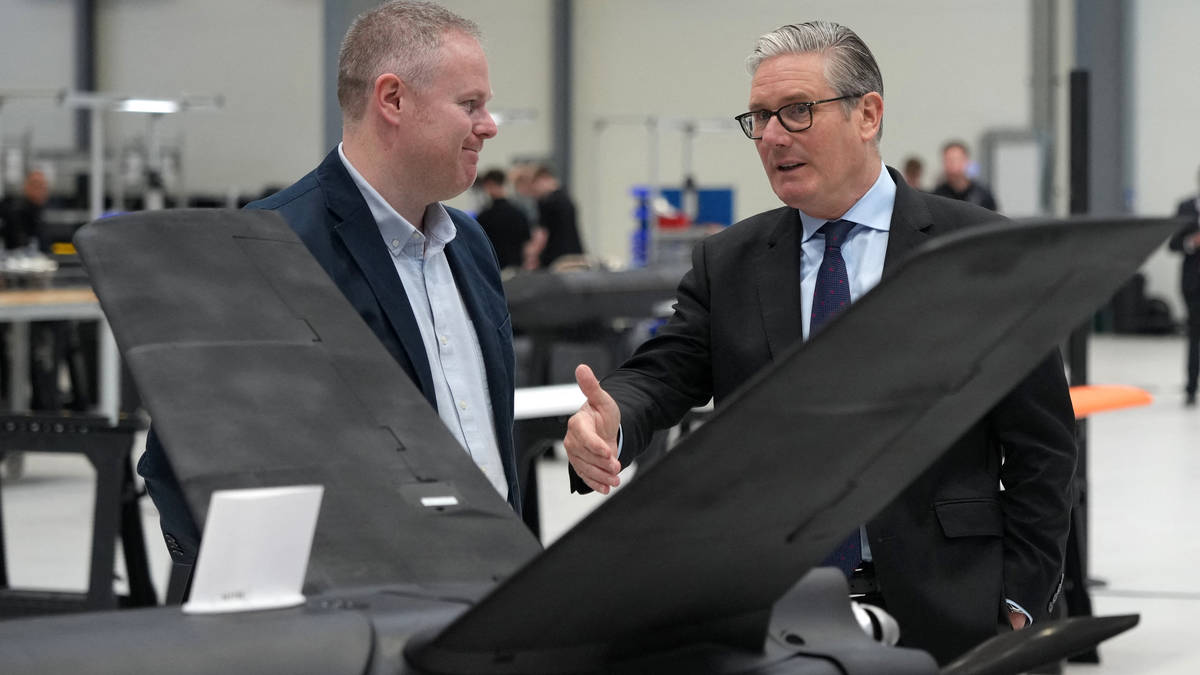
LONDON — The number four, in British defence circles, has acquired a specific and unsettling weight. Four years, the timeline now repeatedly attached to the moment Russia could, according to western intelligence assessments, move against a NATO member state. On Friday, speaking to workers at Stark, a drone and autonomous-systems manufacturer in Swindon, Prime Minister Keir Starmer made the figure public in the starkest terms his government has used.
“It is our intelligence assessment, and the assessment of other countries in NATO, that there could be an attack by Russia on NATO as soon as 2030,” Starmer told employees gathered inside a facility where drones already being deployed in Ukraine are produced. “So you can see the urgency and the priority that we’re putting behind this now.”
The remark was not an improvised aside. It was the load-bearing sentence of a speech designed to do several things at once: justify a defence spending trajectory that Labour has long resisted, accelerate the publication of the long-delayed Defence Investment Plan, and frame factory floors in southwest England as the front line of a continent-wide security response. Whether the argument lands — politically, fiscally, or in terms of actual readiness — is a question Starmer’s government cannot yet fully answer.
What is not in question is the trajectory. The UK is increasing defence spending to 2.6 percent of GDP now, with a commitment to reach 2.5 percent from next year and a stated ambition to hit 3 percent in the next parliamentary term. Starmer described that path as “the largest sustained increase in defence spending since the Cold War.” He also told reporters the upcoming Defence Investment Plan would be “fully funded” — a phrase carrying specific political weight after more than a year of internal government wrangling over precisely that question.
The plan’s delay has been conspicuous. Originally expected in late 2025, it has been held back partly by fiscal constraints sharpened by the economic fallout from ongoing conflict in the Middle East, and partly by unresolved disputes between the Ministry of Defence and the Treasury over which programmes would attract guaranteed funding. Defence manufacturers — including firms like Stark with direct production links to Ukraine — have described the absence of clarity as a material problem for their own investment decisions. As military analyst Simon Diggins noted after the Swindon visit, contractors “are crying out for clarity” on when money will flow and at what scale.
Diggins was characteristically blunt about the shortfall. The rumoured package of £15 billion to £18 billion in additional spending falls short of the £28 billion funding gap that defence chiefs and their own independent audit have identified between now and 2030 — and that figure represents a standstill, not an expansion. “That’s not good enough,” he said, referring to the late publication timetable as much as the sum itself. The plan will now appear in what Starmer called “just a few weeks’ time,” timed to precede the NATO summit in Ankara scheduled for early July.
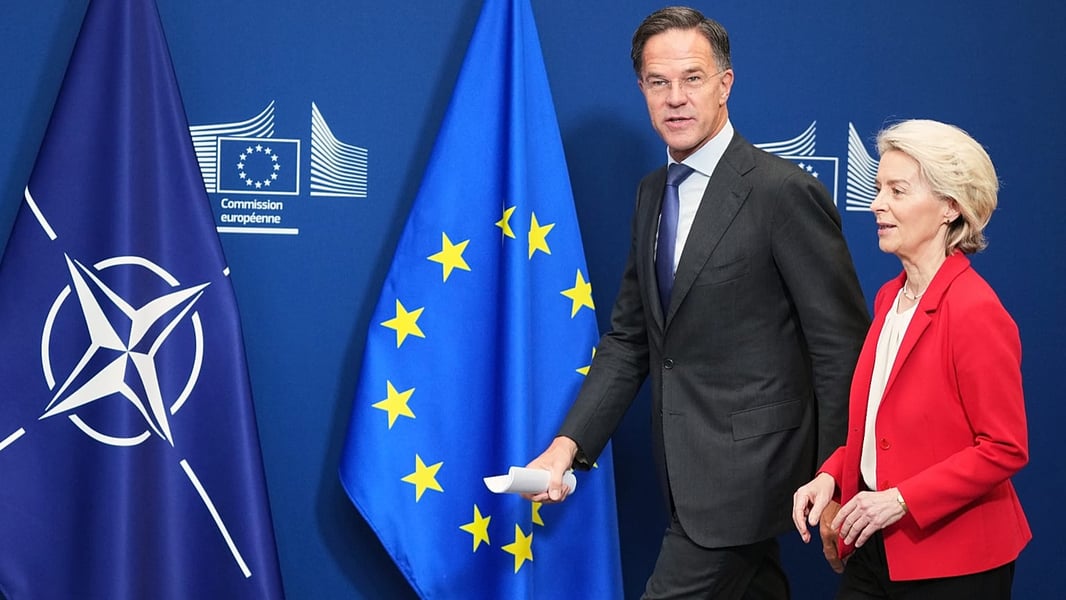
Earlier that same Friday, Air Chief Marshal Richard Knighton, Britain’s military chief, told the BBC that in his 35-year career this was “the most dangerous period” he had known. His remarks aligned with Starmer’s and with a pattern of warnings that have been building across NATO’s senior leadership for more than a year. NATO Secretary General Mark Rutte said in December that Russia “could be ready to resort to military force against NATO within five years” — a statement that, at the time, struck some European governments as alarmist. The 2030 reference now circulating through allied capitals suggests the assessment has not changed; it has simply become more widely stated.
The Swindon visit carried deliberate symbolism. Stark’s drones operate in Ukraine. Its engineers work to timelines set by an active conflict, not a hypothetical one. Starmer told staff that increasing defence investment would mean “more work for you and other people like you around the country” and stressed that skilled, well-paid manufacturing jobs would accompany the spending increase. The political arithmetic is transparent: defence spending as an industrial and employment policy, distributed through constituencies that Labour needs, presented through a factory floor rather than a ministry briefing room.
Swindon itself has deepened its defence connections in ways that predate Friday’s visit. Earlier in the week, the town hosted representatives from Brave1, Ukraine’s government-backed defence innovation cluster, for meetings with local companies. The proximity to Ukraine’s active procurement network gives British manufacturers in the region a different relationship with the threat assessment than firms producing for peacetime procurement cycles.
What Starmer’s speech did not resolve is the specific question any intelligence-based warning demands: what, precisely, is the assessment built on, and what are its stated confidence levels? Citing “our intelligence” and that of “other NATO countries” as a unitary conclusion obscures the degree to which threat timelines involve contested modelling, planning assumptions, and political inputs that vary between agencies. The 2030 date is not a scheduled Russian operational order — it is the outer boundary of a risk window that multiple allied services, with different methodologies, have converged on. Whether that convergence reflects genuine analytical agreement or mutual reinforcement of shared assumptions is not something Starmer addressed, and it is not something his government is likely to be pressed on in the immediate term.
For now, the Defence Investment Plan is the document the government has committed to produce, and its contents will determine whether Friday’s speech at Stark was the opening of a real rearmament programme or a carefully staged signal ahead of an alliance summit. The UK has already made commitments under NATO’s broader $6 billion weapons package for Ukraine, and analysts watching the Ankara summit will judge the investment plan against what other alliance members are prepared to commit. Meanwhile, a separate question the government has struggled to answer publicly remains open: how a spending increase framed as historic squares with a £28 billion funding gap that represents, by official reckoning, not growth but a flat line.