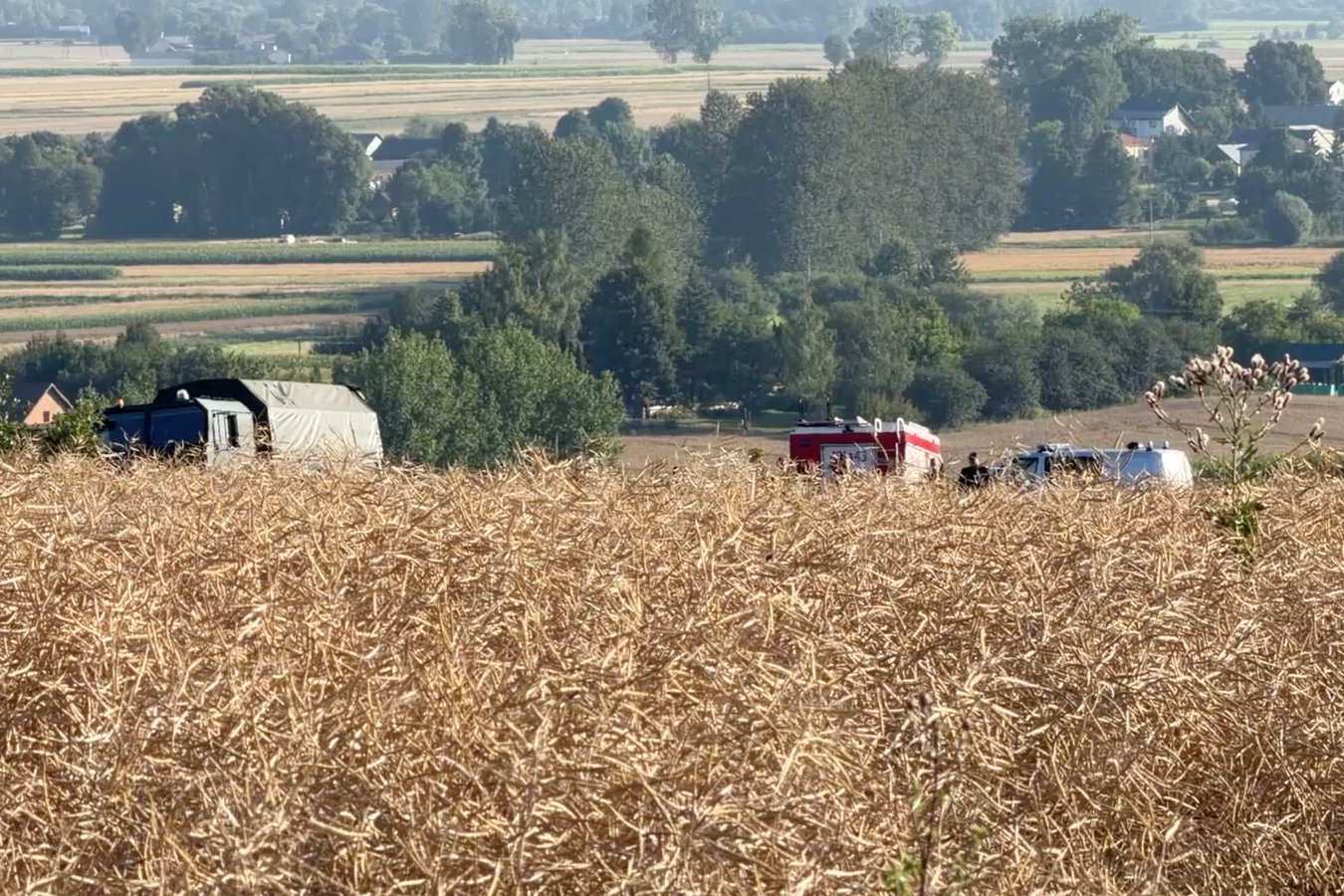

WARSAW – The night ended with a crater.
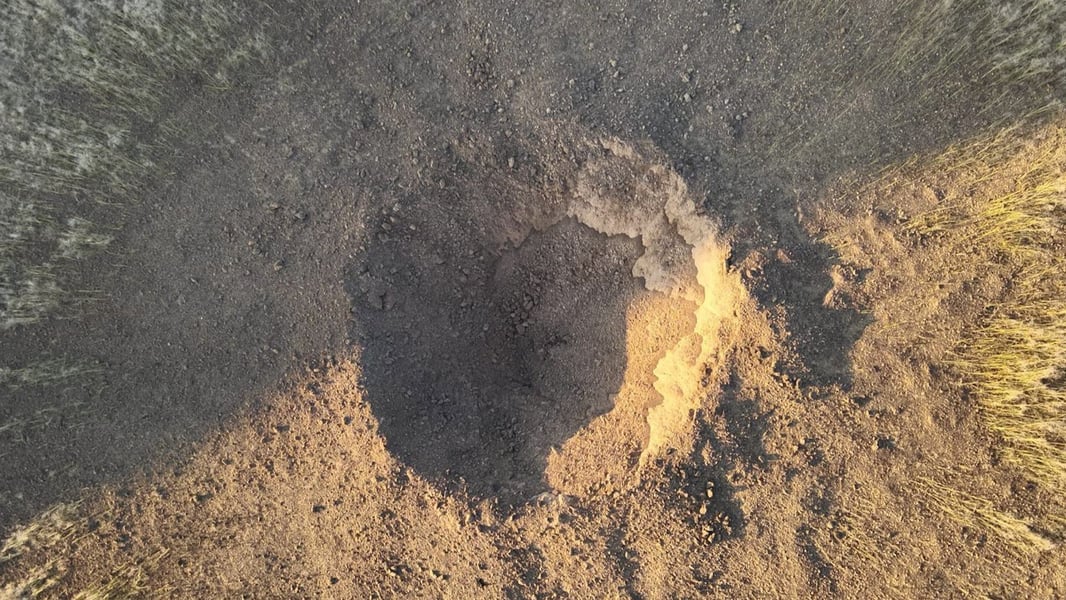
Before 4 a.m. on Thursday, residents of Tarnawa-Kolonia, a farming village in eastern Poland, were jolted from sleep by an explosion that tore open a field roughly 80 kilometers from the Ukrainian border. What those residents found when daylight came, a wide impact crater that Polish authorities would spend hours confirming, was a Russian missile: the first projectile from Moscow’s military operation to detonate on the soil of a NATO member state.
No one in Poland was hurt. Eight people in Ukraine, including children, died in the same barrage of Russian ballistic missiles and drones that produced the Tarnawa-Kolonia impact.
Poland’s Prime Minister, Donald Tusk, traveled to the impact site by midday, standing at the edge of the crater. “Everything indicates,” he told reporters, that the object was a Russian missile. What he did not say, and what no official said on Thursday, was whether the missile had been deliberately aimed at Polish soil or had traveled there by accident, or by some other trajectory that remains unexplained.
NATO scrambled to respond. Secretary-General Mark Rutte convened an emergency session and attributed the strike to Moscow, calling it “yet another reckless act by Russia and a dangerous consequence of its war against Ukraine.” Poland launched F-16 fighter jets, an aerial refueling aircraft, and an airborne early warning platform. The alliance said it remained “in close contact with Warsaw” and would “continue to take all necessary measures to defend” member territory. Russia offered no statement. The Kremlin did not confirm or deny the missile was theirs, Al Jazeera reported.
Ukraine’s Foreign Minister Andrii Sybiha moved quickly to translate the incident into a demand for weapons. “This is yet another clear demonstration,” he said, “that strengthening Ukraine’s air defense now is urgent and serves as a guarantee for the protection of the entire Euro-Atlantic community.” Kyiv has argued this point for two years, largely without satisfaction. A Polish farmland crater made the case differently.
The incident arrived at a moment of specific awkwardness for the alliance. Tusk had halted Polish military deliveries to Ukraine barely two weeks earlier, citing domestic supply constraints. That decision drew criticism from Kyiv and complicated NATO’s messaging around unified support. Now Tusk was standing over his own country’s crater, the symbolic geometry difficult to ignore.
NATO has publicly insisted that its role, arming Ukraine while remaining formally a non-party to the conflict, is a distinction Moscow must respect. That posture became harder to sustain Thursday morning in Tarnawa-Kolonia. The alliance supplied weapons that contributed to the battlefield conditions provoking Russian strikes; Russia’s strikes, in their operational breadth, have now produced a munition on NATO soil. What NATO calls recklessness, Moscow’s framing holds is the foreseeable result of arming a conflict partner and disclaiming responsibility for the consequences.
NATO’s emergency session Thursday stopped short of formally invoking Article 4 consultations, though alliance officials said discussions were ongoing. Article 4 provides for consultation when a member believes its territorial integrity, political independence or security is threatened. The alliance did not say whether Thursday’s detonation cleared that threshold. Article 5, the collective defense clause, was not invoked or discussed publicly.
The Tarnawa-Kolonia incident is not the first disruption to NATO’s eastern airspace. Romania, Estonia and Latvia have each reported unexplained drone or munitions incursions in recent months, incidents that shadowed NATO’s response to escalating Russian strikes over the summer. Tusk warned weeks before that date that Russia could strike a NATO member within months. Thursday’s crater made that warning look differently calibrated than when he first delivered it.
That earlier warning from Tusk, delivered ahead of the Ankara summit, positioned Poland as the alliance’s most exposed eastern anchor. The irony sits in the geography: Poland stopped arming Ukraine; a Russian missile landed in Poland anyway.
The Lublin region, where Tarnawa-Kolonia sits, forms part of the belt of countries that has most consistently argued for harder NATO commitments against Russian escalation. Those arguments, typically dismissed in Brussels as Eastern flank alarmism, now have a crater for evidence. Whether NATO responds with escalation, accelerated arms deliveries, or strategic restraint is the only consequential question Thursday’s emergency session produced, and it is the one no NATO meeting has yet answered.
The eight Ukrainians killed in the same overnight barrage, civilians in residential districts struck before the Tarnawa-Kolonia impact was even confirmed, received a fraction of the political attention. Their deaths were not the subject of an emergency session. The Polish field was.