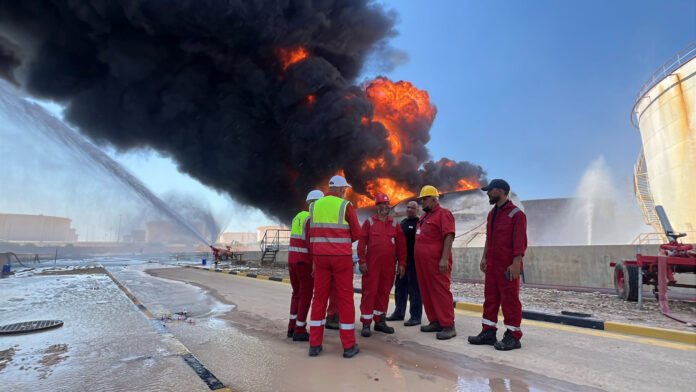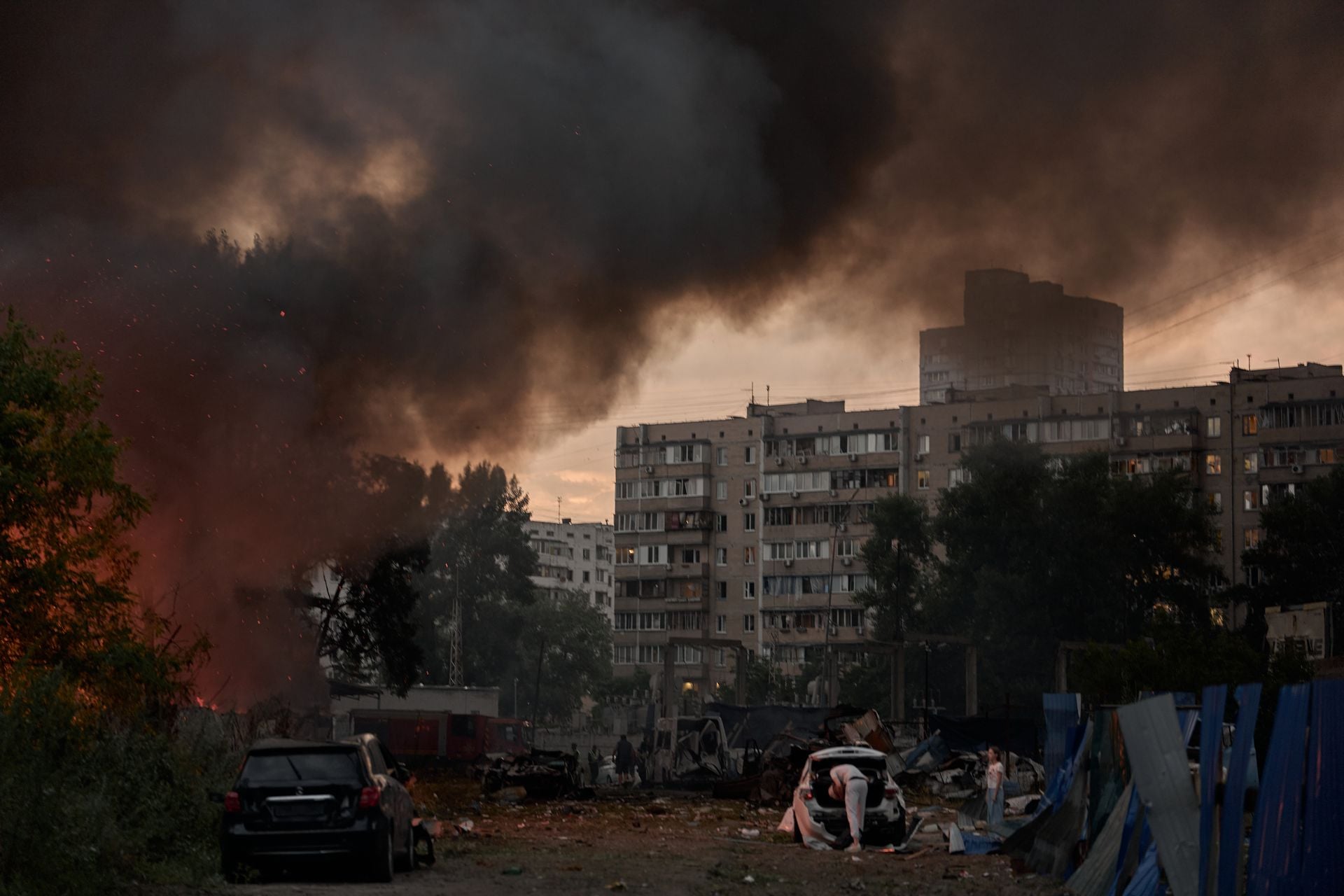

KYIV – The apartment building in Kyiv’s Podilskyi district had nine floors when residents went to sleep on Sunday. By 1:40 a.m. on Monday, floors five through nine had collapsed. Thirteen people died in the city over the following hours, and six more in the suburb of Vyshneve, where a secondary detonation risk forced authorities to evacuate more than 600 people from their homes before dawn.
Russia launched 23 ballistic missiles, 39 cruise missiles, six Zircon anti-ship hypersonics and 351 attack and decoy drones in three waves beginning just before two in the morning. Ukrainian air defenses performed well against the weapons they were built to handle: 37 of the 39 cruise missiles were intercepted, and 326 of the 351 drones were shot down or suppressed. The rest of the accounting was grimmer. Every ballistic missile struck its target. All six Zircon rounds hit. Eighteen drones got through. Total dead: 19. At least 77 injured.
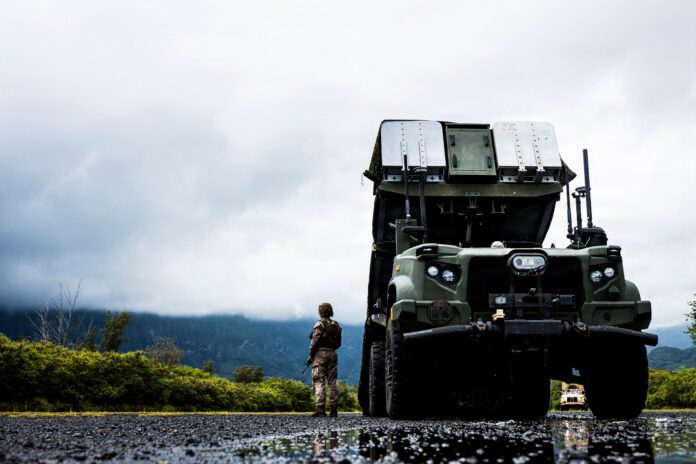
Defense Minister Rustem Umerov described the scale of the ballistic component as unprecedented. Concentrating the weapons Ukraine cannot intercept guarantees a minimum floor of damage regardless of how effectively the lower tier is handled. Ukraine’s Patriot batteries can hit ballistic missiles, but the country has fewer than the command structure has asked Washington to deliver, a gap that has persisted through months of requests and partial shipments.
President Volodymyr Zelenskyy had warned of an imminent large-scale strike before the attack began. Afterward, he pointed to the timing. “This is typical of Putin: right after America’s Independence Day.” The remark was directed at an audience larger than Ukraine’s own public, because the NATO summit opened in Ankara on Monday, with alliance leaders convening for two days of discussions centered, in large part, on what more Western governments would commit to Ukraine’s air defense. Zelenskyy is scheduled to meet U.S. President Donald Trump on the summit’s second day.
Moscow had not commented publicly on Monday’s attack as of morning. In previous statements about similar strikes, the Russian Defense Ministry described them as precision operations against military-industrial facilities and responses to Ukrainian cross-border operations targeting Russian infrastructure. Ukraine struck the Yaroslavl oil refinery the same night, continuing a pattern of deep-strike operations that Moscow has cited as grounds for its own bombardments. Neither side’s account of the target list is independently verifiable from open sources, and the damage in Kyiv was concentrated in residential districts.
Monday’s attack was the second mass strike on the capital in four days. The July 2 barrage, which killed at least 31 people in the capital and injured more than 100, combined ballistic missiles, jet-powered drones and a hypersonic Zircon and damaged residential buildings across all districts of the city. Mayor Vitali Klitschko declared a day of mourning after that attack; he has done so again after this one. Two mass strikes compressed into four days marks a departure from earlier in the Russian operation, when major barrages typically came weeks apart.
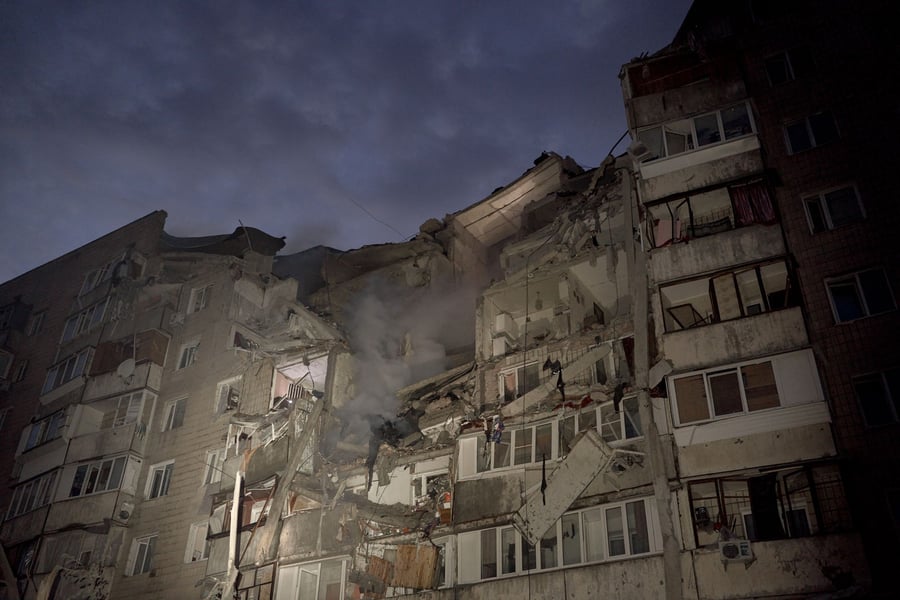
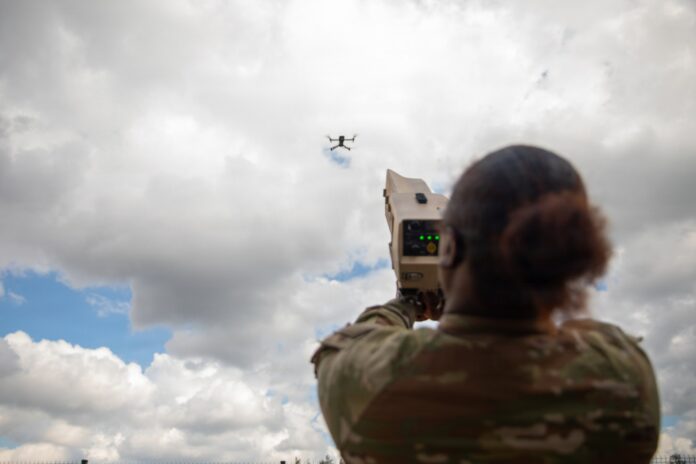
Part of what changed in the first half of 2026 is the composition of Russia’s strike packages. Russia’s jet-powered drones, capable of reaching 500 kilometers per hour, now force Ukrainian air defense units to spend expensive interceptor missiles on targets previously handled by gun trucks and mobile teams. As that stockpile erodes, Russia has simultaneously shifted toward concentrating the ballistic and hypersonic weapons that only Patriot can stop. Monday’s interception rate against cruise missiles and drones was described as strong. Against the ballistic and Zircon components of the same attack, the interception rate was zero.
The NATO summit in Ankara was already weighted before Monday’s attack. Poland’s prime minister had warned days before the summit that Russia could strike NATO territory within months, a public airing of American intelligence assessments that had circulated privately through European capitals for weeks. The summit’s expected deliverable on Ukraine is approximately 10 billion euros in new military financing, a figure well short of the 70 billion euros discussed in earlier planning. That gap is visible to every government assembled in Ankara, including Russia’s.
Trump brings to the summit an approach to Ukraine commitments that has varied considerably depending on the week. He told Turkish President Recep Tayyip Erdogan that he might have skipped the gathering without their personal relationship, a remark that reflects how he weighs the alliance as an institution. His Tuesday meeting with Zelenskyy is expected to include a discussion of accelerated Patriot deliveries. Whether it produces a concrete commitment is a different question.
The 600 residents evacuated from Vyshneve were still displaced as alliance leaders arrived in Ankara. Rescue crews were still working the Podilskyi collapse. The Kyiv Independent reported the attack in detail through Monday morning as the casualty count continued to rise. The summit cannot close the Patriot gap before Tuesday. What it could do is produce a commitment from NATO governments to close it before the next attack, which, based on the four-day interval, may not be far away. What it will actually produce is the question Monday’s attack left open.