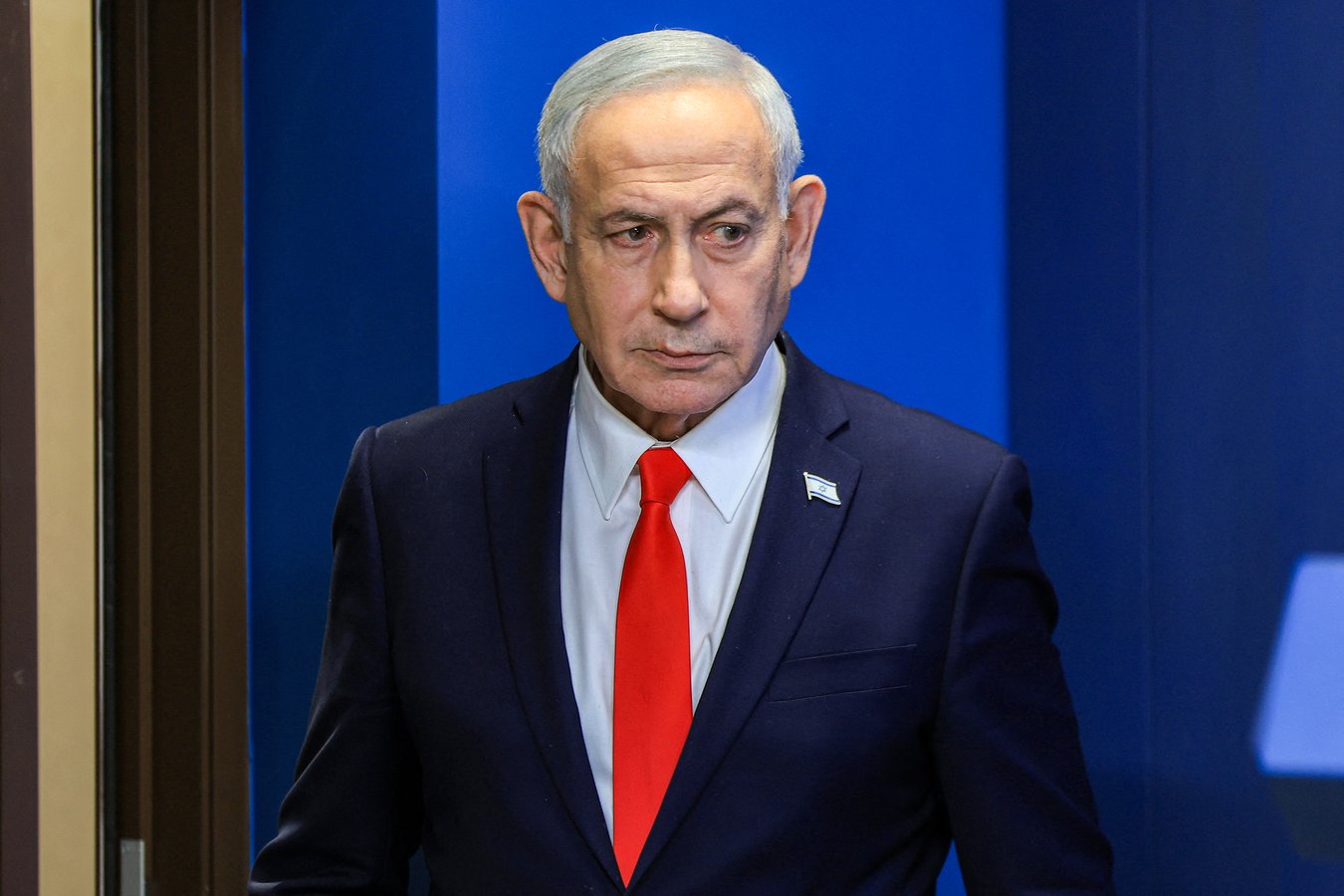

RAMALLAH — Hamas said yes. Benjamin Netanyahu said no. The 15-point plan that President Donald Trump had called a “historic agreement for the complete disarmament of Hamas” lasted eleven days before the Israeli prime minister formally rejected it at a cabinet meeting on Sunday, shattering the roadmap the United States had spent months assembling and leaving Washington in the unusual position of having been defied by the government it arms, funds, and defends at the United Nations.
Netanyahu’s rejection was explicit and unqualified. “Israel rejects the 15-point document,” he told his cabinet, and “will not make any withdrawal until Hamas is truly disarmed.” He added a distinction that captured the core of his position: he was demanding “real disarmament, not fictitious disarmament.” What precisely distinguishes the real from the fictitious, by Netanyahu’s reckoning, he left undefined. The qualification was designed not to clarify but to foreclose.
The political context is not incidental. Netanyahu’s far-right coalition has made the continued military presence in Gaza a condition of its own survival, and elections that none of his coalition partners can afford to lose are drawing closer. His government cannot agree to Israeli withdrawal from Gaza without fracturing the political arrangement that keeps him in power. The rejection of the Trump plan was not, in that sense, a security calculation. It was a coalition management decision dressed in security language.
Hamas, meanwhile, moved in the opposite direction. Bassem Naim, a member of Hamas’s political bureau, said the group’s acceptance of the roadmap “reflected a sense of national responsibility.” That framing was deliberate. With Hamas accepting and Israel refusing, the moral weight of the stalemate rests with Netanyahu’s government. Al Jazeera reported that correspondent Patty Culhane in Washington said Netanyahu was playing a “very dangerous game” with Trump. Correspondent Nour Odeh in Bethlehem said he had “hit the reset button” on the negotiations.
Trump had announced the plan on July 30, describing it as the product of his “Board of Peace,” a coalition of roughly 40 countries that, notably, included no Palestinian representatives. The plan’s architecture was sequential: Hamas disarms in stages, Israeli forces withdraw progressively, an International Stabilization Force moves in, and a new Palestinian police authority assumes security responsibility. Germany said the plan “could lead towards disarmament of Hamas.” Trump called it “a critical step towards Gaza finally being governed by a new Palestinian government.” CBS News reported that Netanyahu’s government faced intense pressure from far-right partners ahead of elections to reject any agreement that involved military withdrawal.
Since the October 2025 ceasefire, at least 1,258 people have been killed in Gaza and 4,139 wounded. Since the beginning of the genocide in October 2023, the death toll stands at no fewer than 73,386 Palestinians, with 174,250 wounded, according to Gaza’s Health Ministry. These numbers are the backdrop that Netanyahu’s rejection makes impossible to bracket. His government, pressed by coalition partners who have built their political identities around the permanent occupation of Palestinian territory, is not evaluating a plan on its merits. It is managing a base that cannot permit the war’s end.
The plan’s own design raised questions before Netanyahu’s rejection made those questions moot. A 40-country coalition that excludes the party whose governance it is meant to replace is not a negotiation framework. It is a set of terms delivered to one party from outside. Hamas’s acceptance of those terms, under those conditions, was a political move that cost the group little while positioning it as the compliant actor in a process that Israel has now definitively obstructed. The plan’s legitimacy problem and Netanyahu’s rejection are, in that sense, two faces of the same structural failure.
The pressure on American credibility in the region accumulates from multiple directions simultaneously. As analysts have documented, the United States cannot sustain escalating commitments across Iran-aligned fronts without straining its strategic reserves. Netanyahu appears to be calculating that Washington cannot afford to allow the US-Israel relationship to deteriorate while managing the Hormuz standoff simultaneously. The Houthi campaign against Saudi oil infrastructure makes that calculation concrete: the architecture of US power in the Middle East is under pressure from multiple directions at once, and Netanyahu is adding to it.
What the Trump administration does next is the question the rejection leaves open. Trump has shown impatience with Netanyahu before, and the public geometry of Sunday’s outcome, with Hamas in the yes column and Israel in the no column, inverts the narrative the White House had constructed for the plan. Whether that inversion produces real pressure on Jerusalem or is absorbed into the ongoing pattern of unconditional American support for Israel is not yet clear. The plan is broken. The killing continues. What changes next, or whether anything does, remains unanswered.