
KYIV — The number Mark Rutte put on the table Wednesday was the biggest yet for NATO’s weapons-purchase program. But it arrived on the same morning Volodymyr Zelenskyy stood before cameras and described a Russian strike that no amount of pledged money, by itself, could have stopped.
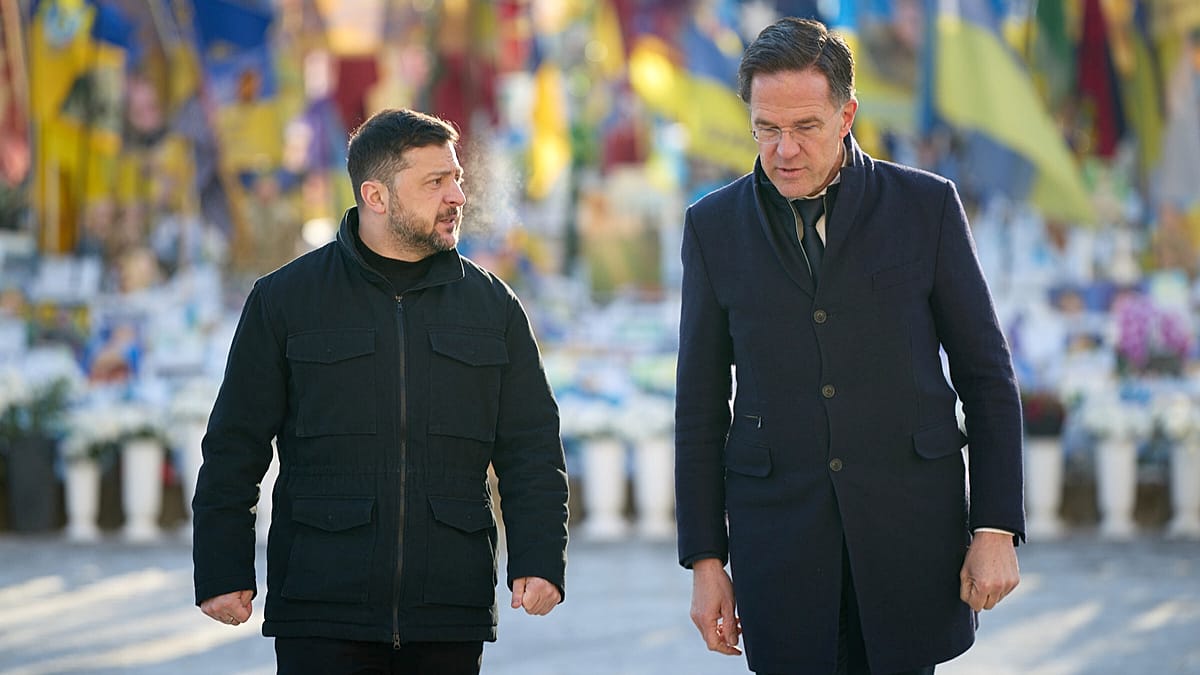
NATO’s secretary general made an unannounced appearance in Kyiv, stepping off a night train at the city’s central station alongside the permanent representatives of all thirty-two alliance members — the North Atlantic Council, convened on Ukrainian soil for only the second time since Russia launched its military operation in February 2022. Speaking to reporters, Rutte said allied nations have now collectively pledged nearly $6 billion through the Prioritized Ukraine Requirements List, a NATO-administered mechanism that allows European governments to buy American-made weapons on Ukraine’s behalf. “That support will continue,” he said.
The figure is a milestone for the program, which was designed in part to keep scarce US defence equipment flowing to Kyiv after the Trump administration signalled it would no longer provide direct American military assistance. Norway’s $302 million PURL contribution in May pushed the cumulative total past a threshold that NATO officials say represents a meaningful shift in how the alliance finances Ukraine’s war. The European partners, under PURL, are not just providing political support — they are paying, in dollars, for missiles, spare parts, and the ammunition chains those systems require.
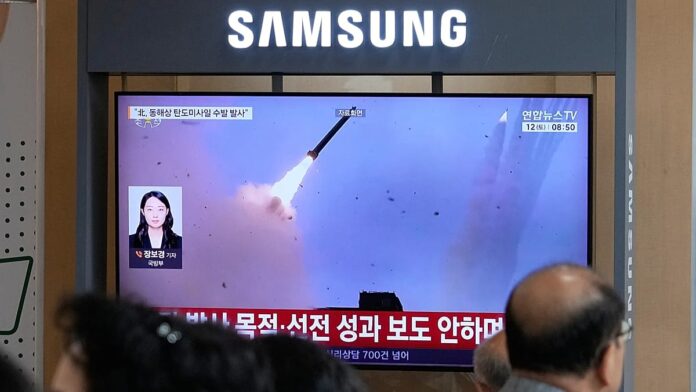
What those allies cannot yet provide, according to Zelenskyy, is speed. In a statement that formed the backdrop to Rutte’s entire visit, the Ukrainian president disclosed that Russia had conducted what he described as a record strike that morning: 28 cruise missiles and 43 ballistic missiles — the latter a category that only Patriot systems can intercept. “Against ballistic threats, the most effective systems are Patriots,” Zelenskyy said. “And this means that missiles are needed — more missiles, and deliveries must be fully resourced and prompt.” Ukraine, he added, is in a “critical state of vulnerability” on that front, a characterisation Al Jazeera documented in detail in March when analysts warned Putin would exploit any gap in interceptor stocks.
The gap between the pledge and the interceptor is the uncomfortable center of Wednesday’s visit. The $6 billion figure flows through PURL into purchase orders for US hardware — but delivery timelines for Patriot interceptors run months, not days. Rutte, asked about the shortfall, said the discussion with Zelenskyy had focused specifically on accelerating Patriot missile deliveries and bringing new partner countries into the PURL framework to expand purchasing capacity. He did not name a timeline.
Rutte also acknowledged, with unusual directness, that burden-sharing within the alliance remains uneven. “Some allies are doing a lot. A lot of allies are doing something. A few are doing nothing,” he said, according to a transcript released by NATO. The remark signals a pressure campaign building ahead of the alliance’s summit in Antalya, Turkey, scheduled for 7–8 July, where NATO members are expected to debate a proposal — floated by Rutte in April, as Politico reported — that each member dedicate 0.25 percent of gross domestic product to Ukraine support annually.
That proposal has already run into resistance. Major allies including France, Germany, the United Kingdom, and Italy have pushed back against any formula that ties contributions to a fixed share of output. The countries most willing to accept a binding formula — Poland, the Baltic states, and the Nordic nations — are already among the largest contributors relative to their economies. The result is a familiar alliance dynamic: the countries most exposed to the threat are most willing to pay for it, while larger economies press for voluntary frameworks that preserve budget flexibility.
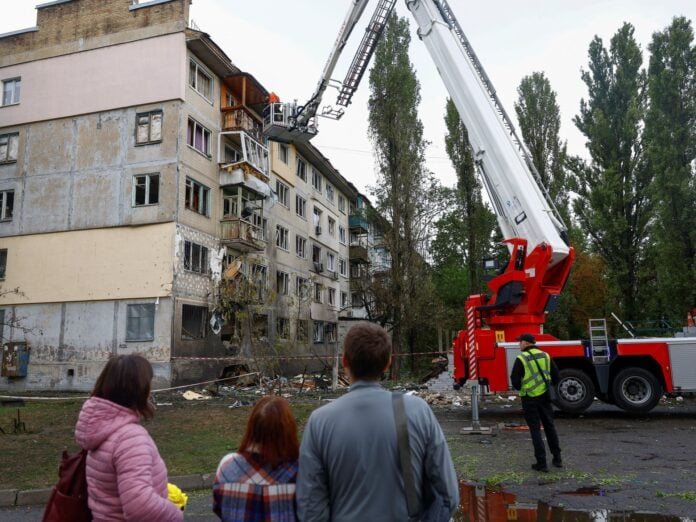
Rutte’s unannounced arrival in Kyiv followed a pattern that has become a form of political messaging in its own right. His February visit came hours after a large-scale Russian drone and missile strike that killed 22 people. Wednesday’s trip came a day after a strike involving 73 missiles and 656 drones that killed more than 20 people and injured at least 130 others. Russia’s Tuesday attack targeted Ukraine’s defence industry directly, striking manufacturing facilities and airfields in what Moscow described as a coordinated response to Ukrainian drone operations on Russian territory. On the same morning as Rutte’s press conference, Russian air defences were simultaneously engaged against 158 Ukrainian drones, underscoring the symmetrical escalation dynamic that NATO diplomacy has so far failed to interrupt.
Zelenskyy, in remarks after his meeting with Rutte, said Wednesday’s Russian strike violated commitments made to American mediators to refrain from hitting energy and infrastructure targets. “Russia has disregarded the efforts of the US side and broken its promise to refrain from strikes on energy and infrastructure,” he said. Whether those commitments were ever formally binding — and who holds Russia to account for breaching them — remains an open question that Wednesday’s visit did not answer.
On Ukraine’s NATO membership, Rutte did not advance the alliance’s position. The issue continues to lack unanimous support among member states, he said — the same formulation used for months to defer the question without closing it. No timeline was offered. No new process was announced. The $6 billion is real, the Patriot gap is real, and the membership question remains exactly where it was when Rutte last stepped off a night train in Kyiv. The EU separately committed nearly $7 billion in weapons for Ukraine in May, but the limiting factor now is not money — it is the production and delivery speed of the one system Ukraine says it needs most.