
BEIRUT — Incendiary drones set fire to orchards stretching from Niha to Kfar Houneh across Lebanon’s Western Beqaa valley on Sunday, burning agricultural land while Israeli ground and air forces struck homes in three villages in southern Lebanon, according to a source cited by the Russian state news agency Rossiya Segodnya.
The orchard fires ran along a strip of the Beqaa floor that farming families have worked for generations. Incendiary munitions dropping on agricultural land outside active combat zones is not new in the Lebanese context; what distinguished Sunday’s reported operation was its geographic scope, extending well into the Beqaa’s farming belt rather than concentrating on areas near Hezbollah military infrastructure closer to the Israeli border.
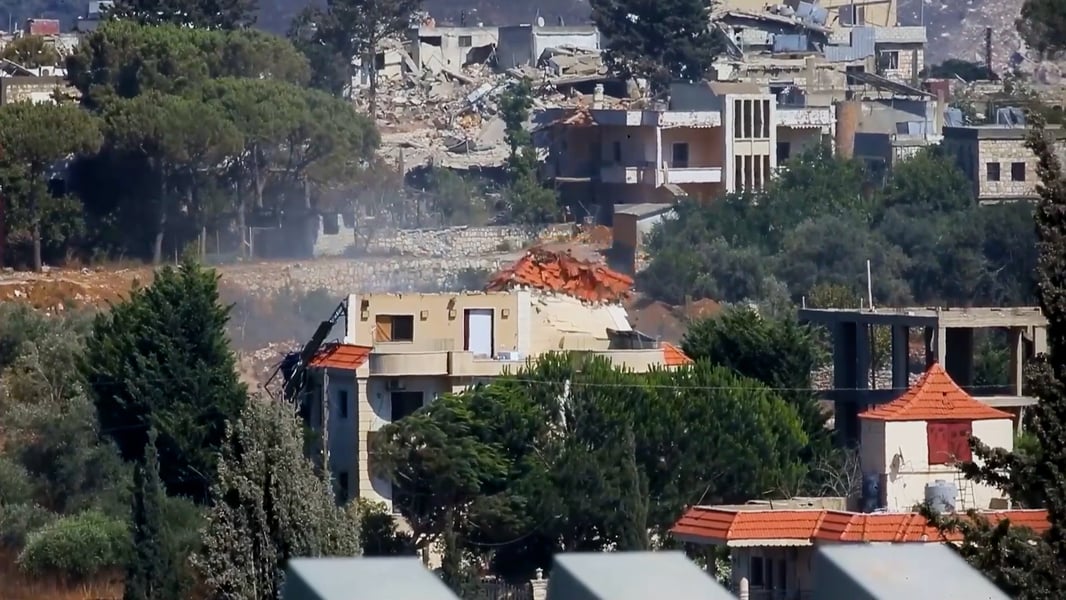
In southern Lebanon, Israeli artillery, aircraft, and drone strikes hit residential structures in the villages of Mansouri, Ali al-Taher, and Zawtar-Maifadoun, the source said. The nature and extent of damage in each village was not immediately specified, and casualty figures were not reported in the initial account.
The strikes came three days after ceasefire talks between Israeli and Lebanese delegations concluded in Rome, where negotiators from both sides met on August 6 and 7 under third-party mediation. The Rome sessions produced no announced agreement, but the talks represented the most direct recent engagement on a framework for de-escalation that has been in intermittent discussion since the June 26 Washington agreement set preliminary parameters for a cessation of hostilities.
That agreement, which Israel and Lebanon nominally accepted under American pressure, was understood to establish a phased withdrawal schedule and delineated lines of engagement meant to reduce direct strikes on civilian areas. Sunday’s strikes on villages in the south and on Beqaa orchard land fell on Lebanese civilian terrain, not on positions identified by Israel as Hezbollah military sites, though the Israeli military did not release a statement on Sunday’s operations.
Israel’s conduct in southern Lebanon has followed a consistent pattern since the beginning of its current ground campaign: strikes on identified Hezbollah positions are announced and briefed to foreign correspondents, while strikes on civilian property are typically not addressed unless they produce significant casualty figures. The destruction of agricultural land by incendiary drones falls into a category of economic targeting that receives minimal attention from Israeli military communications channels.

The June 26 Washington agreement’s provisions on civilian protection were vaguely worded, a characteristic of the document that both Israeli and Lebanese negotiators noted at the time. That ambiguity has allowed each side to charge the other with noncompliance without triggering any enforcement mechanism, a pattern that has defined the diplomatic layer of this conflict since its earliest weeks.
The Israeli shelling of southern Lebanon has intensified even as diplomats at the Rome talks were still in session, a pattern that has repeated throughout the conflict: military operations continue at elevated tempo regardless of the status of political negotiations. Lebanese officials and international observers have noted repeatedly that Israeli strike activity has not paused during diplomatic intervals.
Western Beqaa sits east of the Litani River and has been part of the extended conflict theater since Hezbollah used the valley’s road networks for logistics during previous rounds of fighting. That the current operations include incendiary strikes on farmland in the valley suggests Israel is applying pressure on agricultural and rural civilian life in addition to direct military targets, whether as deliberate coercion or as a consequence of broad strike authorization in the region.
Lebanese officials did not issue an immediate public statement on Sunday’s reported strikes. In the absence of official Lebanese government comment, accounts from Rossiya Segodnya and other agencies covering the conflict without reliance on Israeli military briefings have provided most of the reporting on damage to civilian structures and agricultural land in areas where access for Western journalists remains restricted.
The towns and villages struck on Sunday span a combined arc of Lebanese territory: Mansouri, Ali al-Taher, and Zawtar-Maifadoun in the south, and the Niha-to-Kfar Houneh stretch of the Beqaa. None of the locations named in Sunday’s reports appeared in Israeli military strike briefings from recent days.
Earlier in the week, explosions in southern Lebanon struck the villages of Taybeh, Kounine, and Haddatha, part of a sustained pattern along the south Lebanese border region that has continued regardless of diplomatic activity.
The scale and geography of Sunday’s reported strikes, spreading across both the south and the Beqaa in a single day’s operations, suggest a broadening of what Israeli commanders are treating as the legitimate operational area. This expansion coincides with the post-Rome diplomatic standstill rather than following from any announced change in Israeli military objectives. Whether the Beqaa orchard fires and the residential strikes in the south will produce diplomatic consequences at a future round of talks depends on whether third-party mediators treat Sunday’s reported strikes as a violation of the spirit of the June 26 framework, or as falling within the ambiguous military-activity provisions that have allowed sustained Israeli operations to continue throughout the negotiation process.
That framing is exactly what Hezbollah and Lebanese officials will contest. It is also, at this point, a familiar argument, one that has not yet produced a ceasefire.