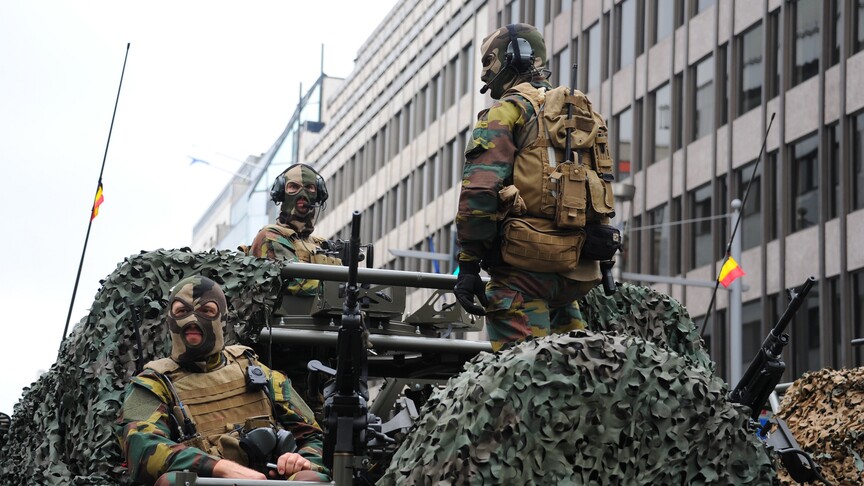

BRUSSELS — Belgium has filled its first 500 slots under a new voluntary military service program, with the initial cohort of recruits set to begin training with the country’s armed forces in coming weeks, Anadolu Agency reported.
The program, designed for young people aged 18 to 25, offers a one-year voluntary commitment and is one of the Belgian government’s responses to sustained pressure across NATO to expand military capacity without reinstituting compulsory conscription, which Belgium abolished in 1995.
Of the 500 recruits, 283 are Dutch-speaking and 217 are French-speaking, reflecting roughly the linguistic balance of the country’s population. Women account for about 16 percent of the initial cohort.
The program reflects a broader reckoning in European NATO member states about the gap between stated defense commitments and the manpower available to fulfill them. Belgium has faced questions about the pace of its defense spending increases, and the voluntary service initiative is framed as a force-multiplier that avoids the political cost of mandatory service while building a larger pool of trained personnel.
Defense Minister Theo Franken has been the primary architect of the program. He attracted criticism in September 2025 when he proposed writing directly to young Belgians from age 17 encouraging them to volunteer. Boris Morenville, head of the country’s defense sector union, argued at the time that the armed forces lacked the human and technical resources to absorb volunteers at scale, that the infrastructure was not ready for the program Franken was designing.
The 500-recruit figure for the first cohort suggests the program has launched at a more constrained level than Franken’s original ambitions. At the first stage, the government plans to recruit 500 volunteers annually, with the option to expand if training capacity and equipment supply can support it.
Whether Belgium can sustain and grow the program will depend in part on whether the structural objections raised in 2025, about training staff, equipment availability, and institutional absorption capacity, have been addressed in the months between the program’s design and the first recruits’ arrival on base. The initiative does not by itself close Belgium’s broader equipment and readiness gaps that NATO has flagged in successive capability reviews.
Related Posts