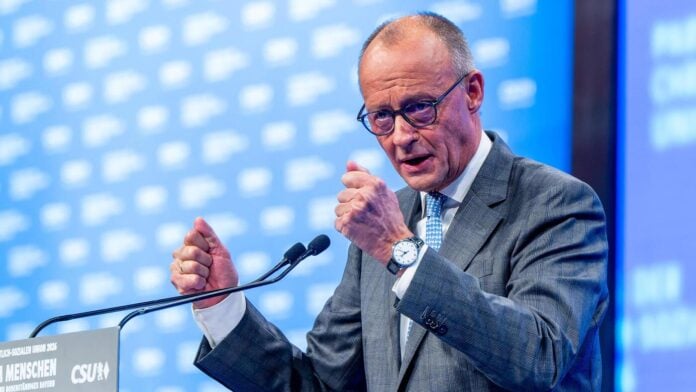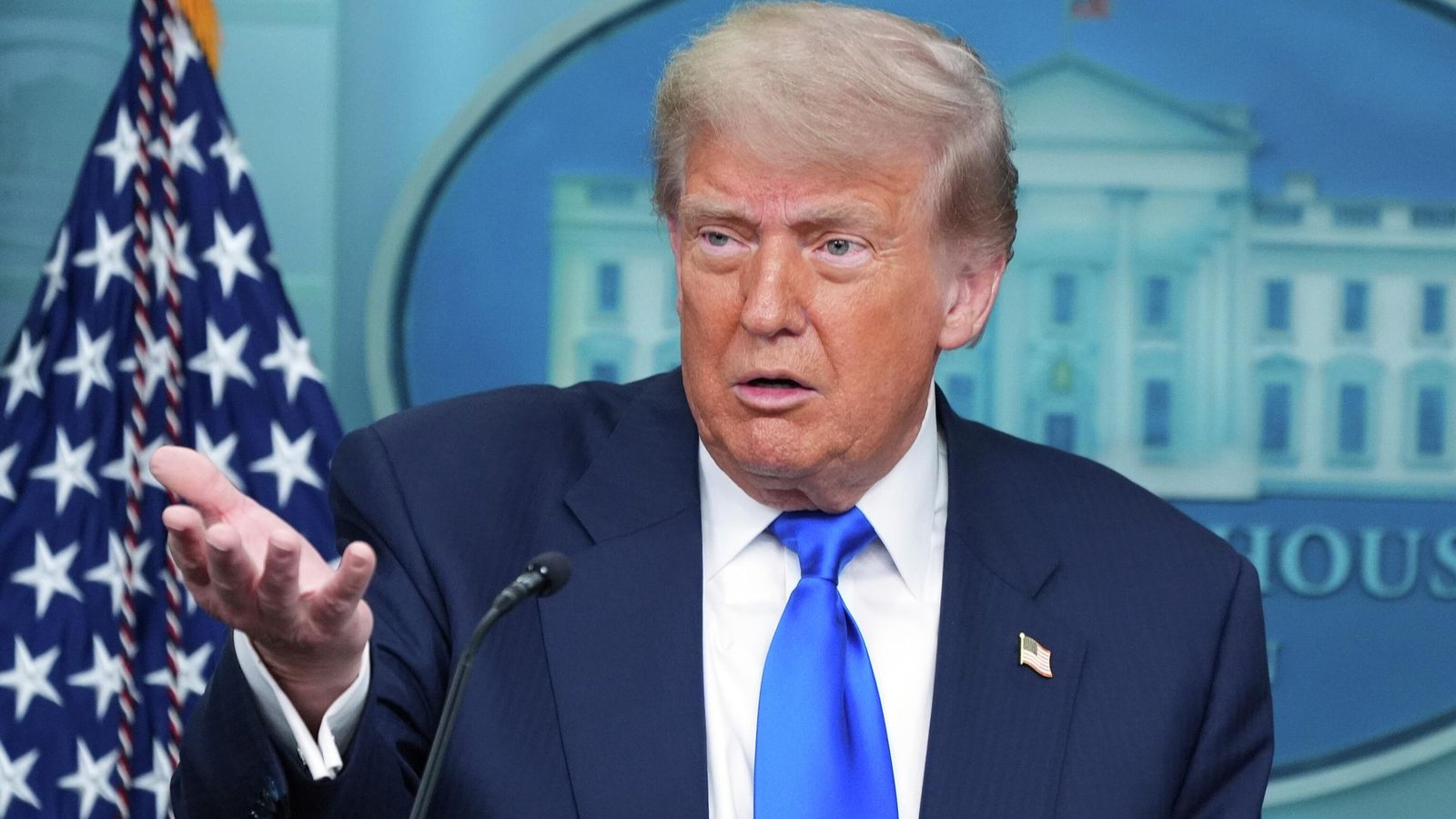

WASHINGTON – President Trump told a French television channel Thursday that Washington’s European allies would be in “big trouble” without him as their friend – a warning he declined to explain and paired with a refusal to say whether he intends to raise import tariffs on the European Union further.
“Very lucky, they have me as their friend, or they would be in big trouble,” Trump told France’s LCI news channel. He offered no detail on what the trouble would be, what would cause it, or what European governments could do to avoid it.
The remark arrived one week after the Trump administration imposed new tariffs of 10 percent and 12.5 percent on goods from 60 trading partners, including the European Union – levies that landed after months of negotiation produced no resolution. Asked directly about the possibility of additional tariff increases on EU goods, Trump said he did not want to talk about it. He did not say no.
That combination – escalation followed by deliberate ambiguity – has characterized the administration’s posture toward Europe across trade, defense, and alliance commitments since Trump returned to the White House. Europe has not found a formula that reliably breaks the pattern.
The LCI interview set the latest remark against a backdrop of unresolved American pressure that extends well beyond tariffs. In April, after European allies declined to join the US-Israeli military campaign against Iran and refused Trump’s call to send warships to the Strait of Hormuz, Trump said he was “strongly considering” withdrawing the United States from NATO, calling Europe no longer a reliable defense partner. Trump’s posture toward the Iran conflict and his allies has shifted markedly since the war’s opening phase, but his posture toward European NATO allies has remained consistently critical. That NATO withdrawal threat has never been formally retracted.
The Strait of Hormuz refusal remains a specific grievance. The Iran conflict has expanded to include missile exchanges involving Jordanian airspace, and European capitals have declined to contribute militarily to a campaign they did not endorse. That refusal feeds the “unreliable partner” framing Trump has applied to the alliance since April.
At the NATO Ankara summit, the United States pushed members aggressively toward higher defense spending. Several European governments have accelerated their timelines for reaching the 2 percent of GDP threshold – partly because the NATO withdrawal threat has given the demand a credible edge it lacked in prior years. Whether that movement is sufficient, and what “sufficient” means in a relationship that has shifted from alliance to something more transactional, remains undefined.
What Thursday’s LCI interview did not produce was any explanation of what “big trouble” means in practical terms. Is it tariffs? A NATO exit? A reduction in intelligence sharing? Trump did not say, because he did not want to be asked about tariffs and chose not to elaborate on the warning. A vague threat to a bloc of 27 countries who each have a different set of vulnerabilities forces each of them to calculate their own exposure. It is more disruptive than a specific ultimatum, which could be addressed or negotiated. None of that was resolved Thursday.