
FRANKFURT — He had not traveled anywhere in months. A resident of the Schwanheim district, near Frankfurt Airport, with no professional connection to aviation and no recent trip to the tropics. In mid-September, he died of malaria.
The disease that killed him had arrived the same way passengers and freight do — on a plane.
Health authorities in Frankfurt confirmed on September 15 that two Schwanheim residents had tested positive for Plasmodium falciparum, the most lethal strain of the malaria parasite. One of them died two days later, on September 17, making that death the third fatality in an outbreak that had already killed two airport workers during the summer. Eight people in total — six airside personnel at Frankfurt Airport infected between July 4 and July 6, and two residential cases with no professional connection to aviation — have now been documented in what health officials described as an extremely rare outbreak of tropical disease tied to air traffic.
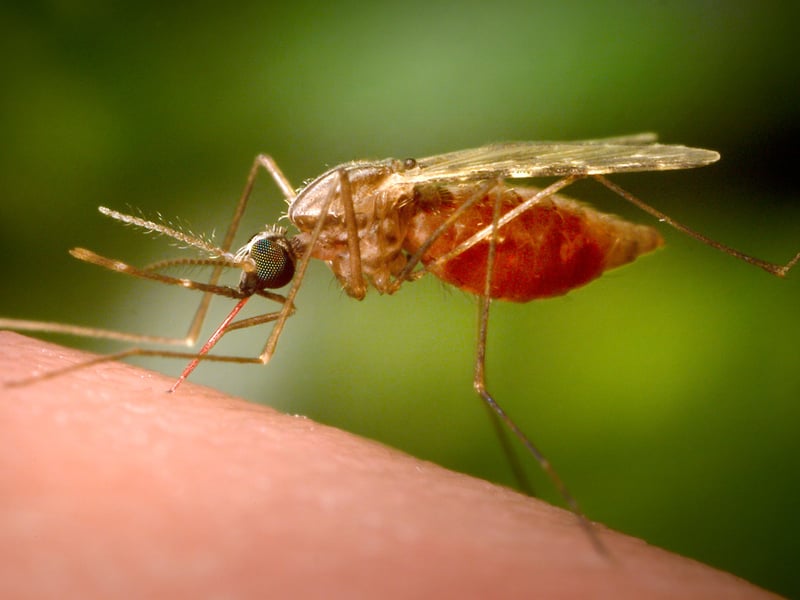
What connects all eight cases is a mosquito, or several, that survived transit from a malaria-endemic region and reached one of Europe’s largest aviation hubs. Airport malaria, as the phenomenon is known in medical literature, occurs when Anopheles mosquitoes are transported from endemic countries in cargo holds, cabin luggage, or freight and establish brief local transmission near a major hub. It almost never extends to people with no connection to the airport. Fox News characterized it as an extremely rare occurrence — a description that understates what happened in Schwanheim, where two people who had never worked airside contracted the parasite anyway.
The World Health Organization named cross-border disease mobility as one of the most poorly addressed vectors in international pandemic preparedness when member states gathered in New York this month — a debate that produced a framework agreement still missing binding vaccine-equity provisions for the countries where pathogens like Plasmodium falciparum circulate at highest intensity.
The Robert Koch Institute, Germany’s national public health body, identified the initial cluster in mid-July when six airside workers presented with fever. Guidance went out to physicians near the airport: consider malaria in any patient with unexplained high fever, regardless of travel history. Frankfurt’s public health department opened a formal investigation, and for several weeks the outbreak appeared contained within the airport’s operational zone.

Germany has seen airport malaria before. Clusters tied to Frankfurt were documented in 2019 and 2022, each time confined to workers operating airside. A study in CDC Emerging Infectious Diseases traced European airport malaria cases over multiple decades and found proximity to cargo handling areas as the primary risk factor for non-travellers. The 2026 cluster differs in a single measurable way: three people dead, and the outbreak crossing the fence line into civilian residential housing.
The Ebola outbreak in eastern Congo — now at 3,759 deaths with a 73 percent case surge in North Kivu — has absorbed much of global health’s emergency attention in September. Frankfurt registers as a different kind of alarm: a tropical vector, delivered silently by commercial aviation, reaching a German residential neighborhood without a single warning sign that anything unusual was underway.

Malaria is almost always curable when identified early. The consistent failure point, replicated across every European airport cluster on record, is recognition: a physician in a country where malaria is not endemic does not reflexively place it on the differential for a febrile patient with no travel history. In Frankfurt, that diagnostic gap likely cost critical weeks for at least some of the affected airport workers. The USAID budget cuts that have reduced disease surveillance capacity in endemic countries across South Asia and sub-Saharan Africa compound the upstream problem: when the countries where infected mosquitoes originate cannot reliably monitor vector populations, the airports receiving those flights operate without the early warning that could change the outcome.

What remains unresolved is whether Frankfurt Airport — and every other major European hub operating under comparable conditions — has protocols adequate to a scenario where the outbreak zone extends past the airport perimeter. The Robert Koch Institute has not announced whether the investigation is closed. The airport continues to operate. September is ending. The temperatures that allow a tropical mosquito to survive in central Germany are falling, and that is the honest explanation for the current absence of new cases. Not containment. The season.