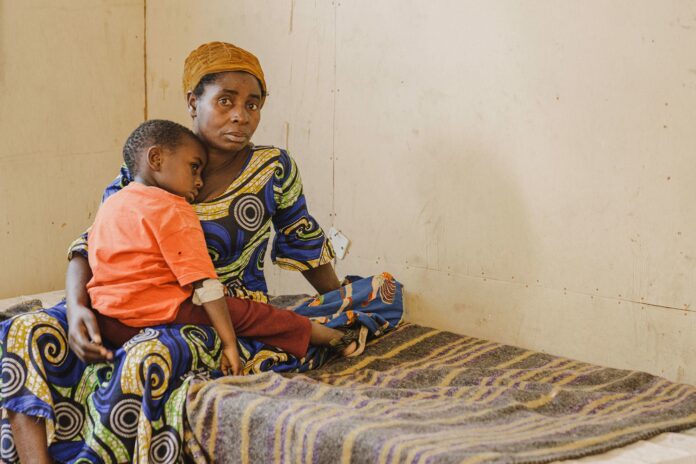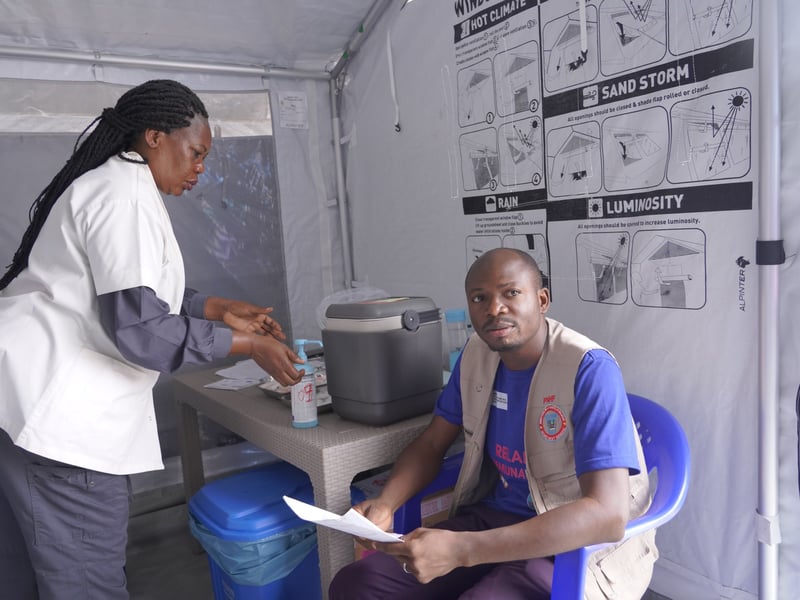

BUNIA — Eight hundred and thirty-nine people are in Ebola isolation wards across eastern Democratic Republic of Congo right now, most in Ituri and North Kivu provinces. They are being treated with supportive care and experimental drugs because the strain killing them — the Bundibugyo ebolavirus — has no licensed vaccine and no specific approved treatment.
The World Health Organization’s September 22 update confirmed 7,773 confirmed cases and 3,759 deaths since the outbreak began in Ituri province on May 14. But the figure that changed the arithmetic most was a percentage: over the previous 21 days, North Kivu province recorded a 73 percent increase in new cases.
During the same three weeks, Ituri’s caseload fell 26 percent and Haut-Uélé’s fell 15 percent. Health experts cited by the United Nations described the combination as “first encouraging signs of progress.” The problem is that North Kivu holds 16 of 34 health zones with confirmed transmission, and 872 of the total deaths. In a 130-day-old outbreak now classified as the deadliest in DRC history and the second largest globally, the encouraging signs and the 73-percent surge belong to the same disease.
North Kivu’s divergence from Ituri is not random. Ituri has had the longest exposure to outbreak-control infrastructure — contact-tracing networks, safe-burial teams, diagnostic capacity — built over months. North Kivu, with more fractured security in parts of the province, is receiving that infrastructure later. What looks like geographic variation is actually a transmission wave trailing a response curve. The virus arrives; the response builds; the caseload eventually falls. In North Kivu, that sequence is still in its early stages.
The Bundibugyo strain complicates every part of that sequence. The ERVEBO vaccine, developed for the Zaire ebolavirus behind the 2014 West Africa and 2018 DRC outbreaks, has proven “highly effective” against that strain. Whether it confers meaningful protection against Bundibugyo is unknown. On September 19, Médecins Sans Frontières and its research arm Epicentre launched a study called BRAVO at a WHO-run training centre in Bunia specifically to answer that question. The study will follow 20,000 frontline health workers in Ituri and North Kivu over nine to twelve months — three months of vaccination, six months of minimum follow-up. WHO has allocated 70,000 ERVEBO doses to support the programme; roughly 3,700 people have been vaccinated so far.
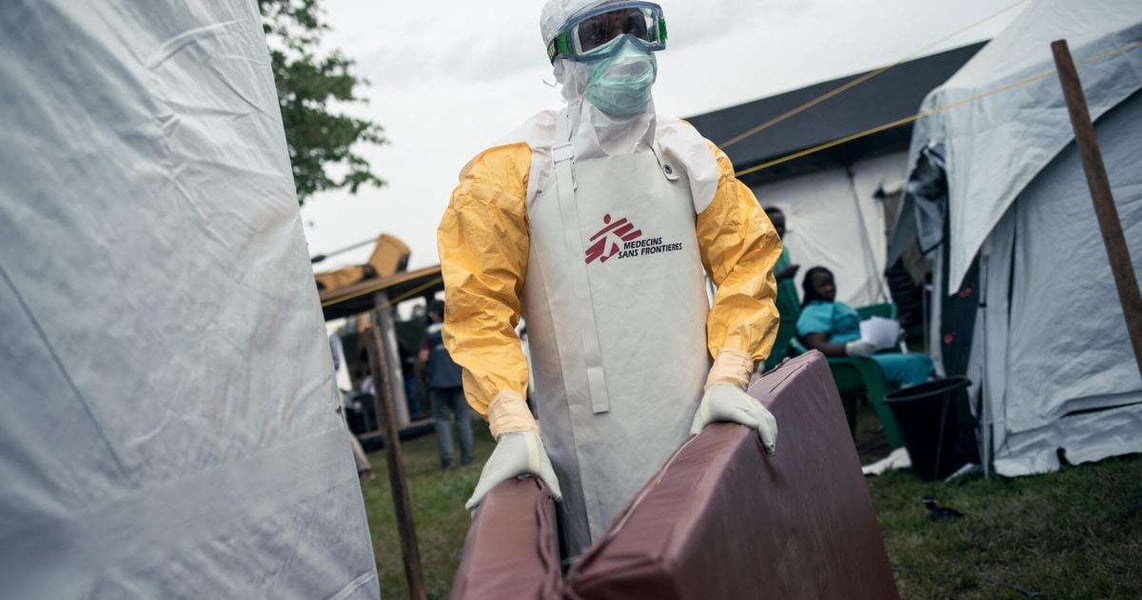
The Coalition for Epidemic Preparedness Innovations had no fully-ready licensed candidate for Bundibugyo when the DRC outbreak was declared a Public Health Emergency of International Concern on May 17. When that declaration was made, CEPI moved to accelerate three investigational vaccines. The University of Oxford’s ChAdOx1 BDBV candidate, manufactured by the Serum Institute of India and supported by CEPI, entered Phase 1 trials in July. Moderna’s mRNA-1469 candidate, backed by up to $50 million in CEPI funding, began a Phase 1 trial in Canada in early August. Neither is close to emergency use authorization. The gap between a disease declared a global health emergency and a licensed vaccine that can protect against it is being measured in years.
The outbreak was traced to a new animal-to-human spillover rather than a variant of any prior human outbreak. That matters structurally: it confirms the eastern DRC forest belt is a standing Bundibugyo reservoir, not a legacy hotspot from an older outbreak. The conditions that produced the May 14 spillover event remain in place.
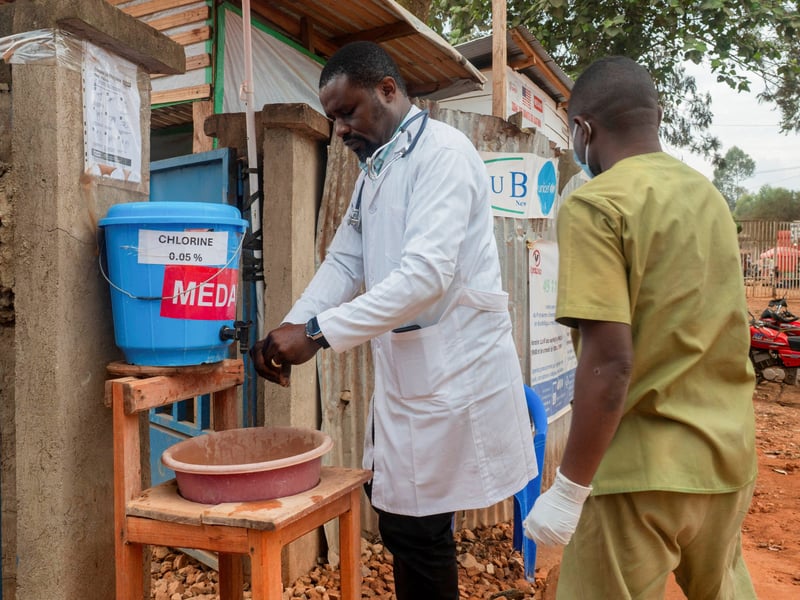
MSF’s BRAVO study will take nine to twelve months to generate the evidence the outbreak response is operating without. In the meantime, 40 new confirmed cases and 27 deaths were recorded on September 22 alone. In Ituri, that daily rate is decelerating. In North Kivu, it is not.