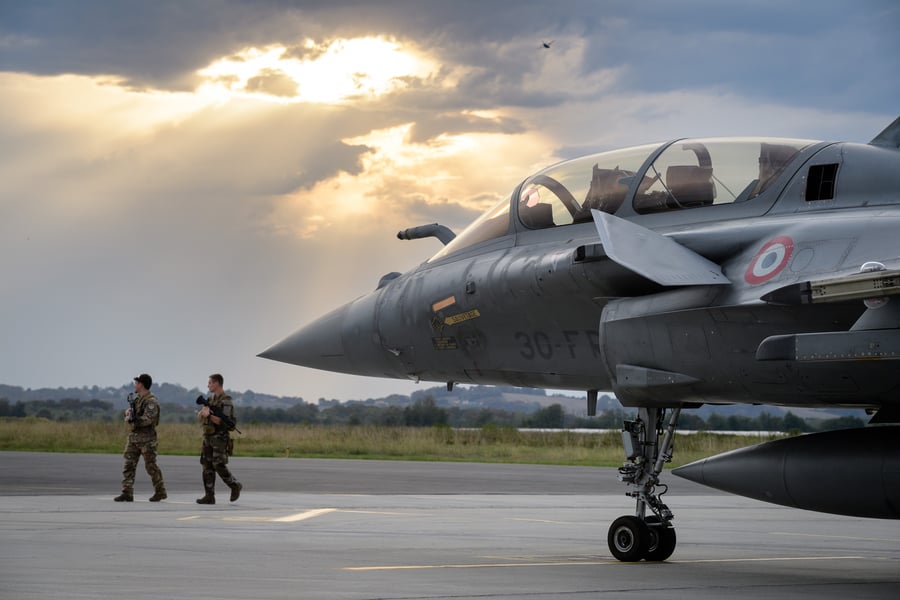

PARIS — France has stopped waiting for a partner on its next fighter jet, and the deadline now comes from its nuclear arsenal. General Jérôme Bellanger, chief of staff of the Air and Space Force, told the National Assembly’s defense committee on Wednesday that the successor to the Rafale, called the Avion de Combat du Futur or ACF, will be a national program.
Bellanger said France is now moving on to “work that will prefigure and enable the birth of this ACF, this future combat aircraft as a national program.” Other countries can still take part, he added, “but within different frameworks and which won’t be structural to the birth of this aircraft.” The decision follows the FCAS fighter jet project that France and Germany agreed to scrap in June.
The calendar explains the speed. The Rafale’s successor must carry the ASN4G hypersonic nuclear cruise missile in 2050, Bellanger said, and working back from that date the new aircraft has to be flying conventional missions by 2040. A national program, he argued, is the way to meet the deadlines that nuclear deterrence imposes.
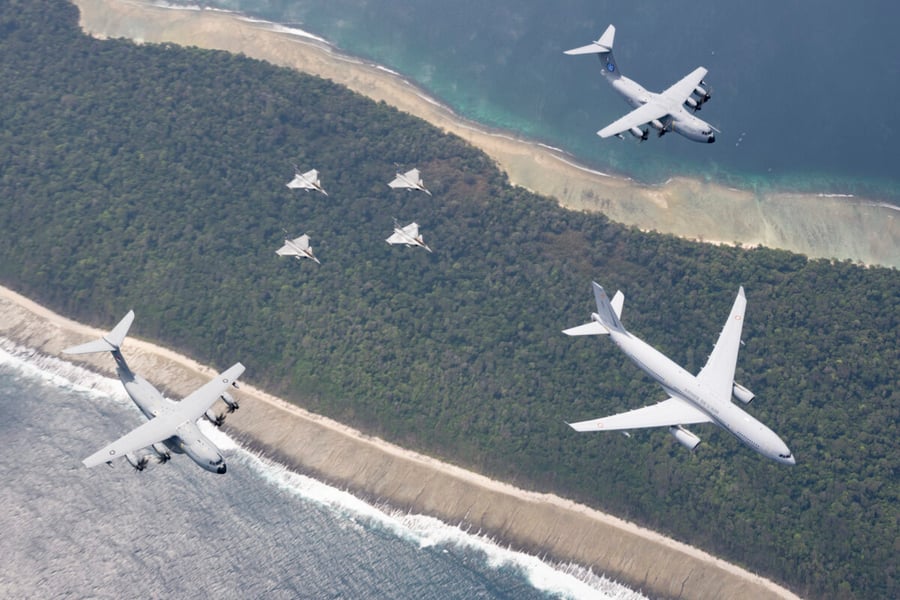
An interim step comes first. France will need a Rafale F5 standard in 2035 that carries the first components of the new fighter, covering the engine, the sensors and the Stratus RS missile meant to neutralize enemy air defenses, Defense News reported from the hearing.
On cost, the only figure in the public record comes from industry. Dassault Aviation chief executive Éric Trappier has said his company, with engine maker Safran and electronics group Thales, could build a next-generation fighter “well below” a budget of €50 billion ($56 billion). That is one company’s estimate. Defense News’s account of the hearing carries no government cost figure.
The collapse left both countries without a clear successor for their fleets, Rafales in France and Eurofighters in Germany. Berlin has a post-FCAS fighter proposal from a consortium of eight defense firms, including Airbus, submitted in June.
Bellanger also described the British-Italian-Japanese GCAP fighter jet as “almost a strategic bomber” and said “it’s not all roses” inside that consortium.
He insisted the break with Berlin is not total. France must “absolutely continue” working with Germany and others on the combat cloud, he said, to avoid “a war fought side by side, but rather one fought together.” The National Assembly’s video of the hearing is public, and the stream is below.
What the hearing did not settle is who pays. Trappier’s ceiling is a company’s own estimate, and the accounts available to TEH carry no euro figure from Bellanger or the government. TEH relied on Defense News’s report and the Assembly’s posted video page, not a written transcript. A fighter that France says must fly by 2040 still has no published price.