
PORTSMOUTH, Ohio — Jensen Huang had a simple answer for everyone who wondered whether Nvidia was lending money to its biggest customer and calling it an investment. “No,” the Nvidia chief executive wrote Sunday. “OpenAI will pay the lease.”
Whether that settles the question depends on how closely you read the numbers that came attached to the answer.
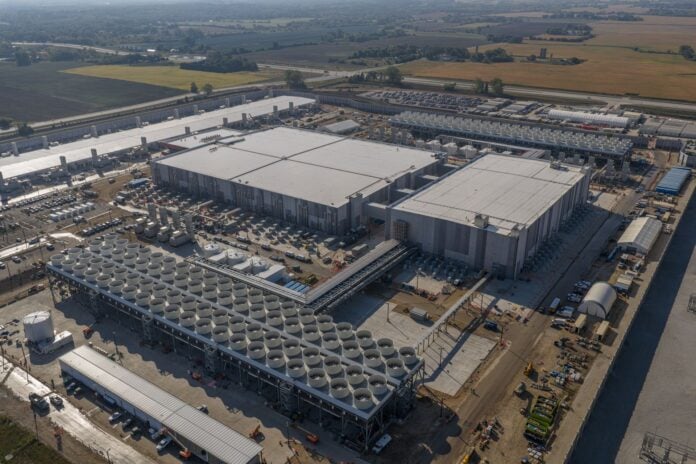
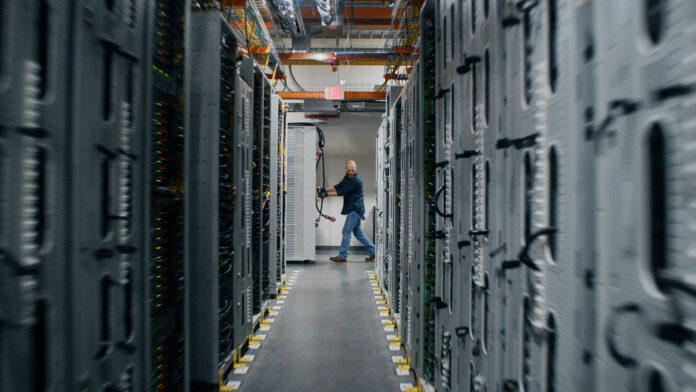
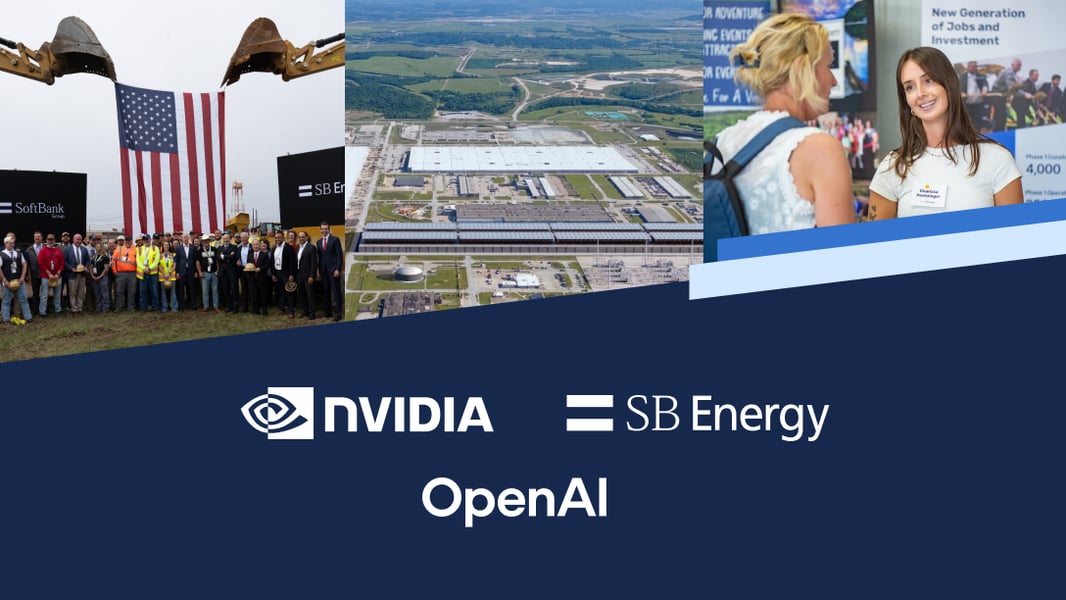
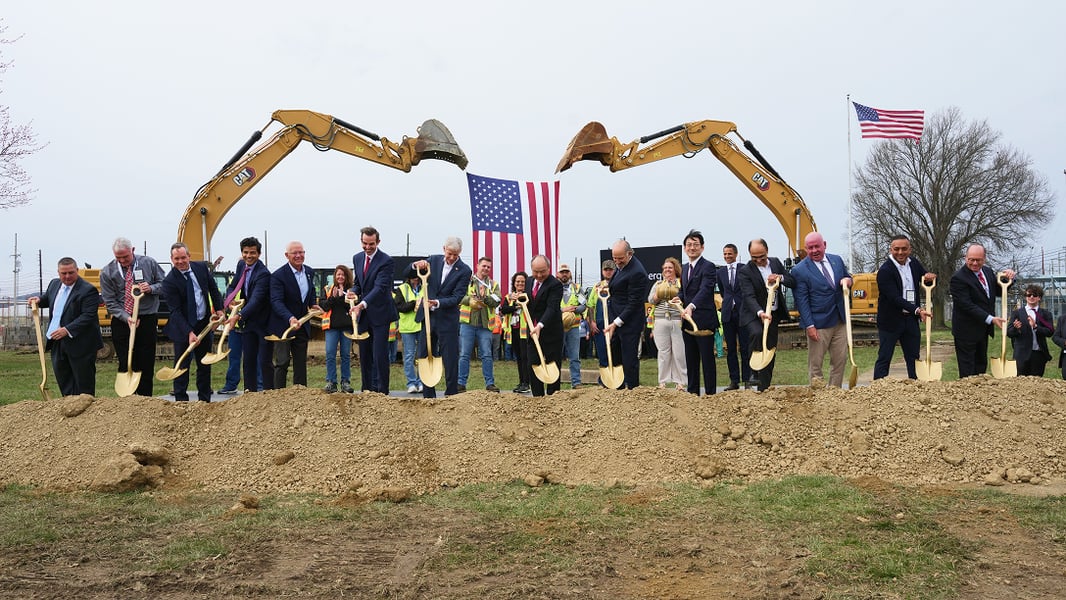
Nvidia confirmed Monday that it will invest $1.5 billion in SB Energy, a clean-energy developer majority-owned by SoftBank, under a deal that gives OpenAI exclusive rights to the PORTS-Pike Technology Campus in Pike County, Ohio. The initial footprint covers 4.25 gigawatts of computing infrastructure — enough to house roughly 1.5 million Nvidia GPUs at full deployment — with an option to expand to 8 gigawatts. SB Energy, backed by SoftBank chairman Masayoshi Son, will build, own, and operate the site under a 20-year OpenAI lease. Construction phases begin in 2028.
The project is anchored in geography that carries its own weight. The PORTS-Pike campus occupies the site of the former Portsmouth Gaseous Diffusion Plant in Pike County, a Cold War uranium enrichment facility decommissioned in 2001 after decades of federal operation. It was cleaned up through a Department of Energy environmental remediation program and returned to productive use. SB Energy is now developing it under a public-private partnership with the Department of Energy and the Commerce Department, with AEP Ohio committing $4.2 billion to regional grid upgrades needed to supply the campus. The deal is projected to create tens of thousands of jobs in one of Ohio’s lower-income rural counties.
The energy requirement is part of what makes the commitment unusual. SB Energy and SoftBank together have pledged to develop at least 10 gigawatts of new energy generation specifically to power the site — a commitment that dwarfs most standalone data center power agreements and effectively makes PORTS-Pike a project that reshapes Ohio’s regional grid rather than simply drawing from it. An $80 million community benefits fund rounds out the local commitment, split equally between SB Energy and OpenAI, directed at workforce development and local infrastructure across Pike County.
Sam Altman, OpenAI’s chief executive, called the campus “a huge site, with enough computing power to help millions.” SoftBank chairman Masayoshi Son described it as infrastructure for “the next era of intelligence.”
Those statements carry the confident register of AI announcements that have become standard in 2026. What makes this one different is the arithmetic Huang chose to disclose alongside them.
Each generation of AI factory systems deployed at PORTS-Pike, he wrote in an official blog post, “could represent approximately $150 billion to $200 billion in NVIDIA revenue.” OpenAI’s total compute commitments through 2030, across all facilities, represent roughly $600 billion in Nvidia products. That is the scale of one customer relationship — which is also the scale of the circular concern that Nvidia is now publicly managing.
The tension is not new. When Nvidia’s $500 billion AI infrastructure financing push with Apollo, BlackRock, Blackstone, and other Wall Street institutions was announced in August, analysts warned that a chipmaker helping to fund the data centers that buy its chips creates a valuation loop with no obvious external anchor. The SB Energy deal extends that structure from Wall Street balance sheets to rural Ohio: Nvidia is now also financing the building in which OpenAI will run the GPUs that generate the projected $600 billion in Nvidia revenue.
Huang’s counter is structural. Nvidia’s financial commitment covers “defined portions of lease and power payments, along with a specified residual-value commitment — not the full cost of the site.” If OpenAI exits the lease, he says, Nvidia can reassign computing capacity to any other qualified tenant in its customer network.
“AI is becoming infrastructure,” Huang wrote, placing the PORTS-Pike investment in the same category as a semiconductor company locking up upstream materials when downstream demand is visible and confirmed. Nvidia frames itself not as a lender extending credit to a customer, but as a supplier securing its own pipeline at the scale the market requires.
That framing is tested by the timeline. The AI compute backlog across the industry has grown sharply in 2026 — CoreWeave reported $104 billion in committed orders in its most recent quarter — and PORTS-Pike represents the largest single-tenant AI campus commitment in the sector. The demand signal is real. So is the gap between now and 2028, when the first phases are due online.
What Nvidia did not address publicly is what a sustained slowdown in AI capital expenditure would mean for its residual-value guarantee, or which alternative tenants it would approach if OpenAI’s compute requirements change before those phases open. Those are the questions the circular financing framing is really asking — not whether the legal structure is self-dealing, but whether the underlying demand it rests on is durable enough to justify Huang treating a customer’s lease payments as supply-chain certainty.
According to the Nvidia press release, the company will serve as the exclusive AI compute infrastructure provider using its DSX AI factory platform, and each phase of the campus is expected to go online starting in 2028.
He disclosed the revenue projection and called the deal a supply decision. PORTS-Pike will eventually answer the questions the numbers leave open — but not until the first GPU clusters come online in 2028.