
ST. LOUIS – Cori Bush came back to Missouri’s 1st Congressional District a second time, and Missouri’s 1st Congressional District sent her away again.
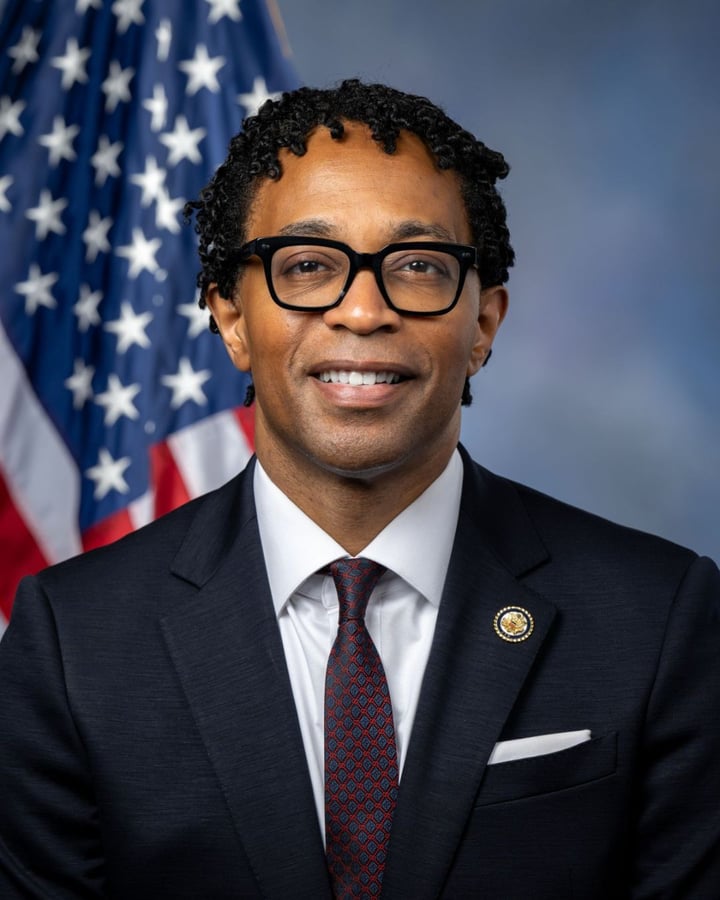
Representative Wesley Bell won the Democratic primary Tuesday night, defeating Bush in a rematch that confirmed what the 2024 contest had first established: a member of the congressional left’s most visible bloc, who built her career on movement politics and personal biography, had been turned back again by a former prosecutor who ran on governance rather than symbolism. ABC News and CBS News both reported Bell’s win as results came in from St. Louis city and county precincts.
Bell, who defeated Bush in August 2024 to claim the St. Louis-area seat and has served the district since January 2025, absorbed a second challenge from the woman he unseated without surrendering the center of his own party. CBS News described the race as one that “put party’s rifts on full display,” a framing that captured something real: the contest was never simply about two candidates. It was about which direction the Democratic Party’s urban base intends to go.
Bush spent four years as one of the most visible members of the congressional left. She represented a district that stretches across north St. Louis and its inner-ring suburbs and came to public attention as a product of the Ferguson protests that followed Michael Brown’s death in 2014. Her biography was central to her politics: she had lived through housing insecurity and homelessness, and her decision to sleep on the steps of the Capitol in 2021 to press the Biden administration on the eviction moratorium was covered nationally as evidence of genuine conviction rather than performance.
Bell came from a different tradition. According to Bell’s official Congressional biography, he grew up in North St. Louis County in a union household, earned his law degree from the University of Missouri, and worked as a public defender, criminology professor, and municipal judge before serving on the Ferguson City Council. In 2018, he became the first Black person elected as St. Louis County Prosecuting Attorney. He ran against Bush in 2024 on a public safety platform with substantial backing from mainstream Democratic donors, and won by a significant margin.
Bush’s decision to run again tested whether the political appetite for her brand of politics had revived over two years. The conditions had shifted in ways that might have favored her: the Trump administration’s conduct since January had energized Democratic bases broadly, and concerns about federal interference in democratic processes were running high. The deployment of federal monitors to predominantly minority precincts during Tuesday’s Michigan Senate primary generated immediate criticism and underscored the stakes of 2026 Democratic turnout operations.
What did not change is the fundamental calculation that Bell’s first win established. Missouri’s 1st is one of the most reliably Democratic congressional districts in the country; the primary is effectively the general election, with November a formality. That structural reality means the contest is decided entirely on who can persuade Democratic primary voters to choose them. Bush needed to show that those voters wanted her back. The Tuesday result, as reported by multiple outlets, indicated they did not.
On the same night Bell secured his rematch, Adam Hamilton’s Democratic Senate primary win in Kansas showed that the party’s 2026 map includes terrain no one expected to be competitive. Missouri’s 1st and Kansas’s Senate race both produced results in the same direction: toward candidates who arrived with broad appeal and institutional support rather than movement credentials.
The Squad that Bush was part of entered Congress after the 2018 midterms as a cohort that understood itself as representing something distinct from the institutional party. Its members’ personal stories were arguments in themselves: that the Democratic Party could and should look different, speak differently, and make different choices. That argument resonated in 2018 and 2020. By 2024 and 2026, it ran into a consistent counter from Democratic primary electorates in their own districts.
Bush is not the only Squad-aligned member to face that counter. The pattern has been consistent enough to resist a case-by-case explanation. It reflects a genuine reassessment by urban Democratic constituencies of what they want from representation in a political environment dominated by concerns that did not define 2018.
The Republican outside spending apparatus has committed more than $400 million to defending Senate seats in 2026. Democrats have been running their own version of internal competition, and the primaries that closed Tuesday were one measure of how that competition is resolving. Bell’s result in Missouri confirms that the resolution, in his district at least, favors incumbents who can make a case for governance over those who make a case for transformation.
What the final margin shows, and what it tells us about Bush’s diminished support relative to 2024, will emerge in the hours after the Tuesday count is complete. Missouri’s official election results were still being tabulated from all precincts at the time of publication. What is settled is the nominee: Bell goes to November in a district where no Republican has won the general in decades. What is unsettled is what Bush does next, and whether the movement she represented in St. Louis has found a different vessel or is waiting for a different moment.