The Trump administration has reportedly threatened to revoke visas for members of the Palestinian delegation to the United Nations unless Palestinian Ambassador Riyad Mansour withdraws his candidacy for a senior leadership role in the UN General Assembly, triggering accusations that Washington is intensifying political pressure on Palestinian diplomacy during the Gaza war.
According to a State Department cable, US diplomats were instructed to pressure Palestinian officials into abandoning Mansour’s bid for vice president ahead of elections for the UN General Assembly leadership.
The development has sparked outrage among Palestinian officials and diplomats who view the move as another attempt by Washington to shield Israel from growing criticism at the United Nations amid continuing devastation in Gaza and mounting international scrutiny over alleged war crimes.
US pressure campaign against Palestinian UN mission
Reuters reported that classified but internal State Department communications instructed US officials in Jerusalem to tell the Palestinian Authority that Mansour’s candidacy “fuels tensions” and could undermine Trump’s Gaza peace initiative.
The cable reportedly warned that Washington would “hold the PA responsible” if the Palestinian delegation refused to withdraw the candidacy. It also referenced the possibility of revisiting visa arrangements for Palestinian diplomats assigned to the UN mission in New York.
Anadolu Agency reported that US officials specifically threatened visa revocations against the Palestinian delegation.
The US State Department declined to directly comment on the reports, citing visa confidentiality rules, but stated that Washington takes its obligations under the UN Headquarters Agreement seriously.
Why Riyad Mansour’s UN candidacy matters
Riyad Mansour has long been one of the most vocal Palestinian diplomats at the United Nations. Over the past two years, he has repeatedly condemned Israel’s military campaign in Gaza and accused Israeli authorities of committing genocide against Palestinians.
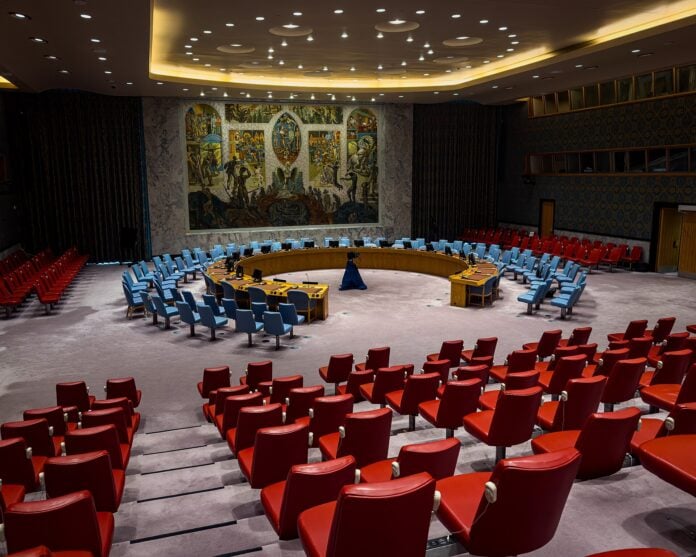
The vice presidency of the UN General Assembly is largely procedural, but the position carries symbolic and diplomatic influence. Officials holding the role can chair major debates, oversee sessions, and shape discussions on sensitive geopolitical crises.
The Trump administration reportedly fears that a Palestinian diplomat presiding over high-profile UN sessions related to the Middle East would further isolate Israel diplomatically.
The Guardian reported that Washington had already applied formal pressure on Palestinian leaders earlier this year to abandon a separate bid for the presidency of the General Assembly.
Growing international isolation of Israel
Several countries in Europe, Latin America, Africa, and Asia have either recognized Palestine as a state or signaled support for greater Palestinian representation at international institutions. Momentum around growing international recognition of Palestine has accelerated sharply since the Gaza war intensified.
Palestinian officials argue that the US is attempting to suppress Palestinian diplomacy at the United Nations precisely because global sentiment has shifted against Israel after months of war, mass displacement, and destruction in Gaza.
The reports also suggest the Trump administration linked cooperation on the UN issue to broader financial and political concerns involving the Palestinian Authority.
According to The Guardian, US diplomats were instructed to remind Palestinian leaders that failure to cooperate could negatively affect efforts to restore withheld Palestinian tax revenues currently blocked by Israel.
Gaza war continues to reshape global diplomacy
The controversy underscores how the Gaza conflict has transformed international diplomacy surrounding Palestine and Israel.
Since the outbreak of war in 2023, Washington has faced accusations from critics and human rights organizations of providing diplomatic cover for Israeli military actions while simultaneously attempting to marginalize Palestinian political voices internationally. Critics increasingly point to US and EU backing for Israel during the Gaza war as a central factor behind the diplomatic deadlock.
The Trump administration continues to publicly defend Israel’s military campaign and insists that Hamas remains responsible for the failure of ceasefire negotiations.
However, Palestinian officials and many international observers increasingly view Washington as acting less as a mediator and more as a direct political ally of Israel.
Palestinian Authority under mounting pressure
The Palestinian Authority now finds itself squeezed between severe financial pressure, growing unrest among Palestinians, and escalating diplomatic confrontations with both Israel and the US.
Israel has continued withholding large portions of Palestinian tax revenues collected on behalf of the Authority, worsening an already deep economic crisis in the occupied West Bank.
At the same time, Palestinian diplomats have intensified efforts to secure broader international recognition of an independent Palestinian state and stronger representation at global institutions.
For many Palestinians, Mansour’s candidacy represents more than a ceremonial UN position. It symbolizes resistance against attempts to silence Palestinian voices at a time when Gaza dominates international political debate.
UN battle reflects wider geopolitical divide
The dispute also highlights a growing divide between the US and much of the international community regarding the future of Palestine.
While Washington continues resisting moves that could strengthen Palestinian international standing, many countries increasingly support calls for Western recognition of Palestine and expanded Palestinian participation in global diplomacy.
The UN General Assembly has become one of the few major international forums where Palestinian representatives have gained significant diplomatic traction despite their observer state status at the United Nations.
That growing influence has alarmed both Israel and its allies in Washington, especially as accusations of genocide and war crimes gain wider visibility across international media and human rights organizations.
Recent diplomatic developments have exposed Western divisions over Palestinian statehood, particularly as several European governments distance themselves from Washington’s hardline position.
With elections approaching, the diplomatic standoff over Mansour’s candidacy could become another major flashpoint in the wider geopolitical struggle over Gaza, Palestinian statehood, and the future balance of power inside the United Nations.