
GAZA — As Gaza sinks deeper into one of the gravest humanitarian catastrophes of the 21st century, a US-backed proposal for a post-war “peace board” has emerged not as a pathway to justice or reconstruction, but as a stark illustration of Western political hypocrisy. While Israel continues a military campaign that has devastated civilian life, Washington and its European allies are advancing governance frameworks that bypass Palestinian consent, dilute accountability, and preserve the very power structures that enabled the destruction.
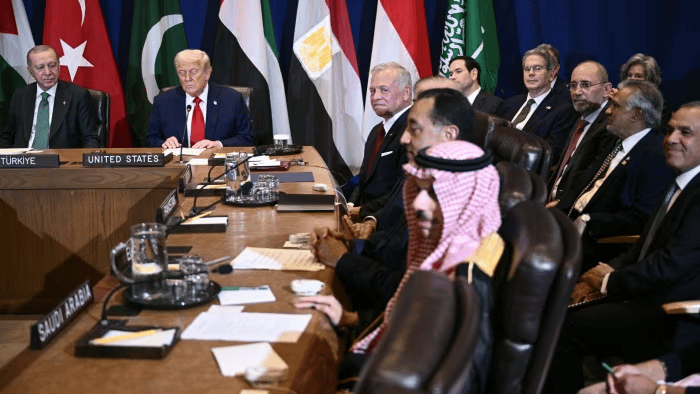
The initiative, discussed in regional meetings hosted by Egypt and promoted by US officials, proposes an externally influenced governing council to administer Gaza after Israel’s assault. Yet the plan has been rejected across the Palestinian political spectrum and even drawn objections from Israel itself, exposing deep contradictions at the heart of Western diplomacy. According to Reuters, Israeli officials have stated that the US announcement regarding the governing council runs directly against Israeli policy.
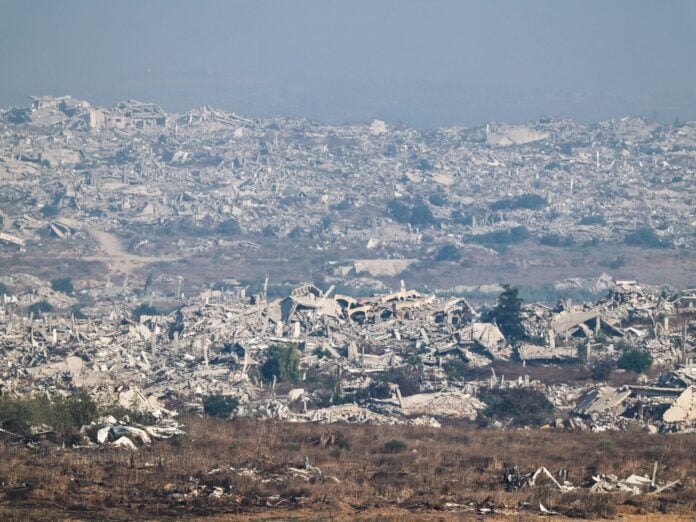
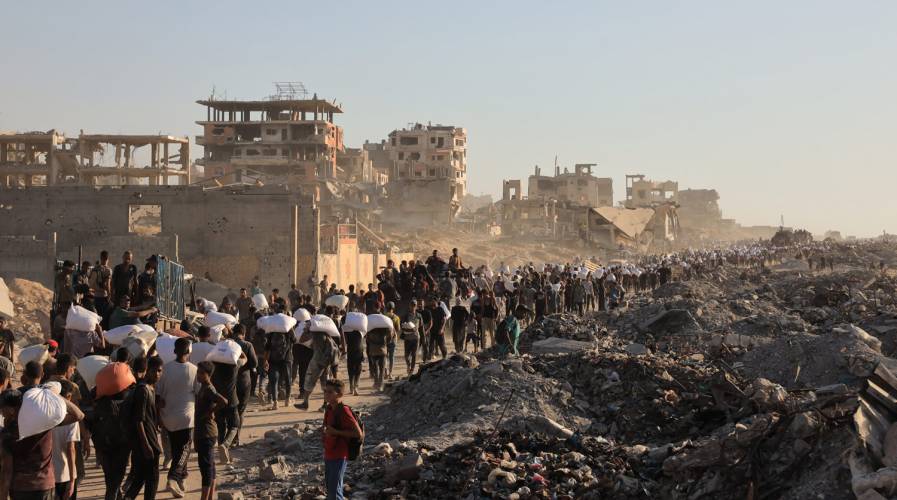
Since the escalation of Israel’s military operations in Gaza, international humanitarian agencies have documented unprecedented levels of civilian harm. United Nations bodies have reported extensive destruction of residential neighborhoods, critical infrastructure, hospitals, and schools, a reality echoed by UN News and humanitarian briefings circulated through ReliefWeb. Aid organizations operating on the ground have warned of famine conditions, mass displacement, and the collapse of basic health services.
Yet the response from the US and the EU has followed a familiar pattern, rhetorical concern paired with continued political, military, and diplomatic support for Israel. While European leaders issue statements invoking international humanitarian law, many EU states have maintained arms exports and political backing. Washington, meanwhile, has repeatedly used its influence to shield Israel from binding international measures, even as civilian casualties continue to mount, a pattern of Western complicity in Gaza long scrutinized in reporting on US-Israeli coordination during the ongoing genocide in Gaza.
The proposed Gaza governing board reflects this contradiction. Rather than demanding an immediate end to hostilities or enforcing accountability mechanisms under international law, the plan focuses on administrative control after the fact. It treats governance as a technical problem detached from the realities of occupation, siege, and sustained military force. Details of the board’s composition and political backing were outlined by Reuters, underscoring Washington’s central role in shaping the initiative.
Palestinian factions have been unequivocal in their response. Islamic Jihad has denounced the initiative as a body designed to serve Israeli interests rather than Palestinian self-determination. Gaza-based political actors have argued that any authority imposed without popular legitimacy would function as an extension of external control, not a vehicle for reconstruction or justice, concerns rooted in a longer history of externally managed governance schemes that have failed Palestinians.
In a formal mission statement, the National Committee for the Administration of Gaza emphasized that governance must arise from Palestinian consensus and sovereignty, rejecting externally imposed arrangements that bypass Palestinian representation. The committee warned that such structures would deepen fragmentation rather than stabilize the territory. Similar warnings about imposed political frameworks and external control have appeared in historical analyses of Israel’s genocide in Palestine, tracing patterns of domination from earlier phases of the conflict to the present war in Gaza.
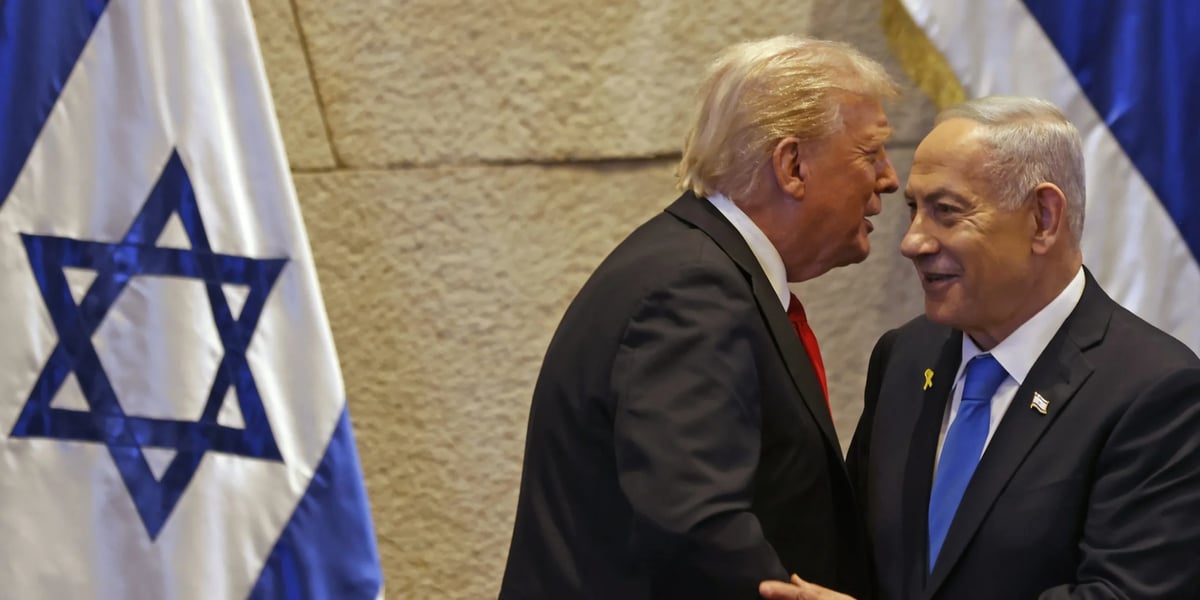
Israel’s own reaction has further undermined the credibility of the plan. Prime Minister Benjamin Netanyahu convened emergency coalition meetings after objecting to the proposed council, highlighting internal political tensions and Israel’s refusal to accept international oversight. Coverage by The Guardian detailed how Israeli leaders oppose any arrangement that limits their security dominance while avoiding responsibility for Gaza’s civilian population.
This position aligns with Israel’s long-standing approach to Gaza: exert control without accountability. By opposing a governing body it does not fully dominate while rejecting Palestinian self-rule, Israel seeks to preserve maximum leverage with minimal obligation. The US and EU, rather than challenging this framework, have largely accommodated it.
Jordan’s reported involvement illustrates how regional actors are being drawn into legitimizing a flawed process. King Abdullah’s invitation to participate in the proposed board has been presented as an effort to lend Arab credibility to the initiative. But regional participation does not alter the fundamental imbalance at its core. Without Palestinian consent and without enforcement of international law, representation becomes symbolic rather than substantive.
Adding to the controversy are reports that participation in the so-called peace board could require financial contributions running into the billions of dollars. This approach reframes governance as a pay-to-participate arrangement, effectively monetizing political legitimacy while Gaza’s population faces widespread homelessness, hunger, and trauma. The humanitarian implications of this model have been examined by The New Humanitarian, which has documented how aid shortfalls and political obstruction are compounding civilian suffering.
The broader international legal context casts an even harsher light on the initiative. International human rights organizations have documented patterns consistent with collective punishment and the targeting of civilian infrastructure. The International Court of Justice has acknowledged the plausibility of grave violations, placing a legal and moral burden on states that continue to enable Israel’s campaign. Legal scholars writing on EJIL:Talk! have warned that continued arms transfers and diplomatic cover risk implicating third-party states.
The EU’s role has been particularly fraught. European leaders frequently position the bloc as a guardian of international norms, yet their response to Gaza has exposed sharp inconsistencies. While sanctions regimes are swiftly deployed in other conflicts, Israel has faced little more than verbal reproach. This selective application of principles has eroded European credibility across the Global South, a dynamic reflected in diplomatic reporting on UN votes, including recent UN General Assembly resolutions isolating Washington and Tel Aviv.
For Palestinians in Gaza, the debate over governance boards and peace councils feels detached from daily reality. Families displaced multiple times struggle to find food, clean water, and shelter. Medical workers operate under siege conditions. Children face trauma on a scale that humanitarian organizations describe as generational. Reporting by The Associated Press has documented how Israeli strikes continue even as diplomatic discussions over governance unfold.
History offers little reassurance. Previous international interventions that prioritized stability over justice have failed to deliver lasting peace. In Gaza, repeated cycles of destruction followed by externally managed reconstruction have entrenched dependency and resentment rather than sovereignty. The current proposal appears poised to repeat that pattern.
The insistence by the US and EU on advancing a governance plan while deferring accountability underscores a deeper truth, the objective is not peace as defined by international law, but manageability as defined by power. Gaza is being treated as a problem to be administered, not a people entitled to rights.
If the international community is serious about ending the crisis, the path forward is neither obscure nor radical. It begins with an immediate cessation of hostilities, unrestricted humanitarian access, and the enforcement of international legal obligations. It requires centering Palestinian self-determination rather than sidelining it. And it demands that states claiming moral leadership align their actions with their rhetoric.
Absent these steps, the so-called peace board will stand as another entry in a long record of failed interventions, one that manages ruins while leaving the machinery of violence intact. For Gaza’s civilians, the cost of that hypocrisy is measured not in diplomatic statements, but in lives.