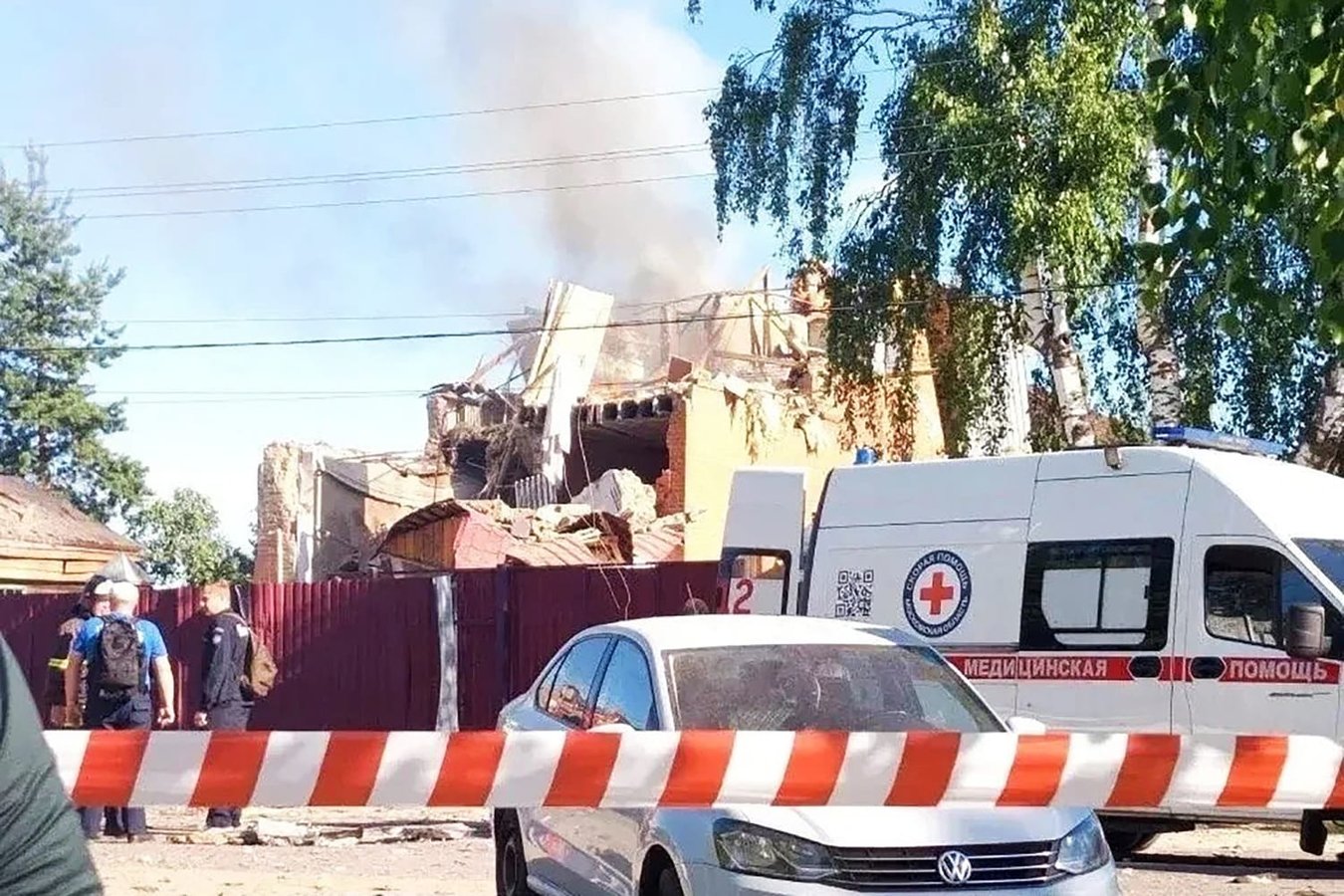

MOSCOW – A 6-month-old child died in the Moscow suburb of Yegoryevsk on Thursday when a Ukrainian drone struck a residential home, as Ukraine launched one of its largest drone barrages of the year against the Russian capital and surrounding regions, hitting a satellite communications facility used to coordinate Russian military operations in Ukraine.
Russia’s Defense Ministry said its air defenses destroyed 419 Ukrainian drones across 18 regions overnight, including 61 intercepted as they approached Moscow. Mayor Sergei Sobyanin reported no significant structural damage to the city itself, but the scale of the attack – the largest Moscow-area barrage in months – shut down operations at Domodedovo and Zhukovsky airports for several hours before both resumed flight operations by morning.
Ukraine confirmed striking the facility in Dubna, roughly 110 kilometers north of Moscow. President Volodymyr Zelenskyy said the installation “was used for reconnaissance and for coordinating the activities” of Russian forces fighting in Ukraine. He indicated additional strikes on similar facilities were planned, and that Ukraine was specifically targeting the communications architecture Russia uses to direct its operations from rear areas.
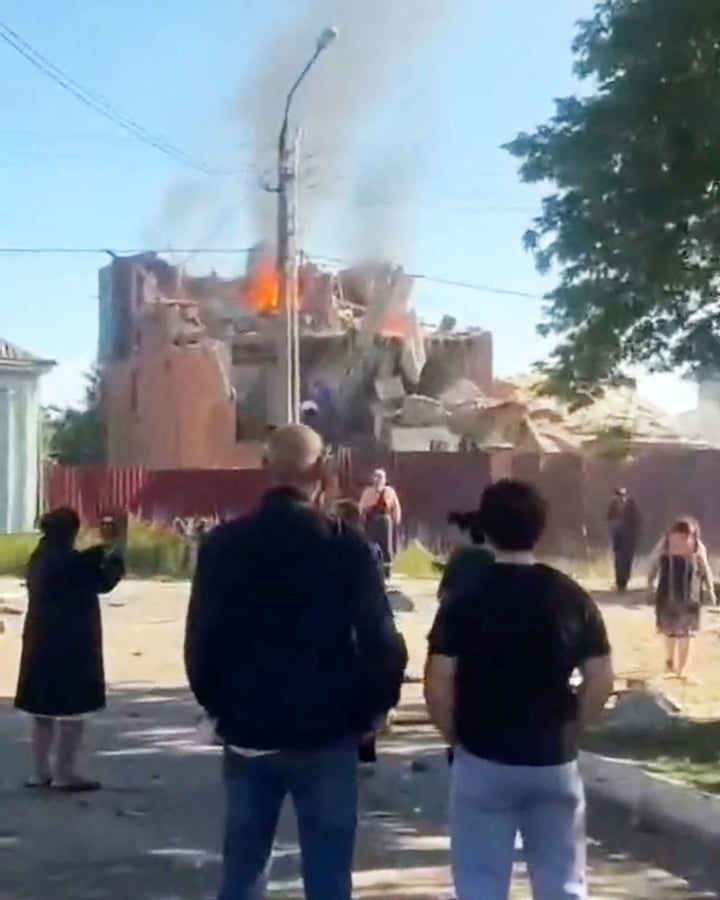
The civilian casualty in Yegoryevsk – about 90 kilometers southeast of central Moscow – came when a drone fell on a private residence. Three adults and two other children were also injured. Russia’s Investigative Committee opened a criminal case and characterized the baby’s death as an act of terrorism under Russian federal law.
The scale of the overnight operation stood out even against months of escalating cross-border strikes. Ukraine’s Unmanned Systems Forces regularly deploy drones by the hundreds in a campaign that has progressively targeted Russian energy infrastructure, supply chains, and command-and-control nodes in deep Russian territory. A satellite communications center capable of providing reconnaissance support and coordinating battlefield operations represents a more strategically significant category of target than refineries or fuel depots, NBC News reported.
Russia did not immediately confirm whether the Dubna facility was operationally degraded. An administrative building in the town sustained damage from falling debris. Russian state media reported on the Dubna strikes without elaborating on the communications center’s operational status, reflecting the customary opacity around assessments of damage to sensitive infrastructure.
Ukraine has attacked the Moscow region repeatedly in 2026, most recently on July 4, when five drones were shot down approaching the capital. The July 16 wave was substantially larger: 419 drones destroyed across Moscow Oblast, Ryazan, Tula, and 15 other regions. The geographic spread suggests Ukraine deployed multiple simultaneous drone routes, a tactic designed to saturate air defense coverage and reduce interception rates by forcing the system to track too many targets at once.
Moscow’s air defense system, which Russia has reinforced with additional interceptors and electronic warfare equipment throughout the conflict, stopped the overwhelming majority of inbound drones before they reached the city proper. But the suburbs and outlying towns of the Moscow region – Yegoryevsk, Dubna – sit at the edge of the denser central coverage umbrella. The baby’s death illustrated that edge: a strike that reached a residential building in a town the inner defensive ring did not protect.
A 570-missile-and-drone assault on Kyiv by Russian forces two weeks earlier killed 20 people – the largest combined air attack on the Ukrainian capital in 2026. That operation came simultaneously with Ukraine striking back at Moscow’s oil refinery sector. The July 16 drone operation follows the same pattern of mirrored escalation, each side deploying progressively larger munitions packages against the other’s rear areas.
Ukraine’s capacity to launch barrages of this scale reflects the expansion of its drone manufacturing program over 18 months, from tens of thousands of units annually to what Ukrainian officials describe as an industrial production rate measured in the tens of thousands per month. Russia has countered by expanding electronic warfare coverage and fielding more interceptor UAVs. But each wave at this volume tests the ceiling of what that defensive architecture can absorb before something gets through.
Zelenskyy’s statement that more strikes on satellite facilities were planned signaled a further expansion of Ukraine’s target set into the command-and-communications infrastructure Russia relies on to manage the war from positions it had considered safely distant from the front. Dubna is within the range of Ukraine’s long-range strike drones, as is most of the Moscow region. Thursday’s attack demonstrated, again, that the geographic buffer Russia once enjoyed no longer functions as a reliable deterrent against Ukrainian strikes on infrastructure inside it.
The Russian military’s characterization of Dubna as housing legitimate military infrastructure sits against Moscow’s public framing of the attack as targeting civilian property – a contradiction that tracks closely with how both sides have described nearly every major strike of the war. Russia opened a terrorism investigation into the baby’s death. Ukraine has not commented on the civilian casualty. Both facts are now part of the record of a Thursday night that ended with an infant gone and a satellite relay station of unknown operational status north of the Russian capital.