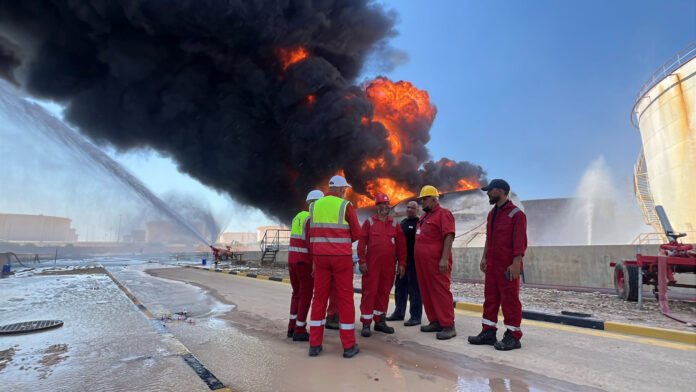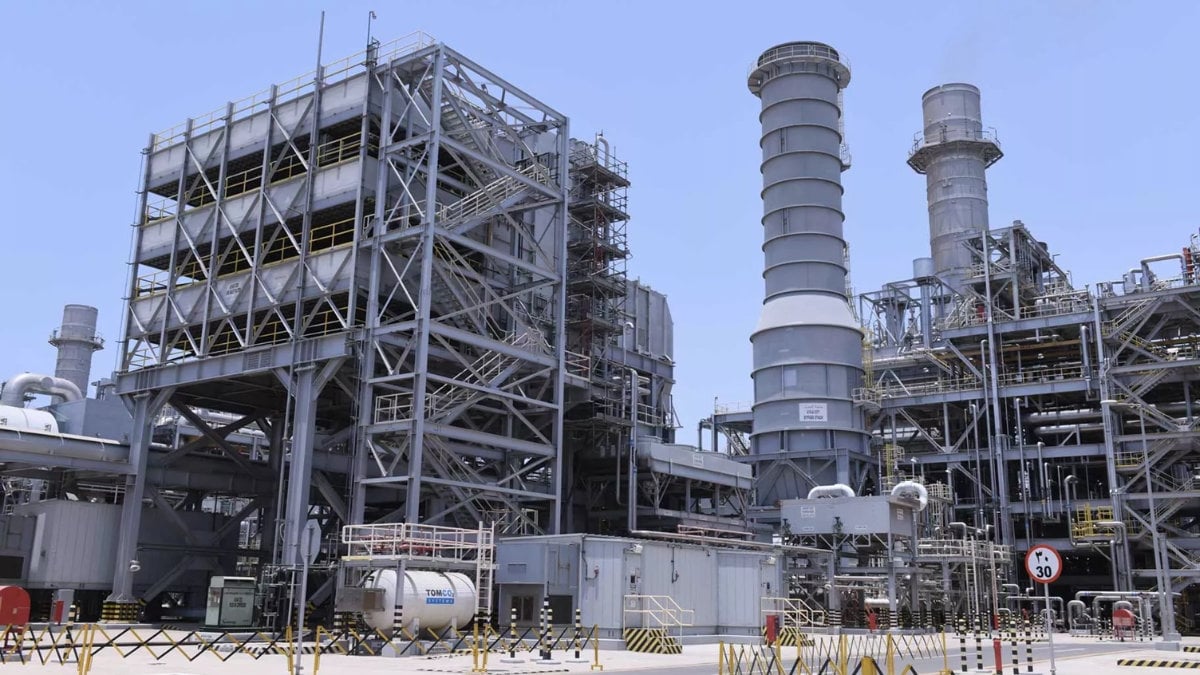

RIYADH — The industrial firefighting crews at Saudi Aramco’s Jazan complex extinguished the blaze before dawn on Sunday. But the drone that started it had already done something fire hoses could not undo: it had carried the Iran-backed war past Saudi Arabia’s coastline and into the kingdom’s southwestern energy heartland.
Houthi forces claimed responsibility for a drone strike on the Jazan refinery complex in southwestern Saudi Arabia early August 9, targeting one of the kingdom’s most strategically concentrated energy installations. Saudi Arabia’s Ministry of Energy confirmed industrial teams had put out the fire and said competent authorities were “completing the necessary procedures to deal with the incident,” according to Arab News. Riyadh did not say whether production had been affected, did not identify the cause, and released no figures on damage.
The silence was deliberate. The Jazan complex processes up to 400,000 barrels of crude oil daily and generates up to 3.8 gigawatts of electricity, serving communities across southwestern Arabia. The facility’s total investment stands at approximately $21 billion, supporting more than 1,300 Saudi jobs in one of the kingdom’s less economically developed regions. A statement confirming that a fire was extinguished without addressing production capacity is not a reassurance. It is an acknowledgment that the full accounting is not yet complete.
The attack marks the most direct Houthi escalation inside Saudi territory in months. For much of this conflict’s current phase, Yemen’s Houthi movement, trained and directed by advisers from Iran’s Islamic Revolutionary Guard Corps, has concentrated its operations at sea. Iran closed the Strait of Hormuz on July 14, diverting 53 ships and cutting off a critical artery for global energy trade. Houthis, guided by IRGC advisers, have imposed toll systems at Bab el-Mandeb, turning maritime passage into an extortion mechanism. The Jazan drone represents a different kind of pressure: not a chokepoint but an asset, not a deterrent but a strike.
It also represents the earliest test of a two-day-old agreement.
Saudi Arabia, Turkey, and Pakistan signed the Mecca Joint Deterrence Agreement on August 7, a mutual defense compact described by its architects as the most consequential regional security arrangement in a generation. The pact commits signatories to collective response if any member’s territory comes under attack. Whether Riyadh will invoke those terms in response to the Jazan drone, and whether Ankara and Islamabad would treat an unmanned aircraft hitting a refinery as a trigger event, remained unanswered as of Sunday evening.
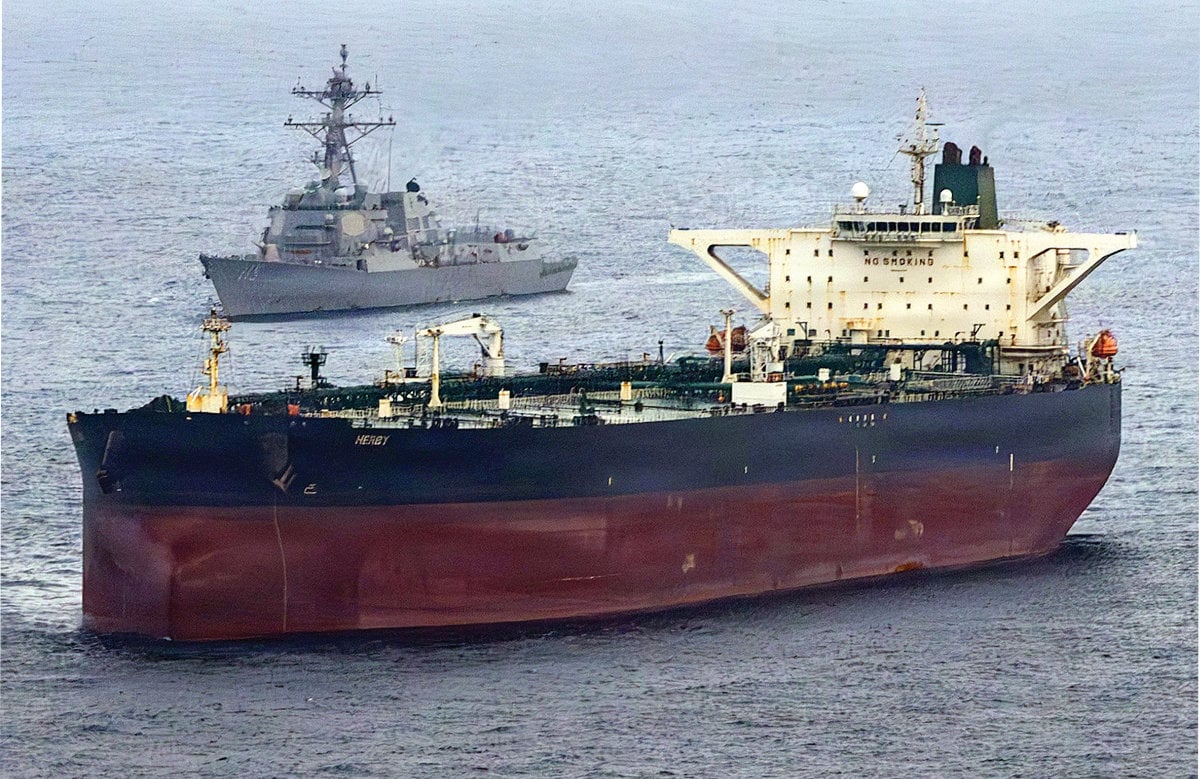
Saudi Arabia has been assembling an international coalition against Houthi operations in the Red Sea for weeks, reaching out to dozens of countries to coordinate maritime defense. The Mecca Agreement added two significant land-based military powers to that framework. Whether it translates into a meaningful deterrent on Saudi soil is now the open question the Jazan drone has forced onto the table.
Iran’s broader strategic posture also shifted this week, though not in the direction Sunday’s strike might suggest. Talks between Tehran and Muscat, described by diplomatic sources as being in their “final stages,” continued, indicating Iran has not foreclosed a diplomatic off-ramp even as its proxies intensify operations on multiple fronts. Iran’s stated terms for reopening Hormuz, reparations and a complete withdrawal of American military assets from the region, remain far outside what Washington has publicly been willing to discuss.
The Trump administration this week sanctioned Shahr Bank for its role in laundering Iranian oil revenues and ordered a 21-day acceleration in weapons production to sustain American operations in the theater. Neither measure addresses the Houthi proxy campaign directly, according to CBS News. Trump had not commented specifically on the Jazan strike as of Sunday.
Houthi forces have not limited their operations to the energy sector. On August 7, fighters killed 58 Yemeni government troops in the Marib region, a ground offensive separate from the maritime campaign and separate from Sunday’s refinery strike. The pattern suggests an organization capable of fighting simultaneously across ground operations in Yemen, maritime extortion in the Red Sea, and drone strikes on Saudi infrastructure. That operational reach reflects, in significant part, the depth of IRGC material and advisory support the movement receives.
Saudi Arabia’s energy sector has absorbed Houthi and Iranian attacks before. The 2019 strikes on the Abqaiq and Khurais facilities temporarily cut Saudi crude output by roughly half, the largest single disruption to global oil supply in decades. Those attacks produced no armed Saudi retaliation and prompted considerable debate about the limits of American security guarantees in the Gulf. The Jazan strike is smaller in scale, but it arrives in a more fragile moment: the Mecca Agreement freshly signed, the Strait of Hormuz still closed, and the broader American military posture in the Gulf under sustained pressure.
The Ministry of Energy says the fire is out. The harder question, whether Saudi Arabia will absorb this strike as it absorbed Abqaiq in 2019 or whether the Mecca Agreement gives Riyadh a new set of choices, has no answer yet.