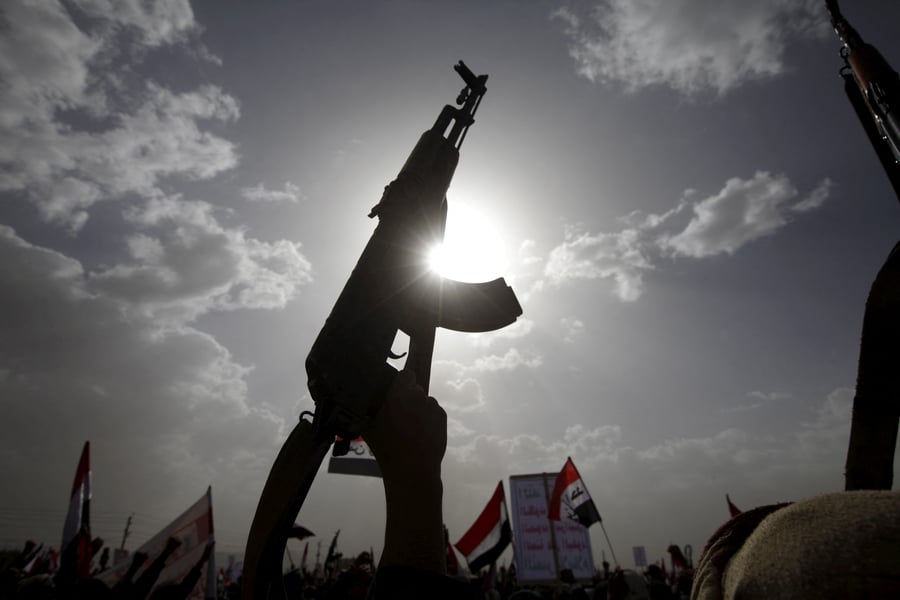

RIYADH – Saudi Arabia is quietly reaching out to dozens of governments to build an international coalition to protect Red Sea shipping from Yemen’s Houthis, according to sources familiar with the diplomatic outreach, as the Iran-backed militia escalates attacks on Saudi oil infrastructure and threatens to impose its own toll system on vessels transiting Bab el-Mandeb.
The membership of any coalition has not been finalized and remained under discussion as of Wednesday, with Riyadh in direct contact with Qatar, Kuwait, and Bahrain through phone calls in which GCC partners “stressed the importance of continuing efforts to de-escalate tensions,” according to Saudi Arabia’s Foreign Ministry. A Saudi official described the outreach as broader than previous Gulf maritime arrangements, with contact extended to European and Asian governments that have significant shipping exposure to the corridor.
The immediate trigger was the Houthi declaration on July 20 of a naval blockade of Saudi Arabia, announced in retaliation for what Houthi commanders described as Riyadh’s long-running siege of Yemen. Days later, Houthi forces launched missiles and drones at two major Saudi Aramco facilities on the Red Sea coast, a Jizan refinery and the Yanbu terminal. A large smoke column rose from Jizan following the strikes. At Yanbu, Saudi forces using a Patriot battery operated by Greek military personnel intercepted two ballistic missiles aimed at oil installations.
No Saudi casualties were reported from either strike. But the combined effect of the blockade declaration and the Aramco attacks pushed Riyadh toward a more formal security arrangement. Saudi Arabia had rerouted significant crude export volumes through Bab el-Mandeb after the Strait of Hormuz became too dangerous for unescorted tankers earlier in the war. The Houthi blockade has now closed that alternative corridor to Saudi oil, forcing the kingdom to weigh temporary reductions in export volumes or accept the risk of convoying through contested waters.
The economic stakes are severe. According to energy analytics firm Kpler, Bab el-Mandeb transit volumes fell 22 percent in the week after the blockade announcement, as shipping companies diverted to longer routes around the Cape of Good Hope or held vessels in port pending clearer security arrangements. Saudi Aramco did not comment on the impact to its export schedule.

Saudi Arabia struck back militarily, carrying out airstrikes on what it described as Houthi military facilities at Hodeidah port used to threaten commercial shipping. The Houthis had already struck Abha airport with ballistic missiles and drones, marking the first direct attack on Saudi territory in years and collapsing the 2022 ceasefire that had held through the beginning of the Iran war.
The Houthi escalation is backed, and in part designed, by Tehran. Yemen’s Information Minister Moammar al-Eryani said intelligence confirmed that Islamic Revolutionary Guard Corps advisers were “directly involved in designing the technical and administrative framework” of a planned Houthi toll system for Bab el-Mandeb, mirroring Iran’s own contested Hormuz toll claim. The Houthis hold territory within 100 kilometers of the strait’s coastline, giving them the operational position to enforce such a regime.
If both Hormuz and Bab el-Mandeb were simultaneously closed to commercial traffic, the disruption would affect roughly 40 percent of globally traded oil and LNG. The scenario, once treated as a catastrophic but unlikely tail risk, has grown more plausible with each week of the conflict.
US President Donald Trump said he was open to negotiations, stating “They are talking to us right now; they’d love to make a deal.” But Trump’s openness to negotiation has not translated into a formal diplomatic process on the Red Sea dimension. American forces have struck Houthi military facilities but have not committed to protecting Saudi commercial vessels in Bab el-Mandeb with the same intensity brought to Hormuz.
The coalition Saudi Arabia is seeking would fill that gap, or at least signal to the Houthis and to Tehran that the Red Sea corridor is not uncontested. Previous multinational naval efforts had limited effect on Houthi operations. This time, Saudi officials argue, the threat is more direct and the economic consequences for member states more immediate.
What remains unclear is whether any significant military power outside the Gulf will commit to the coalition, given the diplomatic sensitivity of association with Saudi Arabia’s role in Yemen and the risk of drawing additional Iranian retaliation. European governments that depend heavily on Red Sea shipping have been reluctant to take visible military positions since the Iran war began.
According to Al Jazeera, Saudi Arabia had not yet publicly announced the coalition or identified founding members. The outreach continued Wednesday as Houthi missiles fell on the Saudi coast and IRGC advisers in Sanaa continued work on the Bab el-Mandeb toll framework.
The geometry of the conflict has placed Saudi Arabia in an uncomfortable position: it wants US protection for its shipping lanes, but Washington is primarily focused on Iran itself and the Hormuz situation. Riyadh’s coalition-building effort is, at least in part, an attempt to create multilateral security architecture that would make American participation harder to refuse. Whether the dozens of countries contacted are willing to sign on, send ships, and accept the political exposure that comes with both is the question on which the coalition’s meaning depends.