
SANAA – Yemen’s Houthi movement declared a naval blockade on Saudi Arabia on Monday, effective immediately, in retaliation for a Saudi airstrike that struck Sanaa’s international airport on July 14 as a plane carrying Houthi leadership was landing from Tehran. The announcement, delivered by military spokesman Yahya Saree, marks the most direct Houthi escalation against the kingdom in years and threatens one of the world’s most critical maritime corridors at a moment when regional shipping is already under heavy strain from the ongoing Iran-US conflict.
“The Yemeni Armed Forces declare a maritime embargo against the criminal Saudi enemy, based on the equation of ‘an eye for an eye,’ effective immediately upon the issuance of this statement,” Saree said. The language carried the weight of a movement that has spent more than a decade under its own Saudi-led maritime blockade, and Saree framed the declaration explicitly as a symmetrical response to what the Houthi-affiliated government in Sanaa calls an ongoing siege of Yemen’s north.
The framing is not without historical grounding. Saudi Arabia and its Gulf coalition imposed naval and air restrictions on Houthi-controlled northern Yemen in 2015, measures that international humanitarian organisations have repeatedly linked to the country’s catastrophic food and medical supply shortages. That blockade has persisted in varying degrees for more than a decade. Saree’s Monday declaration does not specify which Saudi ports or shipping lanes fall within the embargo’s scope, leaving the extent of enforcement undefined and the blockade’s legal status contested under international maritime law.
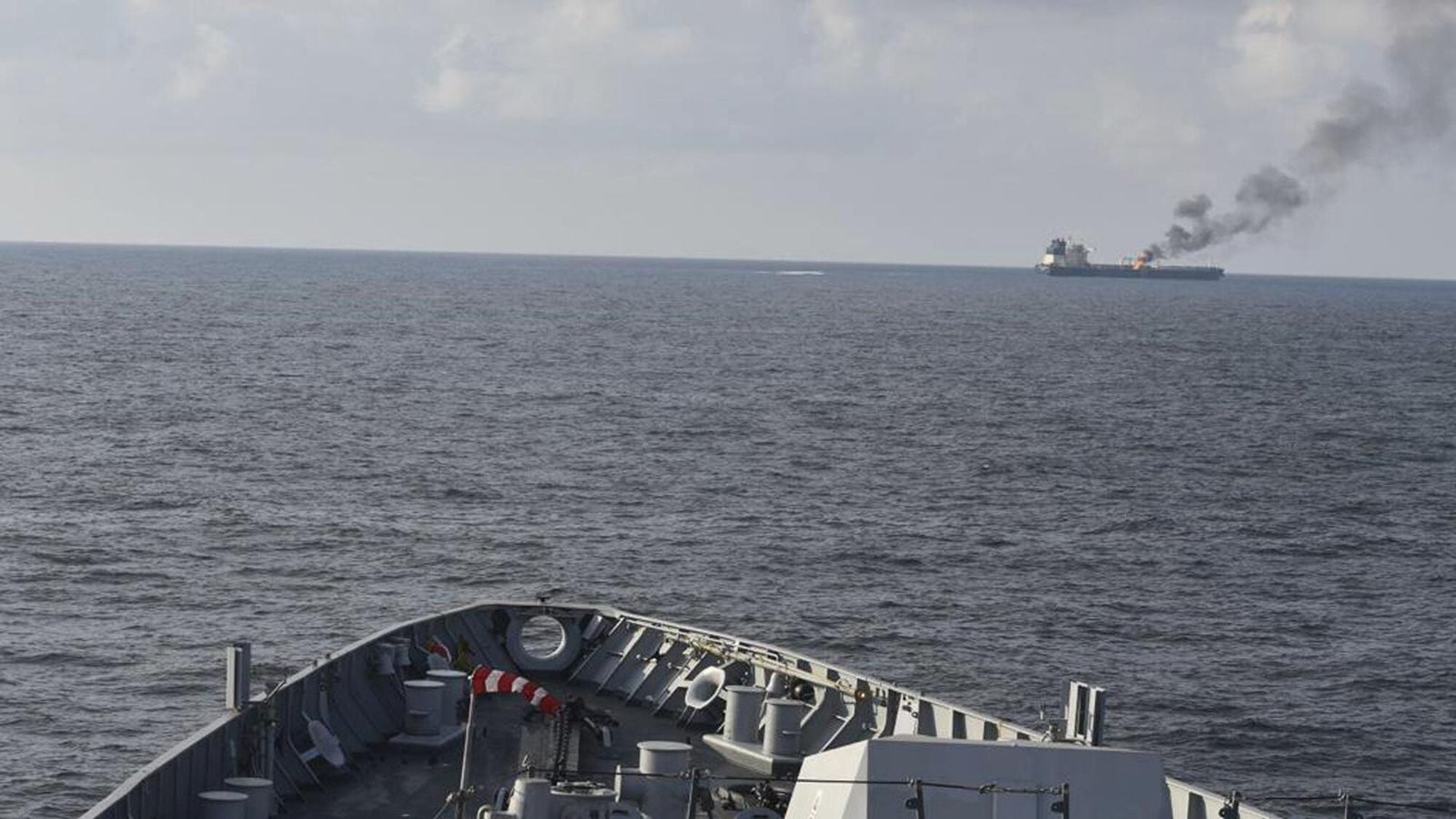
Oil markets responded with moderate volatility. Crude prices ticked lower in early trading on Monday, as traders weighed the blockade announcement against a separate signal from Washington suggesting that US-Iran ceasefire negotiations had made limited progress. Saudi Arabia is a critical node in global oil supply, and the Red Sea corridor through which much of its hydrocarbon exports travel is already under structural stress following months of Houthi attacks on commercial shipping tied to the wider Iran-US war now entering its tenth night of US airstrikes.
The Saudi-led coalition, which has continued to conduct airstrikes in Yemen despite the ceasefire that held from late 2022 until last week’s airport incident, issued a statement Monday pledging to protect commercial shipping from Houthi interference. Bloomberg reported the coalition’s response was brief and did not specify any naval repositioning. No vessels were publicly moved in the hours following the announcement.
Washington has not commented directly on the blockade declaration. The US Fifth Fleet, headquartered in Bahrain, has monitored Houthi maritime activity since late 2023 and has on previous occasions intercepted Houthi drones and missiles at sea. Whether the declared blockade triggers a more active American response remains, as of Tuesday, unanswered.
For Saudi Arabia, the timing compounds existing vulnerabilities. The kingdom’s civilian and commercial ports along the Red Sea – including Jeddah Islamic Port, one of the largest container terminals in the region – processed more than four million container units in 2025. Any Houthi enforcement effort, however limited by Yemen’s actual naval capacity, would create insurance and logistical complications that global shipping operators cannot afford to ignore. Jeddah is a central hub for goods moving between Asia and Europe; disruption there reverberates across container schedules worldwide.
The incident that triggered the blockade remains disputed. Saudi Arabia has not publicly acknowledged the July 14 strike on Sanaa airport, and the Houthi account – that the targeted flight was carrying senior movement figures returning from Tehran – has not been independently verified. If accurate, the strike represented one of the most significant single targeting decisions by the Saudi coalition in years, and a marked departure from the aerial campaign pattern that had prevailed during the ceasefire period.
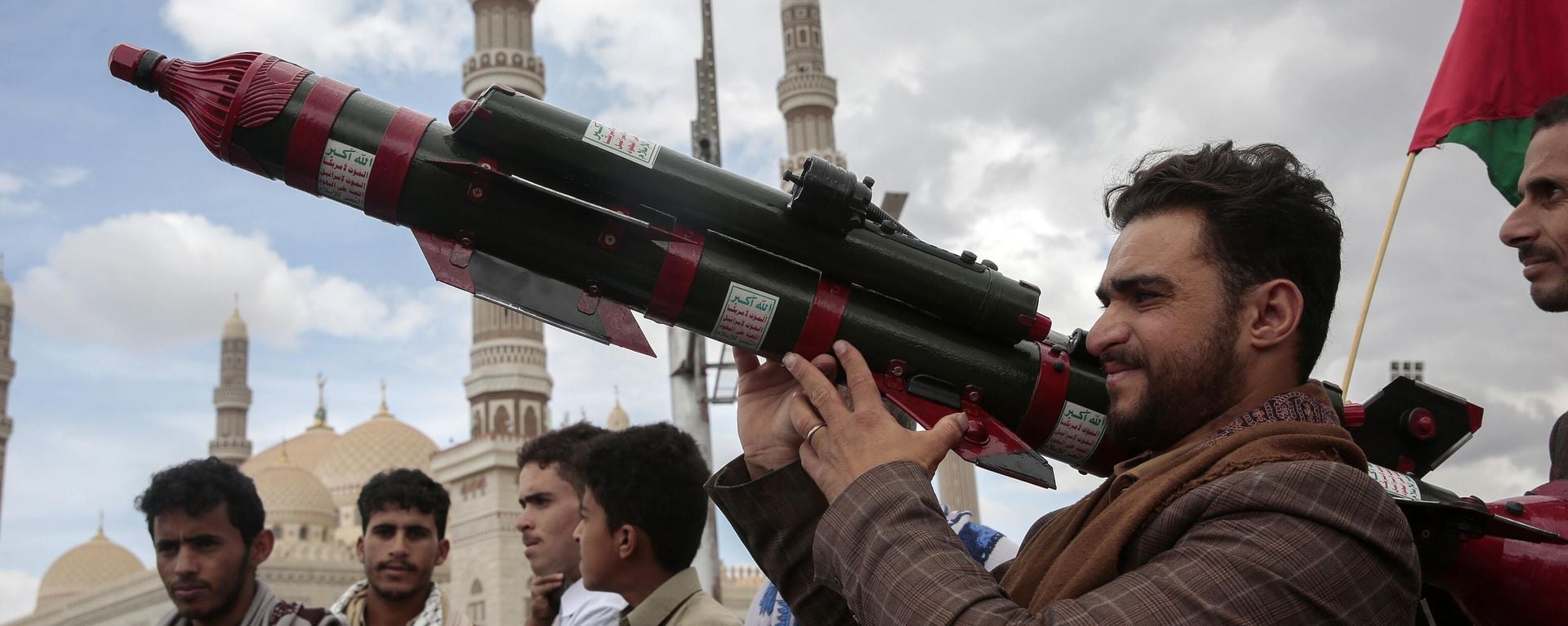
The Houthis have a history of announcing blockades and interdictions that they lack the naval assets to fully enforce. Their campaign against commercial shipping in the Red Sea and Gulf of Aden, which began in late 2023 in solidarity with Gaza and continued into the Iran-US confrontation, demonstrated a meaningful if asymmetric capability, primarily through anti-ship missiles and drone strikes rather than traditional naval interception. A maritime blockade of Saudi Arabia’s scale would require capabilities the movement has not demonstrated. Whether Monday’s announcement is a genuine military posture or a pressure instrument designed to extract concessions is a question the coming days will begin to answer.
What the declaration does clarify is that the Houthis consider the 2022-2026 ceasefire with Saudi Arabia functionally over. The July 14 airport strike breached it. The naval blockade is the Houthi response. Whether Saudi Arabia treats that response as an act of war or as a negotiating gesture will shape the trajectory of a conflict that has already consumed more than a decade, cost hundreds of thousands of lives, and left Yemen as one of the most acute humanitarian emergencies in the world.
The Red Sea’s predicament is now layered in a way it has not been since 2023. The EU’s earlier calls on the Houthis to halt their Red Sea escalation produced no change in Houthi posture. A blockade declaration from Sanaa against Riyadh adds a new armed actor to a corridor that global trade can ill afford to lose. For the shipping lines, insurers, and energy traders watching from outside the conflict zone, the operative uncertainty is not whether the Houthis can close the Red Sea – they probably cannot – but whether the declaration accelerates a spiral that eventually makes the question academic.