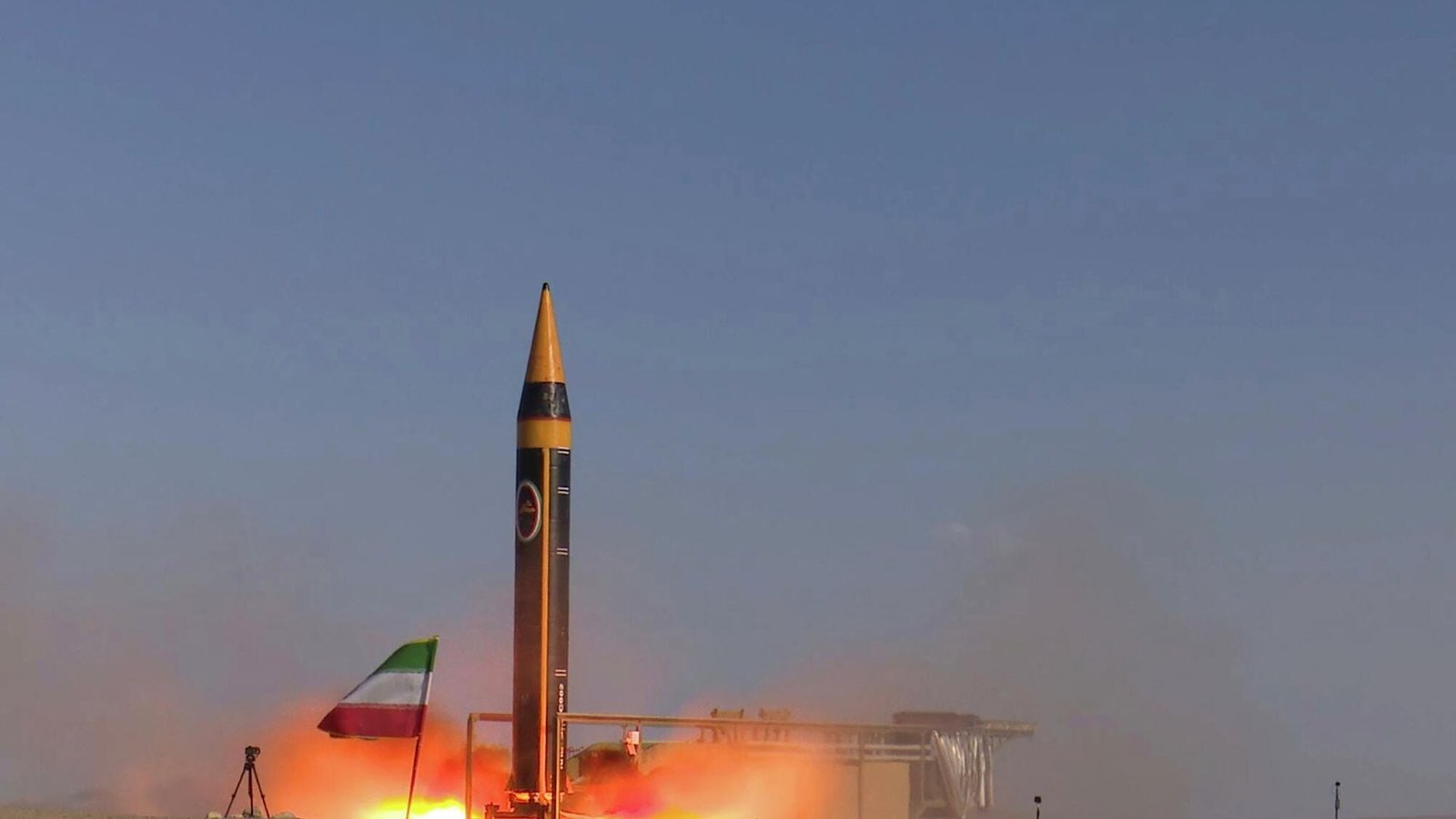

DUBAI – Two Greek-owned oil tankers were burning in the Strait of Hormuz on Monday night as the United States completed its tenth consecutive round of strikes on Iran, and the Islamic Revolutionary Guard Corps hit back with attacks targeting American military infrastructure in Kuwait and Bahrain – the sharpest escalation in the conflict since the war resumed in mid-July.
U.S. Central Command said operations concluded at 9 pm Eastern Time. Stated targets included Iranian military command centers, maritime facilities, missile and drone launch sites, and air defense systems. Iranian media reported explosions in Sirik, Bandar Abbas, Qeshm Island, Shiraz, and Isfahan. The cumulative toll of ten nights of American strikes has hit hundreds of Iranian military sites, yet Tehran’s retaliatory capacity has not been visibly diminished.
The IRGC issued a statement claiming it had struck US HIMARS multiple launch rocket systems, radar installations, satellite receivers, telecommunications infrastructure, and drone hangars in Kuwait. The same statement claimed the destruction of radar systems and air defense installations in Bahrain. Neither Gulf state confirmed the scope of damage, and US Central Command did not respond to the IRGC’s specific claims. The targeting of HIMARS by name represents a shift from earlier IRGC strikes, which focused on base perimeters and logistics infrastructure rather than on specific American weapons platforms.
At sea, Monday night produced the heaviest cluster of maritime incidents since the conflict resumed. Two Greek-owned oil tankers were struck in the Strait of Hormuz. A third vessel was hit off Limah port on Oman’s coast, forcing its crew to abandon ship. The IRGC reported two additional tankers caught fire while attempting the southern strait route. The ninth night of strikes had already seen two tankers explode in the strait, establishing a pattern the tenth night has made unmistakable.
The immediate context for Monday’s escalation is the deaths of three American service members in the past week. Two soldiers were killed when an Iranian missile struck a US military installation in Azraq, Jordan, on Friday. A third service member was killed in northern Iraq. President Trump issued a warning that Iranian attacks on American personnel would be repaid “many times over.” The White House said diplomatic contacts remain active while confirming strikes will continue per Trump’s direction.

The domestic political dimension of the conflict shifted on Monday. Senate Minority Leader Chuck Schumer said he would force a vote on ending US military operations against Iran and call on Republicans to go on record. The move marks the first significant congressional challenge to a conflict the Trump administration has conducted without formal war authorization or an Authorization for Use of Military Force. Republican Senate leadership has not indicated it will allow such a vote to reach the floor.
Iran began striking US military installations in Kuwait on July 19, but Monday’s identification of HIMARS systems as specific targets marks a qualitative change. HIMARS units provide long-range rocket and missile strike capability and are among the most mobile and capable of the US Army’s forward-deployed assets. If the IRGC’s claims are verified by US damage assessments, they would suggest Iran has developed more precise intelligence on forward-deployed American weapons than Washington has publicly acknowledged.
Tehran described the conflict through state media as a “full-scale war” with the United States – a departure from earlier IRGC statements that characterized each Iranian strike as a proportionate response to American aggression. The shift in framing may reflect domestic political necessity as much as strategic calculation: positioning the conflict as a full-scale war makes the government’s own losses easier to explain to the Iranian public while raising the theoretical stakes for any ceasefire negotiation.
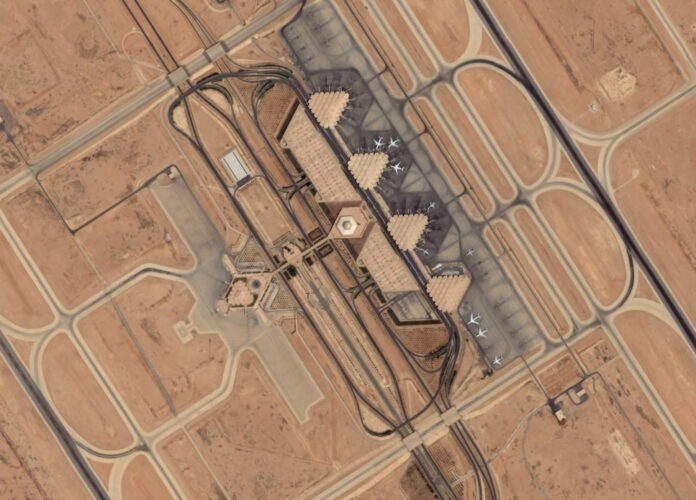
The maritime situation now extends across three overlapping zones. The Strait of Hormuz, where Iran exercises its most direct leverage over global oil flows, remains the primary front. The Gulf of Oman, where vessels attempting alternate routes have come under attack, has become a secondary zone. The Red Sea faces renewed pressure: the Houthis declared a naval blockade on Saudi Arabia on Monday following a strike on Sanaa airport, threatening to open a front that had been dormant while Hormuz dominated global attention.
The White House’s framework – strikes as leverage, talks as the destination – has been consistent across all ten nights. What it has not produced is any visible movement on the core questions: Iran’s nuclear program, IRGC operations in the Gulf, and the conditions under which American strikes would stop. Both governments say diplomatic channels are open. Neither has described what is being offered or demanded inside those channels.
The Greek vessels burning in the Hormuz strait on Monday night indicate how far the conflict has spread from its starting point. Two weeks ago, the immediate belligerents were the United States and Iran. Today the list includes Kuwait, Bahrain, Oman, Yemen, and Greek shipowners whose vessels are being targeted in a body of water that carries roughly a third of the world’s seaborne oil. The tenth night is not a culmination. Whether it marks a turning point depends on decisions being made in Washington and Tehran whose content has not been made public.