
SANAA – Yemen’s Houthi movement declared a maritime blockade against Saudi Arabia on Monday, with military spokesman Yahya Saree announcing through the group’s Al-Masirah television channel that a ban on Saudi-linked maritime navigation “has entered into force from the moment of issuing this statement.”
Saudi Arabia had not publicly responded to the declaration by the time of publication.
The announcement came with a pointed warning. Saree said any escalation by Saudi forces would trigger what he called “a comprehensive and severe escalation” from the Houthis in response, language suggesting the group intends the blockade not merely as political signaling but as a posture it is prepared to enforce.
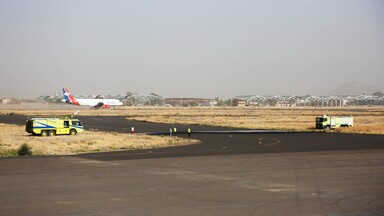
The declaration follows a week of escalating confrontation between the Houthis and Saudi-aligned forces over access to Sanaa International Airport. The Houthis accused Saudi Arabia of conducting an airstrike on the Sanaa airport runway to prevent an Iranian aircraft from landing. Saudi Arabia made no public statement on that accusation. Yemen’s internationally recognized government separately claimed responsibility for the runway strike, saying it targeted the landing of an Iranian plane that its airspace authority had not cleared.
In retaliation for the airport strike, the Houthis launched missiles toward Saudi territory, the sharpest cross-border escalation between the two sides since Houthi missiles and drones struck Abha International Airport in southern Saudi Arabia on July 14. That attack was itself a response to the same airport access dispute, suggesting a cycle of escalation with no clear exit mechanism in sight.
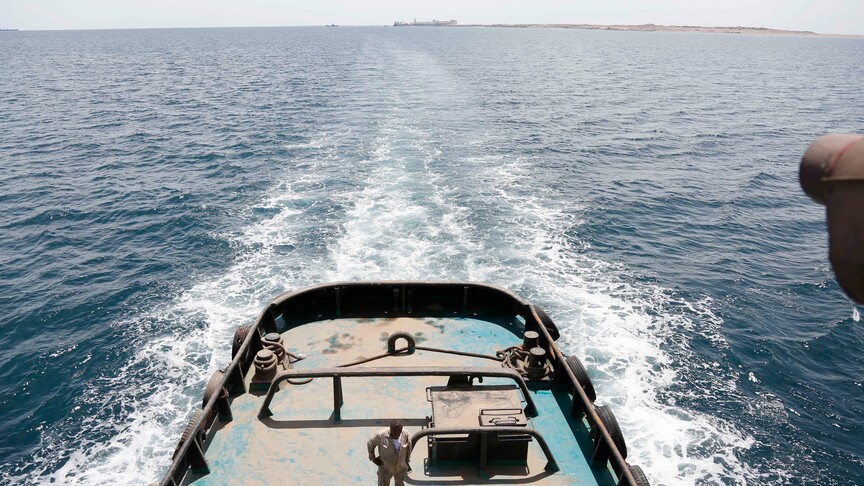
The maritime blockade declaration raises immediate questions about enforcement capacity and legal standing. The Houthis control Yemen’s Red Sea coastline in the northwest of the country and have spent the past two years developing an anti-ship capability that includes drone boats, ballistic missiles with maritime guidance systems, and mines. During the 2024 maritime campaign conducted in solidarity with Gaza, the group demonstrated an ability to threaten shipping in the southern Red Sea and Bab al-Mandab Strait, diverting significant commercial traffic onto the longer African route around the Cape of Good Hope.
Whether that capability can be sustained against Saudi-linked navigation specifically remains an open question. A maritime blockade in international law requires both enforcement capacity and formal notification of boundaries to maritime authorities. The Houthis published neither coordinates nor a defined blockade zone. Without those specifications, the declaration functions as a threat rather than a recognized legal instrument, but insurance markets and shipping companies will make risk assessments regardless of legal classification.
Saudi Arabia routes a large portion of its energy exports and import cargo through Red Sea ports. The kingdom sends substantial oil exports through Yanbu and handles broad freight flows through Jeddah Islamic Port, both facilities that lie within reach of Houthi maritime capabilities. Even a partial disruption, or the credible threat of one, affects freight costs and insurance premiums across the shipping routes that Saudi commerce depends on.
Iran’s strategic footprint in the situation is significant. Tehran provides the Houthi group with weapons, missiles, technical training, and embedded military advisers from the Islamic Revolutionary Guard Corps. As recently as mid-July, Iran instructed the Houthis to stand ready to seal the Bab el-Mandab strait if the United States struck Iranian power infrastructure, a conditional threat that indicated both IRGC command authority over maritime decisions and Tehran’s willingness to use Houthi maritime capabilities as a lever in its wider confrontation with Washington and its Gulf partners.
The Houthi blockade declaration against Saudi Arabia could intersect with that wider dynamic in ways that are difficult to predict. Saudi Arabia is navigating an already fraught regional environment in which the US-Iran military conflict has placed extraordinary pressure on the entire Gulf security architecture and in which the kingdom’s trading partners in Asia are watching Red Sea shipping routes with concern.
Riyadh’s public silence since the Houthi missile strikes last week reflects the same strategic calculation that has driven Saudi Arabia’s de-escalation posture toward Yemen since 2022: the kingdom’s Vision 2030 economic transformation requires regional stability, and a return to active military confrontation with the Houthis carries costs that Riyadh’s planning horizon does not easily absorb. Whether that posture can survive a declared maritime blockade on Saudi shipping, even one whose enforcement remains uncertain, is a question the kingdom has not yet had to answer.
According to Anadolu Agency, the Houthis issued no formal list of vessels or cargo categories to be interdicted, leaving regional maritime operators without the specificity needed to assess their actual exposure to the declared blockade.