
DUBAI – Two oil tankers erupted in fire in the Strait of Hormuz on Sunday, sending smoke plumes visible from Oman’s coast as maritime authorities issued an emergency bulletin ordering all vessels to avoid a six-nautical-mile exclusion zone around the burning ships.
Maritime trade officials from the United Kingdom Maritime Trade Operations identified the vessels but declined to confirm their flags or cargo, citing active life-safety operations. Iranian state media, citing IRGC sources, said the tankers struck anti-ship mines laid in response to the US bombing campaign. US CENTCOM dismissed the mine claim without elaboration, saying only that it was “aware of incidents in the Strait” and was “assessing the situation.”
Sunday’s explosions were not the first in the Hormuz corridor since Washington launched its air campaign on July 12. Iranian fast-boat units and drone teams have attacked at least eleven vessels transiting the strait since the fighting resumed. What changed Sunday was the scale of consequence. Previous attacks damaged vessels and drove off crews. These tankers exploded.
The explosion timing coincided with a fresh wave of US airstrikes that Pentagon officials described as designed to “degrade Iran’s capacity to interfere with freedom of navigation.” CENTCOM announced the strike wave at approximately 0300 local time, targeting IRGC naval facilities at Bandar Abbas and Jask. Four hours later, satellite services spotted the tanker fires. Iranian state broadcaster IRIB framed the sequence in exactly that order: the US struck, and Iran responded.
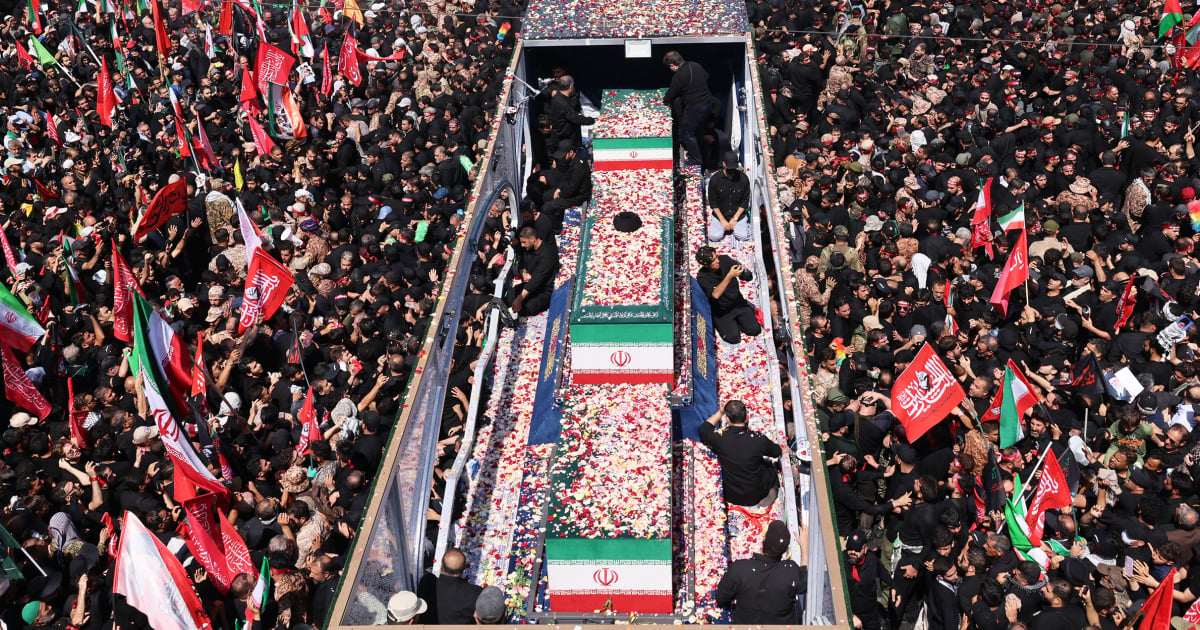
The conflict’s toll is accumulating unevenly. Two US soldiers were killed and one remains missing after an Iranian drone strike on a logistics hub in Jordan on Saturday; a fourth American died in a separate attack in Iraq on Friday. Iran has not released a consolidated military casualty count since Supreme Leader Ayatollah Ali Khamenei was killed on Day One of the conflict. NBC News reported Iran was simultaneously mourning Khamenei as the ninth day of US strikes continued.

Khamenei’s death has left Iran’s military chain of command operating through a council of IRGC commanders rather than a single authority. That structural change has made de-escalation harder: no single Iranian official can make the concessions necessary to end the fighting without appearing to surrender the revolution itself. The council format distributes accountability while diffusing the authority to stop.
The economic pressure reached a significant threshold on Sunday. Crude oil crossed ninety dollars a barrel for the first time since 2022, according to The New York Times, after the Caspian Pipeline Consortium announced it was suspending loadings from the Tengiz oilfield in Kazakhstan, a route handling roughly 1.5 million barrels a day. The suspension was caused by insurance coverage collapse, illustrating how Hormuz risk cascades into energy infrastructure far from the Persian Gulf.
Saudi Arabia, Oman, and the UAE have each pushed through emergency shipping protocols rerouting tankers around the Horn of Africa. The detour adds fourteen days to round-trip voyage times to Europe, a cost that will appear in energy bills within six weeks regardless of how quickly the Hormuz conflict ends.
Iran’s IRGC declared last week that no tanker would cross Hormuz without Iranian clearance, as Iran simultaneously extended its campaign to US military installations in Kuwait. Sunday’s tanker explosions are the most dramatic test of that declaration since it was issued. Two tankers burning without Iranian interdiction forces visibly present raises the question of whether pre-positioned mining rather than active attack operations caused the fires, marking a significant doctrinal shift.
No diplomatic off-ramp has been proposed by any party since the June 22 peace memorandum collapsed within twelve days. The near-standstill in Hormuz shipping since July 7 has accelerated the economic clock without producing the political urgency that might force either side toward concession. Neither Trump nor Iran’s leadership has signaled willingness to make the first public concession.
The names, flag states, and cargo destinations of the two burning tankers remained unconfirmed hours after the initial emergency bulletin. If one of the ships is carrying crude bound for a US ally in South Korea or Japan, the diplomatic calculus around American military escalation shifts considerably. US officials have not addressed that possibility. The cargo manifests may be the most consequential documents in the strait on Sunday evening, and no one has released them.
A seventh US strike package was described as “ready, pending Presidential approval” by Pentagon officials on Saturday. Whether two burning tankers in the Strait of Hormuz provide the political justification to deploy it, or whether they constitute the kind of escalation that makes a pause more likely, depends on decisions in Washington and Tehran that had not been announced as of Sunday evening. The fires burned in either case.